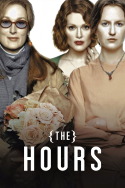
Review of The Hours (2002) by Spangle — 08 Jan 2017
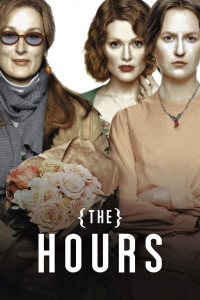
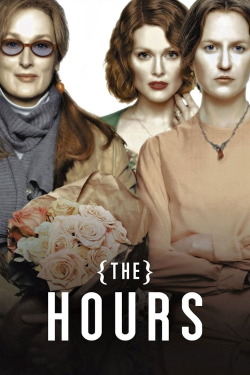
The Hours tells the story of three women: Virginia Woolf (Nicole Kidman), Laura Brown (Julianne Moore), and Clarissa Vaughan (Meryl Streep). Woolf, obviously the well-known and greatly revered artist, is known for her struggles with mental illness and depression. The Hours shows her writing Mrs. Dalloway, a novel about a woman who appears happy on the surface, but she is really not happy. Laura reads the novel thirty years later in 1951 suburban California. In many ways, she is Mrs. Dalloway and the novel has a profound impact upon her life. However, it is Clarissa who lives out the life of Mrs. Dalloway in 2001 New York. A deeply dark and depressing film, The Hours may be a bit too emotionally distant to really resonate, but it is a compelling character study amplified by absolutely stunning performances across the board.
First, we have Virginia Woolf. Book ending the film with her suicide in 1941, director Stephen Daldry takes a reserved approach in telling the story of Woolf for much of the film, except at the end. Disappearing after a visit from a friend, Virginia is found by her husband at the train station, desperately trying to return to London. In this scene, Nicole Kidman honestly steals the show. Moore and Streep are brilliant, but damn. In talking to her husband, she spills her guts and explains the pain of living with the illnesses that she has. As he said that it is hard to manage her illnesses and moods, she heartbreakingly describes the pain of actually living with these issues. Undoubtedly manic depressive, Kidman's pained description of living with these problems is so powerfully acted, both in her delivery and tone, as well as being wonderfully written. Daldry has an issue with on the nose dialogue and this film certainly suffers from it in spots, but this monologue is nuanced, beautiful, and exquisitely executed all around with nothing but a close shot of Kidman to tell the tale. Of course, her story eloquently transitions to Laura Brown in 1951s California. Daldry pain stakingly creates these connections and, though Kidman does not share the screen with her counterparts, there is a match cut at one point. As Woolf "entertains" her friend's children, she lays down next to a dead bird and stares into it with reaction shots of both her face and the bird's. After a reaction shot of Kidman, the film transitions to a reaction and match cut of Laura laying on a bed. Daldry may be obvious and manipulative, but here, he is relatively subtle and uses the editing to tell the tale. A truly remarkable moment of the film.
Portraying the broken Laura Brown, Julianne Moore is brilliant. The most reserved performance of all of the characters, Laura floats by in life. Married to Dan (John C. Reilly) with one son and a daughter on the way, Laura is depressed. Reading Mrs. Dalloway, she no doubt sees herself in the film and, just as with Virginia Woolf, is at the very least bisexual. In 1950s America, however, this is unthinkable, especially in the suburbs. Contemplating suicide, she eventually opts to return to her life, have her child, and leave her family. Described as a "monster" by some and in direct conflict with the belief, expressed by her friend/crush Kitty (Toni Collette), that being a mother is what makes a woman, a woman, Laura can no longer live the lie. To live the lie is to die and she wants to live. Thus, she must leave to avoid being suffocated by a man she is not love and by children she did not really want. It is hard to defend Laura, honestly. Her actions are partially explained by her depression and lack of interest in the world, but hardly defensible. To leave your children is horrible and selfish. The scorn one earns for this is well deserved, especially after seeing scenes with her and her son Richard (Jack Rovello). Sensing that something is wrong when his mom leaves him at a friend's house, Richard panic-strickenly chases after her car. Though she does not kill herself, just as Mrs. Dalloway does not die, Richard knows his mom is still off. Dan, in classic John C. Reilly fashion, is unaware of anything. Moore's role in the film leads into the final segment with Clarissa Vaughn, portrayed by Streep. Now 2001, Richard is a grown man and a revered poet and author, but he is dying of AIDS. Cared for by past lover Clarissa, Richard is near death as Clarissa lives out the plot of Mrs. Dalloway.
Just as in the novel, the poet must die, but not Mrs. Dalloway. Richard, of course, does not survive the film, though Clarissa does. This is the section with the most prominent homosexuality as Richard is gay and separated by his ex-boyfriend Louis Waters (Jeff Daniels). Clarissa herself lives with her girlfriend Sally (Allison Janney) and daughter Julia (Claire Danes). Approaching a party that she is hosting to celebrate Richard's success in writing a novel (which took 10 years to write, she puts on a happy face for the world, but is deeply unhappy.
This review of The Hours (2002) was written by Spangle on 08 Jan 2017.
The Hours has generally received very positive reviews.
Was this review helpful?