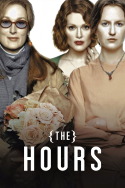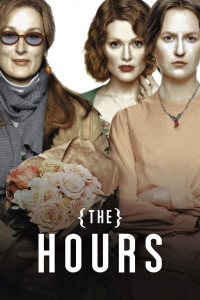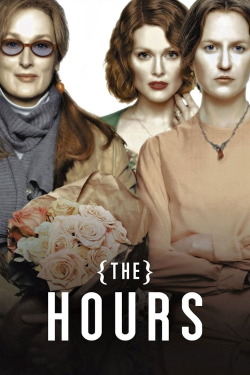
Review of The Hours (2002) by Blythe H — 09 Oct 2011
There comes a time to die. Avoiding life will not bring you peace. But ending it may. You can choose life. Or you can choose death. To look life in the face. To know it. Then to put it away.
The Hours is sweeping in scope, and epic in emotion, pulsing forward to an almost perpetual classical score from Phillip Glass. It's a three pronged meditation on life, death, suicide, love, happiness, homosexuality, and mental illness.
There are so many questions raised, and each idea is fully explored through the parallel stories. We follow Virginia Woolf, writing Mrs Dolloway, and dealing with her mental illness. She feels it coming again. She chooses to end her life to free her husband of her burden, in a moment of clarity.
We follow Laura, who is reading that very book 30 years later. She is a 50s housewife, who is an empty shell. She is miserable. And like Dolloway, perhaps her greatest moment of happiness is in a kiss shared with another woman. Once you've tasted true happiness, how can you face anything else?
Clarissa Vaughn lives another 50 years later, and shares a nickname with Woolfs titular character. She is a lesbian, nursing a former homosexual male lover through the last stages of AIDS. he stays alive out of obligation to her love.
Each day begins with the characters setting up a party, like the book. As hostesses they vary in ability. Virginia has servants. Laura is inept. Clarissa Is a marvelous hostess, although the pressure is unraveling her.
Woolf was a bisexual. Laura Is a repressed lesbian. Clarissa is a lesbian, whose greatest love was a homosexual man. Woolf is deeply in love with her husband who is sacrificing everything to take care of her. Laura feels nothing toward her doting husband, and tries desperately to love her child. Clarissa is indifferent toward her partner of 10 years, and makes her daughter feel secondary to the past.
Woolf chooses death to set her husband free, and give him happiness. Laura can not kill her unborn child with her, so she chooses life. She abandons her family, rather than face the death of living a false life, to be happy. Clarissas former lover, Richard, whom she's been nursing for years, chooses death. To set Ckarissa free, so she can be happy.
So you see life and death is not so literal. Someone has to die for the rest to appreciate life. And ending a life, gives birth to a second one for someone, even yourself. Surely this justifies death? Surely a just god would condone suicide to give life.
All of the stories are connected, two more literally than the other. You know the group of actors in this film. Especially the trio of leads. You know what I think of them. I won't waste adjectives. Everything in the production is universally magnificent.
Magnolia is my favorite movie. I love how operatic the emotions are, how heightened, manic, and surreal everything is. Thisfilm is more classical. It has a way of unifying and deepening the feelings of each character. The questions raised, and ideas brought to bear are stunning.
Two people couldn't have been happier together.
This review of The Hours (2002) was written by Blythe H on 09 Oct 2011.
The Hours has generally received very positive reviews.
Was this review helpful?