Review of The Hours (2002) by Eve C — 11 Feb 2012
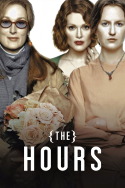
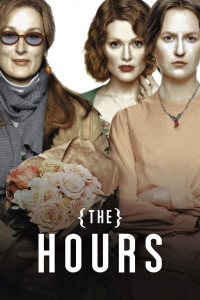
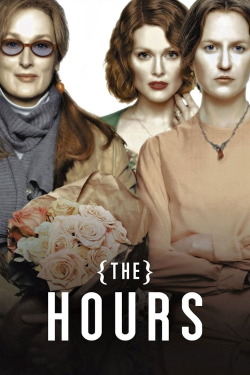
"Who's Afraid of Nicole Kidman?" ...Okay, where are my Virginia Woolf people at; does anyone get it? Well, eitherway, I don't know who'd be afraid of that "little" Aussie sweetie, but I bet I can tell you what the actresses in this film are afraid of: The actual hours, because they're getting to be well past their prime. I think I might be afraid of Nicole Kidman and the hours that are carrying her past her prime, because she was quite the looker, and that's about all she had, because she couldn't act her way out of a paper bag. I suppose she realizes that, which is why she's deciding to pull the ol' switcheroo and focus on acting over looks now-a-days, which is good, because she is most certainly not the same actress that she was before... I guess, because I, in all honesty, didn't see a lot of Nicole Kidman from back then. Of course, her performance in "Eyes Wide Shut" is more than enough bad acting for an entire career, so she's gonna have to go a long way to make up for that, but hey, I must say that this is a heck of a start. Still, no matter how satisfying it is to see Miss Kidman pull her own, as well as Meryl Streep and Julianne Moore, well, just act, because they were good at it from the get-go, it's not quite enough to tick this film's problems away.
Phillip French of "The Observer" deemed the score "relentless" and "over-amplified", and considering that there's plenty of score to go around, as well as some subtle hints in the opening credits - like them going on too darn long, just for the music or making the words "Music by Philip Glass" as prominent as they could -, it's easy to get paranoid that he might be right. Well, I don't know if it's that paranoia manipulating my judgement or whatever, but eitherway, Mr. French was right about the score being rather overwhelming at points, but really, there are plenty of points where you want more of the score than the film gives you, not just because it's an amazing score - which it most certainly is -, but because when it's not playing, things get a little too quiet. Come to think of it, I don't think that the credits are overlong because they want to show off Glass' great score, but because the editor was on break... and a very, very long one at that. Okay, the film isn't that loose, but many a sequence of montage or soliloquy or, well, just whatever go one way too long and lose steam, followed quickly by your attention. It certainly drives a stake through the organic flow in between the storylines, because although each segment of each storyline has all but equal runtime, those runtimes are still just so long that when we do make the time jump, it's easy to fall out a bit. Still, the time jumps aren't horribly offputting, partially due to the storylines having very similar themes, yet there in lies another flaw, because among those themes is manipulation, which is supplemented by the occasional melodrama and a few cheesy lines, and while those moments come in here and there, there's still enough of them for the film to feel very tricky with its emotional resonance, and it leaves some emotional resonance to miss the mark of tear-jerking and hit the mark of manipulative. The film has its bag of tricks, and when it doesn't have that, it slows a little bit too far down, but no matter how many lows it hits, the film is generally compelling and ultimately rewarding, partially because, in spite of some missteps in his direction, Stephen Daldry seems to have a pretty good grip on things.
As I said, some of the emotional resonance is more manipulative than effective, yet note that I said "some" of the emotional resonance, because for every misstep in his tone-setting, Stephen Daldry incorporates many more moments where emotional resonance is effective and genuine, and while this film might not get a tear out of you, you ultimately leave dwelling on the genuineness more than the manipulation. For this, we have to give credit to Philip Glass' score, which, as I said, gets to be too prominent here and there, but is consistently sharp with a softly comforting, yet emotionally flowing symphany that is sometimes used to exacerbate the emotional manipulation, but more often than not used to strongly supplement the effective emotional resonance. Still, the real people behind all of this that truly sell the compellingness are, of course, our leads, all of whom carry the weight of the film, yet none of which fall behind the others, as they're all equally impressive, but in ways that are just different enough to sell several messages worth delivering. Each segment is equal in runtime, as I've said, yet the Virginia Woolf subplot feels the most underexplored, yet what depth we do get is carried by Nicole Kidman with subtlety and grace in a presence that may not be terribly intense, but has enough weight to it for you to feel the late, great Virginia Woolf's pain, making Kidman the most engaging thing about the Virginia Woolf subplot, with a close second being that seamlessly-produced, but porky-rific prosthetic nose, which may not even be part of the film production; it's just that Kidman hung out with Tom Cruise so much that he must have convinced her to get her own snout. Anyways, getting to Julianne Moore, the Laura Brown character is one plagued by that kind of housewife ambition and isolation that eats away at her, and watching Moore portray the tragic unraveling with strong emotion and commitment is a heartbreaker that truly captivates you. Finally, we come to the great Meryl Streep, who carries the Clarissa Vaughan storyline with charisma alone, but when revelations and paranoia come into play, she delivers on the raw emotion to truly hit home, strike a chord, insert metaphor for performance's level of satisfaction here, a leave you haunted. Whether it be on dealing with depression, dealing with isolation or dealing with losing someone, this film has much to tell us about pain, and with these powerful three major performances - complimented by Daldry's mostly impacting emotional direction, as well as by some pretty sharp supporting performances, with the exception of that wooden, annoying little kid in the Laura Brown subplot - carrying each message, you can expect them to be delivered.
As the time runs thin, you're left feeling a little bit cheated by the occasional manipulative trick of emotion, even if they did mean breaking up the slow spots, but what sticks with you the most is the emotional resonance that "does" feel genuine, thanks to Stephen Daldry's mostly sharp direction, Philip Glass piercing score and a trio of excellent, moving performances by Nicole Kidman, Julianne Moore and Merly Streep, leaving "The Hours" to stand as an ultimately satisfyingly touching study on the immortality of grief.
3/5 - Good.
This review of The Hours (2002) was written by Eve C on 11 Feb 2012.
The Hours has generally received very positive reviews.
Was this review helpful?