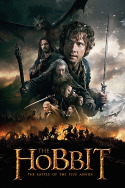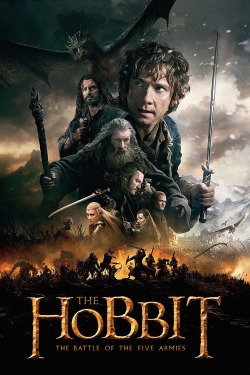
Review of The Hobbit: The Battle of the Five Armies (2014) by Omar K — 17 Jul 2015
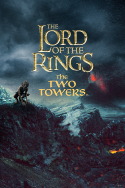
After 6 films, 17 hours and 18 minutes, Middle-Earth is finally over. For fans, there will be mixed feelings of joy that the long-awaited ending to The Hobbit trilogy has finally come, but there will be an underlying sadness permeating through the air for this is the conclusive ending of a franchise that has embedded itself within the mainstream of many peopleâ??s lives. The Hobbit, like The Lord of the Rings 11 years ago, has come to a spectacular ending that will please audiences for its sheer entertainment factor as it is a film that provides so much, and in truth is one of those special films that come out and are allowed to show as much as they want in as much time that is needed. Middle-Earth may seemingly be over, but J.R.R. Tolkien has an incomplete, lesser-known piece of literature known as The Silmarillion that has not been touched yet, which expands on the world created by giving it a rich, lengthy history. You never know, one day The Silmarillion could continue Middle-Earth on the big screenâ?¦ maybe in 10 yearsâ?? time again?
The Hobbit: The Battle of the Five Armies continues exactly where The Desolation of Smaug left off, with the dragon Smaug unleashing his fire-ridden breath of death upon the sitting ducks of Lake Town. The dragon has been a major focus in The Hobbit up until this film where its briefness in the first 15 minutes is overcome by the underlying problem of Sauronâ??s rising forces and their attempt to take over the lonely mountain. The film focuses on the battle for Erebor between the dwarves, elves, orcs, men and goblins and a collection of individual characters ranging from wizards to shape-shifters. Locations arenâ??t just restricted to the lonely mountain; places such as Dol Guldur and Gundabad are depicted making Middle-Earth as a whole layered with profundity. The film climaxes with an array of deaths and a satisfying ending to the story of The Hobbit that leads smoothly onto The Lord of the Rings.
The Battle of the Five Armies does exactly what is says on the tin for pretty much most of its running time; there is an epic battle between loads of beings. Believe it or not, this film was actually titled There and Back Again and in hindsight it is better they changed it because There and Back Again does not even have the faintest resemblance to war whatsoever! The filmâ??s battle scenes are more than epic that they almost resemble the same grandeur and importance as the battle of Pelennor Fields at Gondor. There hasnâ??t been a large battle since the final Lord of the Rings film therefore this film brings Middle-Earth back into the same wavelength to what we would expect from this world. During this 2 hour-long war, there are some important character deaths and perhaps far more than there are in The Lord of the Rings even if The Hobbit was originally meant for younger audiences. The film remains relentless until the end and this intensity gives the film an energetic aura that it is pretty hard to be under-entertained from it. Watching it knowing the potential of evil in The Lord of the Rings, The Hobbitâ??s final chapter provides an epic taster of what lies in store for Middle-Earth.
Despite depicting war on an epic scale, the film can be an intimate affair at some points. You get to see Thorin facing the same distress his forefathers experienced as he gradually becomes consumed by gold, Bilbo is torn between what he should do with the Arkenstone and there is almost political tension over who has the right to what in the mountain. These moments provide a good balance with the war that goes on but perhaps due to the slightly less adultish subject matter of The Hobbit, the emotional intensity of this film is not to the heightened level you have come to see from The Lord of the Rings. The Hobbit doesnâ??t go into extreme depth about certain moments but it does provide some interesting scenes of intimacy that speak to you emotionally. It is a more fascinating emotion to what you would normally see, and perhaps the short running time lends to its fascination because it doesnâ??t exert its potential and allows space for your imagination to understand this world and the problems it potentially faces.
There are so many characters in The Hobbit that you donâ??t get attached to a certain bunch as you do in The Lord of the Rings trilogy. In The Lord of the Rings, there were few main characters for each race, but in The Hobbit there are so many characters of the same race that only the important ones can be remembered. Literally everyone that has appeared in the last three films reappear in this one making it a spectacle of characters on show! There are the 13 dwarves, a hobbit, new dwarves are introduced, there are tonnes of elves, countless number of orcs and a collection of individuals that have been introduced from The Lord of the Rings including Sauron, Saruman, Gandalf, Elrond and Galadriel. Because there is so much going on, the characters are lacking in depth in this film. The only characters that get an expansion are Thorin, Legolas and his father Thranduil. Richard Armitageâ??s Thorin has to develop a whole new facet to his character he never encountered before and it is interesting to see him come to grips with himself. Orlando Bloomâ??s Legolas captivates a lot, for everything he does in this film is connected to his role in The Lord of the Rings making it fun to put the dots together and understand the world as one big fantasy. And Lee Paceâ??s Thranduilâ??s acrimonious nature is challenged by the effect the war has on him that his views change and in essence he changes and guides his son to a very special character. On the whole, the many actors that feature in this film are covered up by tonnes of make-up and clothing therefore no matter how they act, they will always appear as if they are doing what they are meant to be doing.
The Hobbit deserves to be credited for its fantastical visuals, which make this film appear so much larger-than-life. Everything appears so grand that the film can develop a criticism of it appearing quite unreal on the eye. Some may say the sets look like actual sets but it is a fantasy film at heart so it should not distract you from the enjoyment the film brings to your eyes. For fans of Middle-Earth, the visuals are not that important, it is the story and characters that truly have the greatest clout. But for audiences willing to give Middle-Earth a try, they wonâ??t be won over because first of all this is the final part of the Middle-Earth franchise and the fact that there is so much going on, it becomes hard to grasp the voluminous amount of characters amidst blistering visuals! Nevertheless, the 6 Middle-Earth films that have been made have been etched with global significance for their impact on cinema, people and cultures.
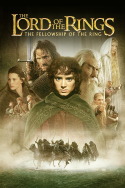
The Hobbit: The Battle of the Five Armies sticks out from the previous 5 films of Middle-Earth simply for one reason: itâ??s 2 hours and 25 minutes running time. Perhaps it is still too long for some but in my opinion I wanted more! Nevertheless, this filmâ??s reference to Strider, otherwise known as Aragorn, is one of its best moments that allow the film to link smoothly onto The Fellowship of the Ring. Now that the final entry into Middle-Earth has been released, the marathon of all cinematic marathons can commence.
The Battle of the Five Armies is a fitting finale to a globally beloved franchise that down to its last second provides audiences with intensely thoughtful yet engaging entertainment.
â??â??â??â??â??â??â??â??â??â?? 8/10.
This review of The Hobbit: The Battle of the Five Armies (2014) was written by Omar K on 17 Jul 2015.
The Hobbit: The Battle of the Five Armies has generally received positive reviews.
Was this review helpful?