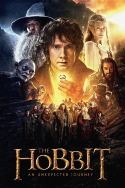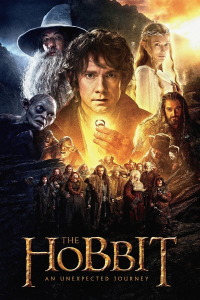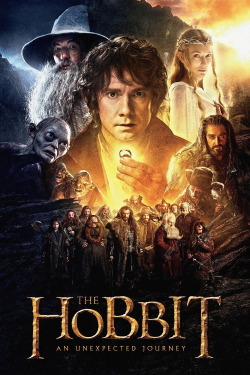
Review of The Hobbit: An Unexpected Journey (2012) by C T — 14 Oct 2014
I have to give props to the visual effects and cinematography departments. Despite the problems faced during filming, Peter Jackson always makes sure his films are visually salient, something that is always enjoyable, if not occasionally used as a distraction during weaker plot points of his films.
I was also relieved that they decided to stick with the decision to refrain from shrinking Bilbo and the dwarfs in post, and instead used juxtaposition and linear perspective to make them seem smaller as had been done in the previous films.
However, the design of the Orks was comparable to the animation style of the 90's, and a major let down when makeup and prosthetics would have almost certainly made them look more profession and realistic.
CGI, when used improperly, can take people out of the movie, and that happened several times with the Hobbit. My biggest complaint, however, is the decision to split the movie up into three parts. While a smart way to make money, it demands all movies include filler and fluff that diverts the main plot and attention away from Bilbo's growth.
As one of the most prominent, if not first, bildungsroman stories written natively in the english language, the Hobbit emphasized how a recluse became a hero as he helped save his world, and not about how he became a supporting character in an epic about dwarfs trying to fight a war.
By making a two-hundred page max book into three movies, it makes the story less about Bilbo and more about the dwarfs and other minor characters that didn't even appear in the book.
This review of The Hobbit: An Unexpected Journey (2012) was written by C T on 14 Oct 2014.
The Hobbit: An Unexpected Journey has generally received positive reviews.
Was this review helpful?