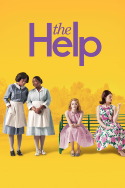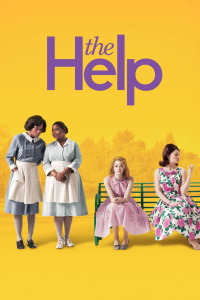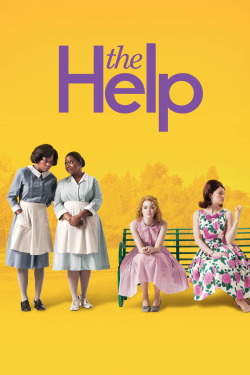
Review of The Help (2011) by Shiira — 07 Nov 2011
What happens in Mississippi, stays in Mississippi. For the next few weeks, as part of their missing persons investigation involving three civil rights workers, last seen registering black people to vote, Agent Rupert Anderson knows that some tough sledding is in store for he and his younger, somewhat green partner, so to lighten the mood, he sings a KKK rally song, which inspires Agent Alan Ward to complain that he "can do without the cabaret," because the Kennedy boy just doesn't "share [his] sense of humor.
" In kind, the former redneck sheriff responds, "Sometimes that's all you have left." Later in Alan Parker's "Mississippi Burning", after the church bombings and lynching, you know, your garden variety Klan mischief, Ward asks, "What's wrong with these people?" clearly aghast at the unrelenting and pervasive ugliness of your typical segregated town.
Now he understands that the old man never meant to be ha-ha funny. In record time, he reaches the same point of resignation which inspired Rupert to drive past the state limits, so many years ago. "These people crawled out of the sewer Mr.
Ward, maybe the gutter is where we should be," yells Anderson, when he tries to convince the principled straight arrow FBI man that the time for diplomacy is over. Being black, Minnie knows the feeling first-hand, so the maid gets down and dirty, just like her enemies, when she decides to fight the power.
"The Help", in addition to being lambasted by critics for telling a black story from a white perspective(the same kneejerk reaction that greeted "Mississippi Burning", even though the 1988 film largely transcended its racially-condescending narrative trappings, unlike other movies of its ilk, such as "Ghosts of Mississippi" and "The Long Walk Home"), the detractors also balk at its comedic moments.
True enough, Jim Crow is nothing to laugh about, but, to reiterate Anderson's sentiment, "sometimes that's all you have left," therefore the maids laugh so as not to cry, the same defense mechanism which the filmmaker, and also, the audience uses to combat the horrors of institutionalized racism.
So while the maids conspire in the kitchen against their white employers by laughing at Hilly's practice of "puttin' pencil marks on the toilet paper," it's only because Minnie chooses to put on a brave face for her best friend Aibileen.
Like Agent Anderson, they laugh out of resignation. In the face of such abject humiliation, what other choice does the maid have? If she cries about it, then Hilly Holbrook, the housewife-turned-reactionary social activist who drums up neighborhood support for separate toilets, comes out the victor in the whole "coloreds only" bathroom dialogue.
Worse still, were Minnie to get mad about the employer-enforced ban on having access to the indoor facilities, she'd probably end up in prison, just like Sofia in "The Color Purple", when the outspoken "Negro" insults the mayor's wife, and then for good measure, knocks out her husband.
A person of color simply can't attack racism in that fashion. Agent Anderson can. because he's white, and in the barber shop scene from the Parker film, he does, purposely nicking Clinton with a straight-edge razor, before shoving the deputy's face against the mirror, and through gritted teeth, says, "You got a stupid smile, you know that, pal?" which is to say that the sheriff's right-hand man has a s*it-eating grin.
Since Minnie's arsenal for revenge precludes any sort of physical contact with her employer(conversely, the FBI agent was just getting warmed up; he ends up tossing Clinton around the shop like a ragdoll), not without some serious repercussions, so "The Help" employs the maid with the next-best available weapon: comedy, in order to settle an old score, while at the same time, maintaining her status as a free woman.
Given that the social context is segregated Mississippi, and not swinging London(the setting for "Austin Powers: The Spy Who Shagged Me"), where eating s*it has a chance of being funny, the chocolate pie which Minnie laces with her own feces, in a sense, acts as a performative violence, and not the puerile hijinks that the film's critics purport it to be.
This is not a gross-out comedy, after all; it's a gross-out drama, in which the grotesquerie masterminded by the subjugated black female can't begin to match the grotesquerie of the racist milieu that she is powerless to overcome.
To be fair, the critics have a legitimate gripe, in regard to the writer as being another example of the trope familiar to this genre: the white savior who is going to save black mankind, but unlike "To Kill a Mockingbird", where the film is told through Scout's eyes, the narrative belongs, not to Skeeter, but to Aibileen.
"The Help" ends with the suggestion that the maid will write a book of her own. "The Invisible Woman", perhaps, an answer to the 1952 National Book Award-winning novel by Ralph Ellison.
This review of The Help (2011) was written by Shiira on 07 Nov 2011.
The Help has generally received very positive reviews.
Was this review helpful?