Review of The Hedgehog (2009) by Claudia P — 04 Jun 2012
An improbable story that brings three oddballs - a child with a keen mind and a soul too mature for her small frame, a middle age janitor who hides her "pretentious" passion for books and culture and a Japanese gentleman recently moved into the luxurious apartment block they three characters reside in.
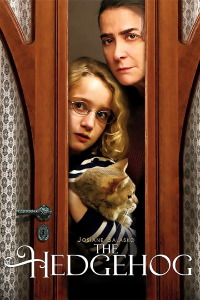
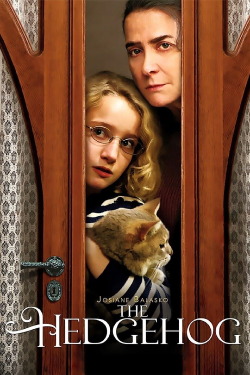
This is a thoughtful visual tale that follows the young girlâ(TM)s POV and at times those of the adults that come into her life. The girl Paloma, her small face framed by wavy blond hair wears her glasses as if they are a barrier and a filter between her and the world.
She displays a reluctance to interact with her family members, particularly her mother, preferring to hide herself away as her mother goes around the house look for her. The only time she lets the world of her family in, is when she points her video camera, the thing is is oddly attached for much of the movie, at them and focuses and frames them during moments that she finds significant.
And in this way she at once absorbs details around her, at the same time editing out much of her surroundings and environment that is out of her focal range. And in this way, we see how she sees her family and in her speech we learn how disturbed she is by her parents behaviour, her politician father and her mentally weak mother.
One wonders how such a neglected girl grew into her artistic talents.
âWhen life is meaningless, it is the job of the mind to give it meaning.â?
Thus Paloma embarked on a sort of self-propelled creativity that drove her to seek to articulate her planned suicide and eventual death via a video documentary of the people around her, saying:
âPlanning to die doesn't mean I let myself go like a rotten vegetable. What matters isn't the fact of dying or when you die. It's what you're doing at that precise momentâ?
Amidst the introspection, Paloma discovers Kakuro Ozu, an aged old neighbour who gave her the attention that a curious but necglected young child craves. He engaged her linguistically, challenged her in games of Go, gave her a refuge where she could play with his young granddaughter.
But still Paloma remained the cynic and continued to plot her early death, marking time using a self drawn calendar of inked squares on her white wall. She roleplays different scenerios where she kills herself in different methods. She tested the effectiveness of her mothers pills on Hubert the goldfish, flushing down the toilet when he floats up to the surface of his fishbowl. It is to be expected in a thoughtful work such as The Hedgehog that the young daughter of a woman dependent on drugs for her sanity, should choose to end her life via an overdose of the same drugs.
But that is not the meaning of Palomaâ(TM)s life that The Hedgehog ascribed to her. The sociable Kakuro was one the first step towards getting Paloma receptive to older adults. Paloma interest was piqued when she enters the janitors room and finds her book left opened on the kitchen table. She steals a shot of it in her video camera and sneaks out. After Kakuro, Paloma was emboldened to befriend the janitor Renee. A person she would later caricature as a hedgehog in her drawings. Paloma would find her kindred spirit in Renee, identifying with Reneeâ(TM)s secret library and her hidden âun-janitor-likeâ? self.
âYou have found the ideal hiding placeâ?
Unfortunately death comes knocking, forewarned by Hubert the gold fish who mysterious came to life again in Reneeâ(TM)s toilet bowl.
âI've known I'm heading for the fishbowl. A world where adults bang like flies on the glass. But I know one thing. The fishbowl isn't for me.â?
Reneeâ(TM)s death brings to close her budding love story with Kakuro. Theirs was an intimate friendship coloured by their common love of Leo Tolstoysâ(TM)s novel Anna Karenina and cats.
I have not read the novel before, but wikipedia says it is âcommonly thought to explore the themes of hypocrisy, jealousy, faith, fidelity, family, marriage, society, progress, carnal desire and passion, and the agrarian connection to land in contrast to the lifestyles of the city.â? Certainly common themes found in The Hedgehog.
Reneeâ(TM)s death, however, was necessary. Paloma experiences grief and understands death and what it means for the people who survive for the first time. This was in contrast to the detachment she shows when she filmed the body bag of another neighbour in an earlier scene. The young girl who seeked death survives at the end of the film and wondered what Renee was doing when she died because âWhat matters isn't the fact of dying or when you die. It's what you're doing at that precise momentâ?
This review of The Hedgehog (2009) was written by Claudia P on 04 Jun 2012.
The Hedgehog has generally received positive reviews.
Was this review helpful?