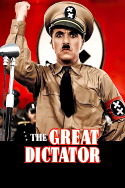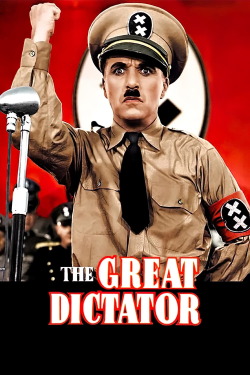
Review of The Great Dictator (1940) by Mike H — 11 Feb 2009
Chaplin never wanted to join the talkie revolution. He refrained from talking for years after the technology was available and the pressure to join the sound world increased. He used sound effects sparingly in his first few post-silent-era films.
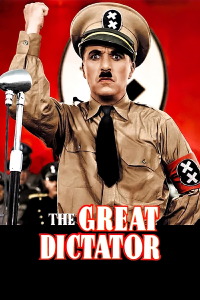
But as Adolf Hitler became a stronger threat to humanity, Chaplin spoke on film for the first time in an effort to turn the world against those ideals -- something almost no one in America had the courage or the forsight to do at the time.
Chaplin's Jewish barber character retains part of the well-recognized Tramp character, though whatever semblance of the Tramp remained for this film, it was retired completely afterwards. This is therefore the only time the Tramp spoke, if it can be said that he did ever.
The speech that ends the film remains one of the most powerful monologues ever delivered on film. It may not be Chaplin's best, but is a classic, and there is a great deal of history behind it.
This review of The Great Dictator (1940) was written by Mike H on 11 Feb 2009.
The Great Dictator has generally received very positive reviews.
Was this review helpful?