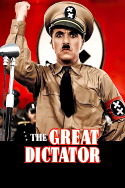
Review of The Great Dictator (1940) by Kim D — 09 Nov 2009
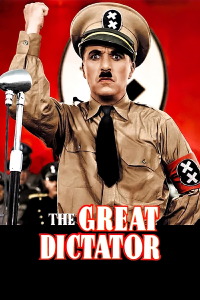
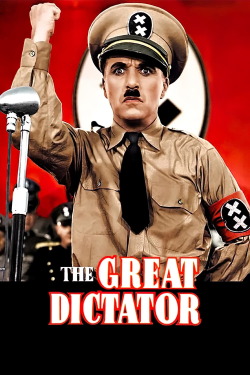
Chaplin's first 'proper' talkie (City Lights & Modern Times had sound, but "The Tramp" still didn't talk, although he did sing in the latter) really does unleash some extra creativity that a silent film wouldn't be able to execute properly. Made before the full extent of the Nazi's destruction was discovered, Chaplin plays two characters: A dictator (Possibly based on Adolf Hitler, only possibly) and his beloved Tramp, who is a soldier in the war, but a barber by trade.
As a director, Chaplin has improved over his silent films, but his slapstick isn't quite as funny as it once was, infact the funniest parts of the film revolve around Hynkel's hectic routine as a dictator, the propaganda machine making him out to be a hero, and his faux-german. But possibly the best part of the film is when a fellow dictator from Italy (Mussolini maybe?) comes along, and the two argue over who should invade which country, it turns into quite a funny pissing contest when the two jump into barber's chairs, and each tries to raise the chair higher than the other one.
Unfortunately, the film builds to a final speech, where Chaplin abandons his characters and speaks directly to the audience about dangers of the modern world, asking us to join together and make a brand new world. It's split audiences down the middle, and I'm not a fan of it: It's out of place, a little cheesy, and proof that Chaplin is a better comedian than a preacher.
But don't let the ending ruin the entire experience, this is one of his most creative films, where he tried to move away from the silly slapstick of his earlier stuff, and for the most part it's pretty funny and quite smart. Out of his classics, I'd rank it below "City Lights", and just above "The Gold Rush", "Modern Times" and "The Kid".
This review of The Great Dictator (1940) was written by Kim D on 09 Nov 2009.
The Great Dictator has generally received very positive reviews.
Was this review helpful?