Review of The Grapes of Wrath (1940) by Kathryn E — 20 Jan 2019
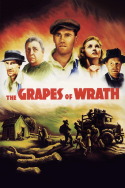
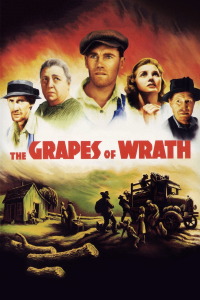
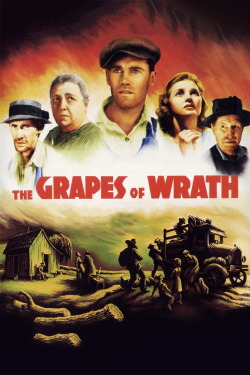
In "The Grapes of Wrath", the 1940's film adaption of Steinbeck's classic novel, director John Ford tragically illustrates the dissolution of the American dream of Western settlement amidst the Dust Bowl of the 1930's. The story centers around Tom Joad, who returns from jail after four years on parole, only to find his parent's house abandoned due to unrelenting dust storms. Tom reunites with his family at his Uncle John's house, but the group is soon evicted from their farm by the land owners.
The rest of the film chronicles the journey of the Joad's, an eight person family of sharecroppers, who are now forced to travel west. The family sets their eyes towards California, urged on by labor pamphlets which promise thousands of well paying agricultural jobs to those willing to make the trek. With all of their belongings packed into the family truck, the Joad's and former town preacher Jim Casey head westward in search of a new life. Along the road, the family faces heart-wrenching circumstances that faithfully depict the struggles of the rural poor during the 1930's.
From a directorial standpoint, Ford excels in capturing the spirit of the downtrodden American settler. Working alongside cinematographer Gregg Toland, Ford employs a variety of wide-lens landscape shots to convey the scale and gravity of the midwestern plains. In doing so, Toland and Ford create a visual backdrop that begins to symbolize the burden of the rural poor. As the plot develops, the inhospitable country serves to reinforce the severity of their working class struggle. Throughout the film, Toland utilizes low lighting to add to the depressing tone of the movie. During night scenes, Toland employs candle like lighting to envelop the actor's faces in shadow. As a result, the family's circumstances feel more tragic during dialogue. Pinned against such dark and overwhelming visuals, the Joad's feel especially helpless in their quest for California.
The movie was produced by Darryl Zanuck of Twentieth Century Fox, whose prior films at Warner Brothers often depicted the struggle of the working class during the Great Depression. Nunnally Johnson's well adapted script serves as a homage to the resilience of the everyday man, despite some minor alterations to the language from Steinbeckï¿ 1/2(TM)s novel. Johnson's script is brought to life by moving performances from Henry Fonda, Jane Darwell, John Carradine and Charley Grapewin.
Serving as the film's lead, Henry Fonda does an excellent job depicting Tom Joad's transformation from a headstrong ex-convict to a man overwhelmed by the reality of his living situation. By the end of the film, Tom Joad leaves his family behind to fight against the injustice he perceives in the world around him. Fonda's careful attention to dialogue allows the viewer to fully invest in Tom Joad's character as a victim of his time and an eventual symbolic hero of the working class. Fonda's final speech serves is a poetically delivered homage to the resilience of the common man.
Additionally, Jane Darwell shines as Ma Joad, the family matriarch. A personal highlight of the film is Ma Joad's final goodbye to the family house, as Darwill silently but expressively portrays the sadness of leaving her former life behind. Furthermore, Darwell's final speech serves as a perfect conclusion to an otherwise gloomy film, as Ma Joad reasserts the resilience of the working class despite the crushing circumstances they face. John Carradine charismatically portrays John Casey, the former town preacher, who has lost his faith at the beginning of the movie. As the plot unfolds, Carradine glows as a glimmer of hope and redemption amidst the darkness around him, aided tremendously by his expressive acting.
Overall, I highly recommend this film as a poetic commendation to the working class spirit. The film is at often times tragic, but the conclusion of Ford's movie will leave attentive viewers inspired. Modern viewers may be bored by the film's slower pacing, but I believe those willing to give the film a full viewing will be more than rewarded. Viewers may benefit from some prior contextual knowledge regarding the dustbowl to augment the reality of the Joad's situation, but the film certainly holds its own without this. The Grapes of Wrath holds up as a classic homage to the downtrodden after all these years.
This review of The Grapes of Wrath (1940) was written by Kathryn E on 20 Jan 2019.
The Grapes of Wrath has generally received very positive reviews.
Was this review helpful?