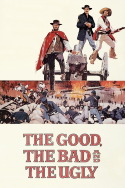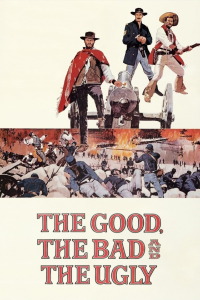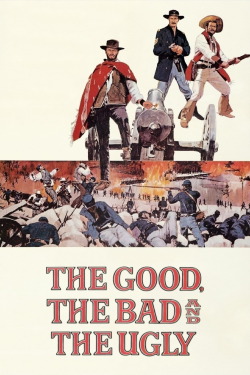
Review of The Good, the Bad and the Ugly (1966) by Shane S — 18 Nov 2017
This is the exact reason why Italians are usually credited as masters of cinema. Not only have they managed to destroy every single trope then commonplace in American Western cinema, they also managed to turn a once-laughable genre into one of the more brutal part black comedy/part psychological drama/part Western films ever made. And that's counting all of the great Westerns from "The Searchers" to "High Noon." While this film managed to outdo them with its insane anti-war message (it picks no side, but instead tells the tale from the viewpoint of an outlaw, a drifter, and a cold-blooded contract killer), it also paid great homage to them and caused an entire generation to respect the films that it was inspired by and the films that were inspired by it.
This is the film that effectively transformed Clint Eastwood from "that guy who played that one cowboy on Rawhide" into the superstar who not only personified some of the most iconic roles in mainstream American cinema (comic racist Walt Kowalski; individualist police chief Harry Callahan; that guy who paints wagons and sings very horribly) but also showed that actors could also be really good directors. Here, you get kind of a hint that Clint's something other than Rowdy Yates. With his droll delivery, eternal squint, and nicotine addiction, Clint took Sergio Leone's anti-hero template and effectively turned him into something bigger.
So, what makes this film a classic? Well, it's probably that even though the film's been cut down to just a little over two and a half hours, it still feels very complete. It keeps you on the edge of your seat without sacrificing any of its integrity and message (war is hell and it turns humans into greedy, amoral idiots). Also, you're just immersed into this incredibly raggedy and dirty world - there are not clean-looking people. Hell, there are no good people (don't even argue that the Man with No Name is good - he's still traditionally a villain, just one with more morals than Angel Eyes and Tuco) in this world. This isn't the pristine, excessively-staged "High Noon," but is more or less inspired by Hollywood's first attempt at making a realistic Western: George Stevens' "Shane.".
Also, this film makes great use of its anti-heroes. Tuco is a greedy little demon who steals from corpses and takes on other peoples' identities just so he could get their benefits. Angel Eyes kills anybody he pretty much sees. The Man with No Name is another ingredient in the eventually formation of the modern Internet troll, tricking both of his partners into acting like complete buffoons just so he could get the upper hand. However, at the same time, none of them are purely evil - Tuco highly regards his direct family, Angel Eyes is just doing his job (giving weight to the whole "war is hell" message), and the Man with No Name has no oppressed town to save this time.
Overall, it's one of the more perfect action films I've seen in my life. It's also one the smartest, using its message to tell a convincing and thought-provoking story that's equal parts brutal, bleak, optimistic, and dementedly funny. It goes to show that not a lot of filmmakers are actually learning from Sergio Leone's set example - actually and actively combining cerebral themes with stereotypical "popcorn thrills" without having a sharp misbalance.
Also, that Mexican standoff at the end is just perfect.
This review of The Good, the Bad and the Ugly (1966) was written by Shane S on 18 Nov 2017.
The Good, the Bad and the Ugly has generally received very positive reviews.
Was this review helpful?