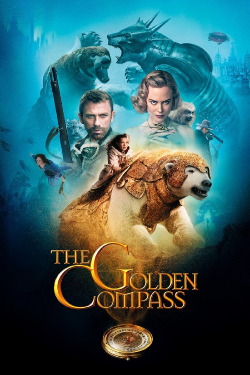
Review of The Golden Compass (2007) by M. K — 29 Jul 2011
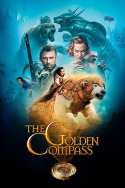
How does the film version of the great novel The Golden Compass hold up? Remarkably well, as long as you are a little forgiving, and know going in that the theatrical cut is a butchered slice of studio interference. It is almost comical to watch early trailers for the film, in which nearly half the scenes shown are not in the film. In fact, one can gather from the snippets shown in trailers that Chris Weitz's original cut was remarkably faithful to the novel. The only reason the film went overbudget was due to New Line hacking the film down, destroying the narrative flow, and rendering much of the film nonsensical, which then required the need for reshoots to try and make the plot work.
Originally, the film followed the book's sequence of events; one can see this in the trailers, which depict Lyra falling out of Lee Scoresby's balloon, as she does in the book, and this is what lands her in Svalbard. This entire scene was cut, which then required reshoots to somehow establish how Lyra got to Svalbard; cue a convenient Samoyed attack. Serafina Pekkala, the witch queen who aids Lyra in her quest, has several scenes cut which help to establish her character; Eva Green has stated that an entire scene was filmed and cut between her and Farder Coram on the Gyptian's boat. Her first appearance in the film is also problematic; she simply appears out of thin air. This kind of rapid introduction plagues most of the characters in the theatrical cut. Also a problem is the ridiculous pace and the editing, most likely, again, a problem caused by suits hacking up the film. Some scenes lack basic transition shots, such as the first scene among the members of the Magisterium. We suddenly jump cut to a bunch of sinister priests sitting in total darkness - we don't know where we are at first, and the transition is jarring and annoying. As if that weren't enough, their expository dialogue is awful - another flaw that the film suffers from at times.
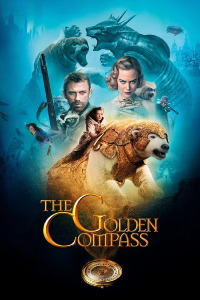
Those instances aside, the film flows far too fast, but is still compulsively watchable. The visuals are genuinely impressive; this is certainly one of the nicest looking films to come along in quite some time. The production design is beautiful and immaculate, and the substantial bit of money that went into the film certainly shows up onscreen. Simply put, the locations and machines in the film are brilliantly realized to such a degree that the way they appear onscreen is virtually indistinguishable from the way I envisioned them as I read the novel. This perfection of design extends to the casting: Dakota Blue Richards is Lyra. Nicole Kidman is Mrs. Coulter (and the blonde hair makes sense, seeing as her daemon and wardrobe is all gold). The extensive supporting cast, including Daniel Craig as Lord Asriel (the beard works, but I like my Craig shaven, thank you), Eva Green as Serafina Pekkala, Sam Elliott as Lee Scoresby, Ian McKellen as the voice of Iorek Byrnison, and Freddie Highmore as the voice of Pantalaimon -just to name several- are all impeccably cast. Alexandre Desplat's score is suitably epic and grand (despite his overly dainty orchestrations), and he even manages to sneak that trademark undulating electronic bass of his in at a few points.
So, with all the technical aspects being spot on, the story elements have to satisfy at least on an equitable level. Unfortunately, this is not entirely the case with the theatrical cut. The story itself is a great one, but the way the present cut is edited, and the way the plot has been restructured seriously lessens one's enjoyment and interest in the proceedings. That isn't to say the film is not enjoyable and interesting; it's still entertaining for fans of the novel. In an unexpected twist, the plot restructuring actually works in one instance: the fight at Bolvangar comes before the bear fight at Svalbard in the novel, but the events are reversed here, which makes sense on a cinematic level, as the battle at Bolvangar is bigger and a more fitting conclusion. However, had the original ending not been cut (causing reshoots for a very weak new epilogue), the film's original structure could have been preserved. It's infuriating to think that what is quite possibly a great fantasy film, and a fabulous adaption of a great novel, has been hacked apart by studio suits into something that is merely just 'very good.'.
The biggest issue with the film, since the first announcement of it's production, has been the excising of the religious themes to appease the lunatic Christian fringe. In the weeks leading up to the film's release, numerous reviews for the film appeared online, all of which described it as "completely sanitized." This is not quite the case: the men of the Magisterium dress like priests. They talk about heretic. Mrs. Coulter has a religious mural depicting the Kingdom of Heaven on her ceiling. The "Magisterial office", where Iorek's armor is kept, has paintings of saints and angels on it. If it looks like a duck, and quacks like a duck, it must be veiled anti-religious allegory.
One thing several critics have also pointed out is that the film has seemingly replaced the theme of totalitarian religion with "authority" in general. They cite this as a fault, saying Lyra's battle against "the authority" is watered down and contrived; just a simple "follow your dreams" message. This simply shows their ignorance of the source material, as when Mrs. Coulter says the word "authority" near the end of the film, it's "The Authority", capitalized, ie God. The speech about Adam & Eve and original sin is still here, it's just not fleshed out. Weitz had not sanitized the themes of the novel; he has disguised them so that they could be explored in full in the sequels which never came.
In its extant form, the film is better than the first installment in the Lord of the Rings trilogy at least. The cinema version of the His Dark Materials trilogy had the potential for greatness, and with the series left incomplete, it is a tragic missed opportunity.
This review of The Golden Compass (2007) was written by M. K on 29 Jul 2011.
The Golden Compass has generally received mixed reviews.
Was this review helpful?