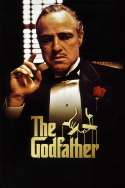
Review of The Godfather (1972) by Dorian A — 05 Jun 2014
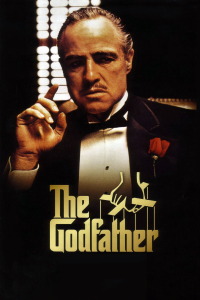
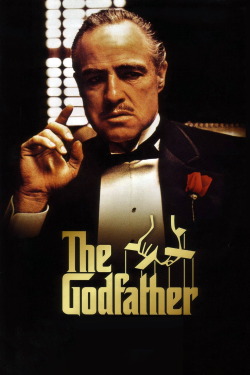
The Godfather. Not much can be said about this film that hasn't already been said, as Francis Ford Coppola's Mafia epic is considered among the greatest movies of all time. So why has this gangster film been deemed a classic among classics? The studio heads held little faith in the film before its release--the gangster genre had fared poorly for years, Coppola's previous works were financial failures, actor Marlon Brando had become a Hollywood recluse and the rest of the cast was unknown at the time. Yet the story, characters, drama and action all came together to produce a masterpiece that became the highest grossing film ever (until the release of Jaws three years later) and won Best Picture at the Oscars. How was this film so wildly successful? Simple answer: it understood why its story needed to be told, and conveyed perfectly the complex emotions of ordinary humans who put themselves in extraordinary places.
The story centers on the Corleone family, whose patriarch Vito (Marlon Brando) is also the head of a notorious New York crime syndicate which reaps the profits of city gambling and offers the services of hit men to paying clients. When passions flare against the rival Tattaglia syndicate, Vito is shot and hospitalized, forcing his sons Santino "Sonny" (James Caan), Fredo (John Cazale), and Michael (Al Pacino) to resolve the families' disputes. Michael, a decorated veteran of World War II, is charged with exacting revenge on the Tattaglia's, and it is here that the true genius of the movie is revealed: Michael becomes a tragic antihero, yet embodies the ordinary dream of a long, peaceful life. Can murder be justified if the victims are hardened criminals, and would it really differ from the killings Michael undoubtedly witnessed during the war? Though this moral question remains unanswered, Michael follows through on his plot, and must face the consequences of his killings even as he tries to abdicate himself of his sin. As a result, he comes to understand himself as he always has, as the good guy caught in a bad situation, and underestimates his capacity for ruthlessness. In Michael, the hypocrisy of humanity is unveiled for the sake of personal and familial survival, so the question is placed upon our shoulders: what would we sacrifice for the good of ourselves and our loved ones? And is the sacrifice worth it?
The film as a whole draws much of its influence from strong Italian and Sicilian traditions running through the Corleone family, from their food and celebrations to the moral code they use to govern their money laundering schemes. In fact, each character in the movie is defined by how he or she (most of the time he) views and values these traditions, and how they reconcile Old World formalities with New World assimilation. The men who request justice through vendettas from their Godfather "believe in America", knowing that their own justice system is generally dependable despite its flaws in dealing with their own particular dilemmas. While the Don is of course a last resort, his clients still use his immense power as an expression of their freedom to choose their destinies, as Vito himself rose from rags to riches in much the same way that his followers aspire to. Vito runs his empire like a monarchy, praising and prioritizing his family while continuing to put them at risk due to his own position. Hypocritically, he wishes for Michael to escape to a civilian lifestyle while he has the chance, yet freely employs Sonny and Fredo under his command and charges them with helping to run the business. The irony of Michael's ascension as the new don is not lost on Vito, who bitterly regrets not realizing why his family was so important to him socially or spiritually when he was so concerned with their material well-being. Michael, who not by coincidence has the most American-sounding name in his family, distances himself at first from the shady dealings of his relatives and dismisses the role of tradition in his conscience, believing it to be too corrupt for his taste. Some combination of war, crooked cops, and Vito's newfound infirmity makes Michael realize that maybe, just maybe, there is no set of morals except those he dictates himself. Ultimately, what makes this film so powerful is its eloquence in pointing this out to everyone in the audience, sympathizing with the faulted figures of the film and not the faults themselves.
Coppola, an Italian-American himself, certainly proved his capable hand at directing with this piece. Beautiful landscape shots, slow suspenseful close-ups, and rapid cause-and-effect contrast shots illuminate the story and drew my attention. Meanwhile, the sepia-toned cinematography was reminiscent of an earlier age of film, reflecting the bygone times portrayed by the plot and characters. The brass-knuckle brass of Nino Rota's score was foreboding and played very well into the moral complexity of each situation, emanating a sense of loose ends being wrapped up wherever the Corleone's make their mark. The editing is solid and ties the direction together, creating a feeling of restraint from hacking the story apart even as it does exactly that. The only flaws I could discern from the film were nit-picking the "blink and you'll miss it" slip-ups like fake punches and what not. All in all, a lot of the behind-the-scenes action built an extremely strong foundation on which to lay an equally powerful drama, so much so that The Godfather is deservedly the standard of modern cinema.
While The Godfather sought merely to emphasize key aspects of Italian culture and introduce them to the American mainstream, it's gone far and beyond its call of duty and has become a pivotal cultural icon in itself. No screen-time is wasted as everything in this movie has a purpose, for better or for worse, a quality sorely lacking in many of today's self-proclaimed blockbusters. Reportedly, the Mafia themselves were flattered by the impact of the film. Even those unfamiliar with the film can recall its extremely memorable dialogue, from "the offer he can't refuse" to "take the cannoli". Is it the greatest film of all time? That's arguable. Is it a great film? That's without question. The Godfather is worth a watch for everyone, exposing and exploring the depths of humanity's weaknesses and the true meaning of its strengths.
This review of The Godfather (1972) was written by Dorian A on 05 Jun 2014.
The Godfather has generally received very positive reviews.
Was this review helpful?