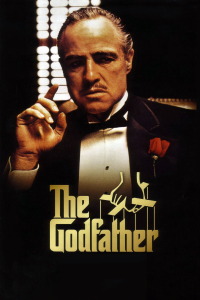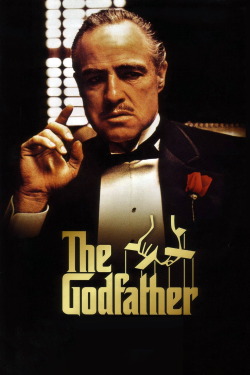
Review of The Godfather (1972) by Mitchell S — 12 Jul 2017
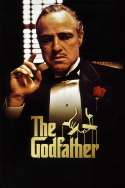
A generational passing of the torch, not just in Brando bowing to the microwave-method acting generation of the 1970s, but also in the loss of innocence of American culture. The pervasive message of the film is that of grand failure - certainly not the patriarchal love story some audiences misinterpreted from the movie. The moment when Brando so subtly laments Michael's descent into amoral leadership is made ever more poignant when he realizes that all of his decisions in life came to fruition in this one nostalgic conversation - personally, a father's pointless apology; symbolically, an epic betrayal of American values. Maybe the first film was too subtle for its own good, which explains the more literal minded Godfather II and III.
It's unthinkable to create a list without including a "classic" screen villain, but I seriously doubt anyone can tell me that there is a protagonist more deviant, more irredeemable and more subtle, than Michael Corleone, played with robotic intensity and ferocious cunning by a young Al Pacino. Sure, he did more theatrical work in Scarface and Dog Day Afternoon, but The Godfather trilogy was his most ambitious acting challenge, solely because he was an antagonist not merely against the opposing mafia families, nor his delinquent brother Freudo, nor even his long-suffering wife. The true "hero" who died at the hands of this heartless antagonist was the boy's own father. Michael Corleone is the antagonist that reflects a wayward son, who buries a respectable family legacy, and who honors his hopeful father in the worst way possible.
This review of The Godfather (1972) was written by Mitchell S on 12 Jul 2017.
The Godfather has generally received very positive reviews.
Was this review helpful?