Review of The Girl on the Train (2016) by Sunil K — 20 Jan 2017
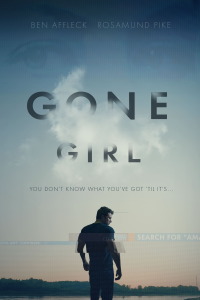
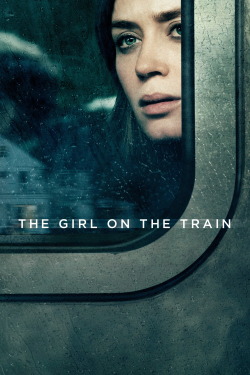
Let's get the obligatory Gone Girl comparison out of the way: the only thing The Girl on the Train has in common with Gone Girl is that they are both about deception. But I feel like the comparisons stop there. The actual book by Paula Hawkins when it initially came out in 2015 was a fun little whodunnit. The idea of someone observing people while commuting on a train and creating fictional stories about them, giving them fairytale style names, and then getting intertwined into a plot of murder coupled with the crisp writing made for an interesting read. I wasn't sure what to expect from the movie. The reviews weren't very good: "An exploitative melodrama," "Tate Taylor is no David Fincher," and "Fails to elevate it's source material," were just some of the things that most of the reviewers said in their reviews. I went in with nominal expectations and came out more impressed than ever. I'll admit the movie is melodramatic, but it was the good type of melodramatic. If you can look past the Gone Girl comparisons, I think you'll find that the movie is impressive from a number of standpoints.
Taylor's adaption of the movie actually explores the themes that were in the book a lot more persuasively, if only because of the compressed format. The themes of jealousy, suspicion and abuse are explored well enough. But at it's core, what the movie really is interested in exploring is the fictional narratives that we create for ourselves, the ones that others create for us and the way in which we perceive them. Rachel maintains the narrative of her having a job by continuing to commute to her place of work each morning. She creates fictional stories about couples in which they live perfect lives. The moment when Rachel discovers that Megan is cheating on her husband with another man, her carefully constructed fiction is broken and her world turns upside down. But later when we see the same scene from Megan's perspective, we see that Rachel misinterpreted the act. Megan is afraid of being alone and her therapist is only just trying to comfort her. Also, Tom deceives Rachel by providing a narrative where she behaves psychotically when she is blanked out, when in actuality it is the other way around.
Furthermore, Anna is dissatisfied with her current status as a mother. She is tired all the time which is the reason why Tom has an affair with Megan in the first place, as he himself admits. When she says to Megan, "There is no job more important than raising a child." You can hear the uncertainty in her voice. But she needs to keep up the narrative of her being happy, even though she really isn't. Apart from this, the running theme of pregnancy felt like it perfectly captured most women basing their self worth on their ability to have and care for children. Megan accidentally drowned her child in the past and is now pregnant again and apparently wants to do a better job this time, Rachel is dissatisfied because she is infertile and the IVF isn't working and she believes that that is the reason the falling apart of her marriage, and Anna is conflicted about having a child in the first place. The themes are given an extra dimension by the constant cycling between the different point of views of the characters and it also gave a sense of fluidity to the narrative.
As usual, a lot from the book has been cut, but the core is still very much intact. The only scene that I wish screenwriter Erin Cressida Wilson would've kept from the book was the scene with Tom and Rachel in the car where he gives her a heartfelt talk about not wanting her around his house anymore. That would've extended Theroux's woefully short role without it feeling extraneous to the story. But still Wilson managed to keep the intrigue going even though I was familiar with the overarching story, and seeing the jigsaw pieces fall into place was still pleasurable. Another reason that added to that pleasure was the cinematography by Charlotte Bruus Christensen. Everything looked so goddamn gorgeous. The pivotal Tom's death scene was shot in such a banal and dreamy way that it happens before you can even begin to process it. In the close ups Chirstensen always places the camera at an angle and it's always slightly wobbling. It's a common practice, but here it fit the state of mind of the characters perfectly. Whenever the camera is on Rachel, it sways from side to side, not in a GTA IV style where it threatens to induce vertigo in you, but in a more subtle way, which conveyed Rachel's dizziness effectively.
And all that camera trickery would be useless if the acting wasn't good, but a chappy lipped Emily Blunt gives an incredibly nuanced performance as Rachel. She was very convincing as someone who couldn't get over the dissolution of her marriage. The scene in the restroom of the bar where she becomes psychotic and starts hysterically describing the things she is going to do to Anna, sent chills down my spine. Haley Benett plays the role of Megan who is someone at once sensual and childlike perfectly. She is afraid of having another child because she's had a bad experience before. We see that experience play a role in the following dialogue exchange between her and Anna: She says to Anna, "Mothers need to go to work, it's actually better for the kid," to which Anna replies, "And how would you know?" Rebecca Ferguson, who hardly made an impression on me when I first saw her in MI5, really stood out to me in the movie. An example of the detailedness of her performance: When Theroux's characters says to Anna, "I thought you two were getting along," Ferguson gives a pause, and then does this thing where she sort of bites her teeth and lets out a "hmm" sound, and then replies, "that's what I thought." The pause and the subsequent gesture say so much using so little. Lastly, the music by Danny Elfman which combined traditional sounds with the synthesized ones, fit every scene perfectly, it was spiritually similar to the score for Gone Girl, but also very different in it's own way. Come to think of it, that's probably an appropriate way of describing the whole movie.
This review of The Girl on the Train (2016) was written by Sunil K on 20 Jan 2017.
The Girl on the Train has generally received mixed reviews.
Was this review helpful?