Review of The Game (1997) by Moviemaniac83 — 22 Apr 2015
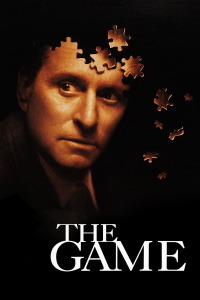
The opening scenes of "The Game'' show Michael Douglas as a rich man in obsessive control of his life. The movie seems to be about how he is reduced to humility and humanity--or maybe that's just a trick on him. The movie is like a control freak's worst nightmare. The Douglas character, named Nicholas Van Orton, is surrounded by employees who are almost paralyzed by his rigid demands on them. "I have an Elizabeth on line three,'' says one secretary, and then a second later adds, "Your wife, sir.'' "I know,'' he says coldly. We have the feeling that if the second secretary had not spoken, he would have replied, "Elizabeth who?'' His underlings are in no-win situations. It is, in fact, his ex-wife; at age 48, Van Orton lives alone in the vast mansion where his father committed suicide at the same age. His birthday evening consists of eating a cheeseburger served on a silver tray and watching CNN.
Of course many of the physical details of what happens to him are implausible or even impossible, but so what? The events are believable in the sense that events can be believed in a nightmare: You can hardly worry about how a horror has been engineered when you're trapped inside it.
"The Game,'' written by John Brancato and Michael Ferris, is David Fincher's first film since "Seven," and projects the same sense of events being controlled by invisible manipulation. This time, though, there's an additional element: Van Orton is being broken down and reassembled like the victim of some cosmic EST program. And it is unclear, to him and to us, whether the Game is on the level of a fraud, or perhaps spinning out of control.
The movie's thriller elements are given an additional gloss by the skill of the technical credits, and the wicked wit of the dialogue. When Van Orton's brother asks, "Don't you think of me anymore?'' he shoots back, "Not since family week at rehab.'' And when his ex-wife asks if he had a nice birthday, he answers, "Does Rose Kennedy have a black dress?'' The film's dark look, its preference for shadows, recalls "Seven'' and also Fincher's "Alien 3." The big screen reveals secrets and details in dark corners; on video, they may disappear into the murk. Like "Seven,'' the plotting is ingenious and intelligent, and although we think we know the arc of the film (egotist is reduced to greater humility and understanding of himself), it doesn't progress in a docile, predictable way; for one thing, there is the real possibility that the Game is not an ego-reduction program, but a death plot.
Douglas is the right actor for the role. He can play smart, he can play cold, and he can play angry. He is also subtle enough that he never arrives at an emotional plateau before the film does, and never overplays the process of his inner change. Indeed, one of the refreshing things about the film is that it stays true to its paranoid vision right up until what seems like the very end--and then beyond it, so that by the time the real ending arrives, it's not the payoff and release as much as a final macabre twist of the knife.
This review of The Game (1997) was written by Moviemaniac83 on 22 Apr 2015.
The Game has generally received very positive reviews.
Was this review helpful?