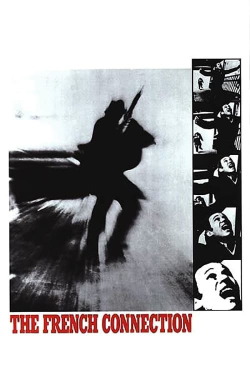
Review of The French Connection (1971) by Terry W — 28 Feb 2010
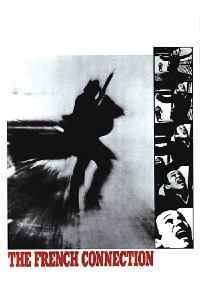
An exciting mix of street humor, intense police procedural and highly dramatic thrills, THE FRENCH CONNECTION is a landmark crime thriller by the young director William Friedkin. Ernest Tidyman's adapted screenplay, which based on the book by Robin Moore, is gritty and in fact broke plenty of new ground that will later becomes a blueprint for future crime thrillers: Jimmy "Popeye" Doyle was a brilliant prototype of a psychotic cop who dedicated to his job only with results even when it means to break the law.
Gene Hackman's no-nonsense portrayal is so highly influential that he is no doubt deservedly won the Best Actor Oscar. The rest of the cast are equally captivating, with Fernando Rey's slick villainous turn.
Director William Friedkin, who has a substantial background as a documentarian, served him well on helming a startlingly realistic crime picture that is truly dramatic from the minute one. No single shots are flawed, as every frame are tightly framed to sheer perfection.
Owen Roizman's cinematography for the seedy New York City is perfectly lensed with such genuine flair. Don Ellis's music score is similarly intense, upped the dramatic moments whenever the heat is up.
Completing the whole riveting experience is of course the groundbreaking, hair-raising car chase sequence that says it all. The scene begins with Pierre positioned himself as a sniper during the day when Popeye is walking along the blocks.
Pierre squeezes off a shot at Popeye from the rooftop of a building, only to be accidentally killed off a female passerby. Popeye reacts fast enough to withdraw his pistol and pursues the killer to the top of a building.
He spots no one there except for the sniper rifle and a couple of ammo left on the ground. The killer has apparently flees out of the building, prompting Popeye to run down quickly and pursues him as fast as he can across the street.
The killer made his way up the staircase to the subway station and eventually into the train. Popeye tries to halt the killer by aiming his pistol but to no avail. Not willing to give up, Popeye proceed on overtaking a civilian car and races wildly through the busy streets, attempting to overtake the train.
Meanwhile, the killer hurried to the front side of the train and forced the motorman not to stop or he'll blow his head off. On the ground, Popeye keeps his eye close at the elevated bridge as the train is moving.
During the high-speed pursuit, he accidentally knocked over garbage cans and newsstands as well as narrowly misses a few pedestrians and careens off cars. Back on the train, the killer kills a transit cop who comes to the rescue.
The motorman collapsed in terror after suffered a panic attack and the train goes out of control. The train crashed face to face against the incoming train and halts to a stop. Popeye quickly pulls over and jumps out as he finds the killer leaps out from the train.
Popeye carefully trained his eyes on which direction the killer is heading. By the time the killer reaches at the staircase, Popeye has already warned him with his pistol. But the killer refuses and tries to get away, thus forcing Popeye to shoot him in the back.
The killer collapsed and rolled down the staircase to his death. What a rousing and timeless excitement that remains unsurpassed till now that definitely rivalled the landmark car chase scene eariler in BULLITT (1968).
The chase scene was brilliantly shot from Popeye's car with cameras mounted in the back seat and on the front fenders and coupled with Jerry Greenberg's tight editing so Friedkin is able to capture "you-are-there" kind of adrenalin rush.
A definite must-see.
This review of The French Connection (1971) was written by Terry W on 28 Feb 2010.
The French Connection has generally received very positive reviews.
Was this review helpful?