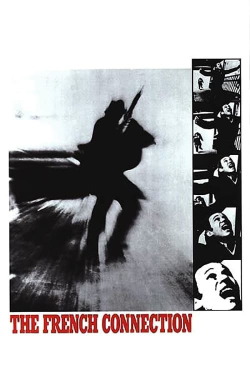
Review of The French Connection (1971) by Spangle — 01 Jul 2017
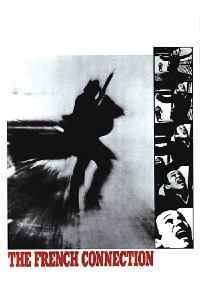
Between The French Connection and The Exorcist, the early 1970s were clearly William Friedkin's high-point in his long career. While he made many good films outside of those two, none really reached the heights of either in the minds of critics and audiences alike. In finally watching The French Connection, it is not hard to see why it has been often cited as one of the best American films ever made. Set in New York City, the film shows two morally iffy narcotics detectives stumble upon a drug ring that has ties to a dealer in Marseille, France. Going off of hunches and some neighborhood crackdowns, the two men will do whatever it takes to bring down these dealers, even if it means losing themselves in the process. With intense chase scenes, great characters, and a thrilling realization of a true story, William Friedkin's The French Connection certainly lives up to the hype.
Time-after-time, The French Connection is absolutely mind boggling. Taking the voyeurism of Alfred Hitchcock's Vertigo and adding it to the thrill of a foot or car chase, The French Connection is the film equivalent of a testosterone-laced speedball. One needs to look no further than Gene Hackman as Detective Jimmy Doyle chasing a train in his car from underneath the tracks for why this film is so deeply masculine. A thrilling chase, it is as great as it is insane to watch unfold with Doyle putting one eye on the train above - which has a burgeoning hostage situation to add to the tension ten-fold - and the other on the road where he plays bumper cars with civilians. In addition to this car chase, there are numerous scenes of Doyle following a potential perpetrator where the game of cat-and-mouse really takes hold, especially with Alain Charnier (Fernando Rey). Ducking and weaving around a subway station with Charnier fully aware that Doyle is there, the two have one hell of a battle of the minds as they try to stay one step ahead of one another at all times. By now, The French Connection has become revered for its chase sequences and, honestly, it is not hard to imagine why. The plot is compelling, the characters are strong, and the chases give audiences that "heart in the throat" feeling that many films aim for, but fall woefully short of achieving.
Perhaps one of The French Connection's greatest accomplishments is showing both the similarities and the differences between cops and criminals. For the former, in the pursuit of justice, cops often compromise themselves and their morals to catch a criminal. Both Detective Doyle and his partner Detective Buddy Russo (Roy Scheider) rough up black people in the streets, shake down clubs, beat people up, and shoot first without bothering to ask questions. They are both brutal men who take the challenge of finding a criminal as a question of their masculinity. As a result, they spare no expense in ensuring that their pursuit is successful, no mater where it leads them. This is perhaps never clearer than when they strip the car without cause, going purely off of Doyle's hunch that drugs are in the car. Regardless of whether he is right or not, it is unquestionably a morally gray action that shows how willingness to cut corners to get to justice.
The latter, however, is perhaps the most interesting bit. With the cops being the ones in pursuit, they can never rest, out of fear that their target will slip away. The criminals, however, just toy with the cops and go about their daily lives with hardly a care in the world. This is perhaps best portrayed in a single scene of the film. With Doyle and Russo waiting outside in the cold looking through at Charnier and company in a restaurant, Friedkin brilliantly juxtaposes the actions of the cops with those of the criminals. Outside, the cops are freezing, eating cheap food from a stand, and drinking awful coffee that Doyle throws out on the street. Inside, the the criminals eat in a Michelin-rated restaurant with perfectly cooked food and piping hot coffee served at the table. In this juxtaposition, Friedkin shows the difference in the lifestyle of those pursuing justice and those avoiding justice. The cops slave away as the criminals put their feet and relax. Though crime may not pay, it is clear in the film that it is certainly not a bad lifestyle while it lasts.
A thrillingly complex web of constantly moving parts, The French Connection's plot is just as brilliant as its chase sequences. With the film being a dense puzzle waiting to be unlocked, Friedkin's great achievement here is lacing the picture with an overwhelming sense of doubt. With Doyle shown to be a loose cannon who is willing to cut corners, Friedkin establishes him as a bit of an unreliable narrator. Though we do know the Frenchmen are up to no good and orchestrating a deal to bring drugs, Friedkin leaves it up in the air as to whether or not Doyle is actually following the right leads or not.
This review of The French Connection (1971) was written by Spangle on 01 Jul 2017.
The French Connection has generally received very positive reviews.
Was this review helpful?