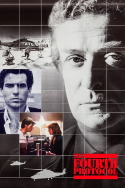
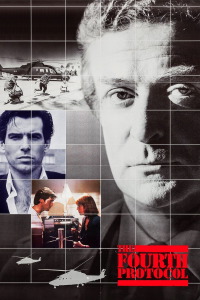
Review of The Fourth Protocol (1987) by Spangle — 09 Jun 2017
Most war films are focused upon the horror of war as it is experienced in the battlefield. The accidental killing of civilians, friendly fire, and the terror facing the enemy are all well-trodden territory and Oliver Stone's Born on the Fourth of July portrays them through the eye of Ron Kovic (Tom Cruise). However, what separates this film from other war pictures is that it quickly moves away from those horrors. As hinted in the film's nostalgic and sentimental 1950s America first act, this is not a film about the carnage of war as it relates to the carnage itself. Rather, it is a film about what that carnage does to a person's mind, their body, and their spirit. How one encounter with the enemy can damage them for the rest of their life and alienate them from the world that one embraced them so eagerly. Born on the Fourth of July is a film about the things that many wish to overlook as being facts of war and the fact of fighting on behalf of one's country. This is a film about the dirty details that are inconvenient regardless of the side you are on.
Ron Kovic, a real man who wrote the book upon which the film is based, is a paraplegic from the chest down. Unable to walk or have sex, he feels like he is not a man anymore. Worse, he killed one of his own men in Vietnam and was partially responsible for the death of babies while there. In the hospital, he is greatly mistreated with nurses fighting him, threatening him with amputation, and telling him his sacrifice was worthless. Doctors never see him, all because they are overloaded due to demand with no budget whatsoever. At home, he is alienated from his family as they struggle to adjust to his paralysis and as he struggles to acclimate back into life at home. Drowning his sorrows in alcohol and prostitutes while feeling ostracized from anti-war protesters who hate what he represents and pro-war folks who hate that he is a reminder of the human cost of war, Ron Kovic is a truly tragic figure throughout the entire film. His tale is a moving and powerful one that calls to attention the one element we always forget: our veterans.
As an anti-war person myself, it is easy to see why veterans in America have been forgotten. As Ron figures out, nobody wants him. Too often anti-war protests turn against those who fought instead of focusing on the true source of evil: the government that corrupted those boys and girls minds and convinced them that this was worth their life. On the other side, the pro-war folks ignore the veterans equally as much as they are a reminder of the fact that war kills, maims, and damages completely. Politically, this winds up being the democrats who do not support veterans out of fear of seeing too pro-war to their base and republicans who do not support veterans because, well, they should be able to pay their own way and not rely on handouts (in essence, passing the buck so they do not need to think about them). The only ones who get hurt by this are veterans. It is tragic to see this film come out in 1989 and, yet, we are still here in 2017 wondering why the VA is awful and why we let so many veterans become homeless and unemployed.
In portraying this character, Cruise approaches it with great sensitivity. Perhaps, his turn as Ron Kovic is the most nuanced performance he has given in his career. Deftly portraying him as an unquestioned patriot before the war to a man who slowly realizes he was fed lies all these years, Cruise's depiction is heart breaking and entirely moving. Alongside him, however, both Raymond J. Barry and Caroline Kava give terrific performances as his parents. Both lost and confused about how to handle their son after the war, the two try their best. Eli (Barry) acts like a father and builds Ron everything he needs. He tries to essentially rebuild his son, which he knows to be futile, but he tries anyways. Patricia (Kava) struggles more openly, especially when Ron's anger and PTSD gets into full swing and he lashes out at everybody around him. For her, her son died in Vietnam and the man that came back in his place is a cruel and mean impostor. It is a nearly impossible mental hurdle to overcome and Kava's raw performance embodies just how challenging it is to see somebody you love be so impacted by something you wish you could fix immediately for them.
This review of The Fourth Protocol (1987) was written by Spangle on 09 Jun 2017.
The Fourth Protocol has generally received positive reviews.
Was this review helpful?