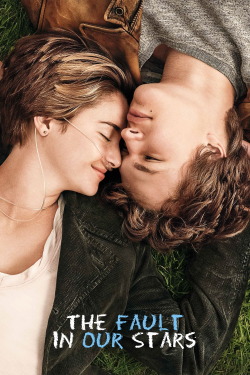
Review of The Fault in Our Stars (2014) by Dom V — 23 May 2017
Barely a fault in this star-crossed love.
Not your typical Romeo and Juliet, but a shining modern day take on the love story, writes Dominic Vu.
The age-old trope of star-crossed lovers can be traced all the way back to Orpheus and Eurydice of ancient Greek, but has been popularised throughout generations through stories such as Romeo & Juliet, and The Great Gatsby. But after all this time, do the stories of star-crossed lovers still resonate with modern day audiences?
The answer is a resounding yes. This is evidenced in Josh Boone's splendid adaptation of John Greens acclaimed novel, The Fault in Our Stars. With consultation from Green, Boone, fresh off his 2013 first film Stuck in Love nails his breakout directorial role.
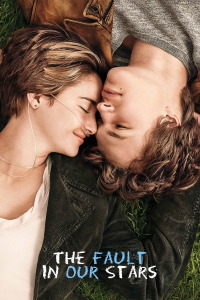
The Fault in Our Stars revolves around Hazel Grace Lancaster (Shailene Woodley), a witty and pessimistic 17 year old girl who has terminal thyroid cancer. Her mother (Laura Dern) decides that Hazel is depressed as "depression is a side effect of cancer". Despite the fact that Hazel thinks "depression is a side effect of dying," she agrees to attend a cancer support group to please her parents. There she meets the charming "self-aggrandizing bastard" that is Augustus Waters (Ansel Elgort). This is where their story as star-crossed lovers begins. Although the story is a social commentary on the impact of cancer on individuals and their families, it is foremost a story of love. It is not a cancer story, the characters just happen to have cancer.
Woodley shines as the mocking and cynical Hazel. Her depiction of Hazel's ill physicality through her laboured breathing, nasal cannulas, and portable oxygen tank (which she calls Phillip in the novel) all leave an impression as if Woodley is suffering herself. More impressive though is her perfect portrayal of Hazel's personality and good-hearted nature, which is done through her outstanding delivery of Green's dialogue where she balances wittiness and sarcasm beautifully.
This is exemplified with Hazel and Augustus's first conversation. When Augustus proceeds to put a cigarette in his mouth, Hazel goes on a rant about hamartia's. What 17 year old uses hamartia in everyday conversation? Not only does this discussion display Hazel's personality but it also demonstrates humour in the film.
In fact, most of the humour comes from the sick characters suggesting a powerful message that even in bleak circumstances humour should persist. This is in line with Green's purpose of normalising cancer kids.
The attraction with film adaptations is that the places that you visualise turn into reality. While in some cases this can be disappointing, Boone has adapted Green's descriptions superbly. For instance, the hospital feels cold and bleak, representing Hazel's viewpoint. This has been done with the use of dull colours (white and beige) and an unfocused camera shot.
Boone must be praised for not only for his accurate depictions of the settings, but for the excellent way in which he captures the overall narrative and essence of the story. Granted, omissions have been made, however Boone makes such omissions for the purpose of the time restraints. He breaks the story down and then reassembles it, cutting the reasonably non-important parts. The result is a feature length film that is not overstuffed yet still portrays the core of The Fault in Our Stars.
His craftsmanship is especially evident with the scene in the Anne Frank house where Hazel struggles to climb the stairs and ladders which finally ends in Hazel and Augustus kissing for the first time. This encapsulates their love, hope, and struggles just like Green intended and is presented beautifully on the screen.
In the scene, a soft but tense instrumental underscore done by Mike Mogis and Nathaniel Walcott gradually gets louder and more hopeful as Hazel reaches the top with background narration of Anne Frank talking about hope. The changes between low and high camera angels, and close ups of Hazel are all done purposefully. The cinematography and sound all come together to build Hazel and Augustus's first kiss. Not only did the people in the film applaud, but so did people in the cinema. Truly, Boone must be praised for this.
Despite this, I have an issue with one of Boone's plot omissions. Although a background character, Augustus's first cancer girlfriend Caroline Mathers, who is "no longer suffering from personhood" is excluded from the film. By the end of her life Caroline became a cruel and unfriendly person, supposedly because of her brain tumour. This is important as it demonstrates the other side of cancer patients; the awful and hostile side which we for the most part do not see with the other characters.
Although I take issue with this exclusion, I also understand why Boone has done so. There was simply not enough time in the movie to explore her, and by doing so the movie risks becoming overstuffed or lengthy. Boone eschews Caroline to fully capture the story's theme of love. Her omission makes the film more streamlined and focused on the relationship between Hazel and Augustus, which is the paramount purpose of the story.
This however leads to another issue.
By focusing on the love aspect, Boone sacrifices fully exploring the other themes and Green's ideas of death and existentialism. Yes, these themes are in the film, however they take a back seat. Still, their romance is done so well and believably that I can forgive Boone for these sacrifices if by not doing so it meant lessening the emotional impact that their love story had.
Boone can also be forgiven for the lack of themes as the ones which he does include, are represented exceptionally in their few scenes. For instance, despite the depressing story, hope is conveyed throughout the film. This is especially seen in the outstandingly done final scene. In the novel, Hazel reads a eulogy for her written by Augustus and remarks "I do... I do," which is symbolic of hope, optimism, and marriage. Boone's construction of this scene slightly deviates from the novel, but none the less encapsulates the theme of hope. In the film, Augustus's narration is used to read the eulogy instead of Hazel. Also, instead of remarking "I do... I do," Hazel remarks "ok," a lovely call back and a nice way to bookmark the film. In compromise to the themes of marriage, Hazel is wearing a white dress. The scene, scored with beautifully hopeful music plays out with a mid-shot of Hazel lying in the grass, gazing at the starry sky before crossing her arms in an 'X' and closing her eyes to call back to the start of the film. The mise-en-scene evokes the iconic star-crossed lover Juliet. Although the theme of love is prominent in the scene, the story's theme of hope is also foregrounded exceptionally by Boone.
The Fault in Our Stars could have easily been a cheesy love story or an overdramatic, depressing cancer story. Instead it is both, and yet neither of those things. At its core both Boone's film and Green's novel are love stories of people who just happen to have cancer. They may tragically not end up together, but their journey together filled with laughter, hope, and romance is well worth your time.
There is no doubt in my mind - Augustus and Hazel are this generation's definitive star-crossed lovers.
This review of The Fault in Our Stars (2014) was written by Dom V on 23 May 2017.
The Fault in Our Stars has generally received very positive reviews.
Was this review helpful?