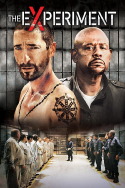
Review of The Experiment (2010) by Lamar W — 16 May 2013
As If the Original Wasn't Sensational Enough.
I think I first read about the Stanford Prison Experiment in high school, which was when I took my first psychology class. I also read some, though far from all, of a book on the subject, I don't know, some time in the last five years. Dr. Philip Zimbardo finally wrote a book just five years ago detailing his end of things, and it was too difficult for me to get through. It's a really uncomfortable story, and I can't quite absolve Zimbardo of the blame as I'm sure he'd like me to. After all, he saw what was happening, and it took him six days to call the experiment to a halt. I've read some other criticisms of it as well, though this does appear to be the most salient criticism of Zimbardo himself. However, among its many other failings, this film essentially implies that no one was actually watching the experiment take place, which was never true of the real thing.
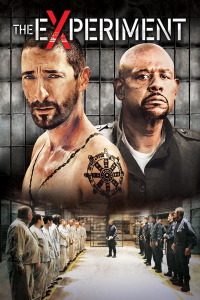
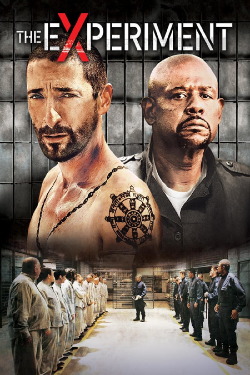
A group of men are being offered a thousand dollars a day for a two-week experiment. They will be completely out of contact with everyone, and they will not be able to leave for the duration without forfeiting their money. They are also not allowed to have their own prison record or bring anything from the outside world with them. When they arrive at the building in the middle of nowhere, they discover a fake prison has been set up. Some of them, including Barris (Forest Whitaker), will be guards. The rest, including Travis (Adrien Brody), will be prisoners. In the movie, the purpose of the experiment is never really defined; Archaleta (Fisher Stevens) is essentially a phantom and only seems to appear at the beginning and in flashback. It quickly becomes apparent that being in charge has put the "guards" on a power trip. At first, the prisoners take the whole thing as a joke, but it rapidly becomes serious. The biggest conflict is between Barris and Travis, despite the fact that they'd hit it off before the experiment began.
I found quite a lot of the movie unnecessary and detracting from the real point. When Barris first exercises power over the "prisoners," we get a closeup on the bulging front of his pants. I mean, I ask you. I'm not saying it's impossible that the men would get off on power. Shocking but true; it's a thing that happens. Indeed, one of the criticisms I've read is that Zimbardo didn't do a good enough job at weeding out people already predisposed toward sadism when selecting his guards. However, we have no reason to believe that of Barris. He seems at first like a nice guy, someone who would be on Travis's side even if he is assigned as a guard. However, it seems to take him less than a day to turn from a guy who is just trying to make rent while his mother is in the hospital to a man getting off on non-sexual sadism. And even if we had the need to see that, there are better ways of making it clear.
Part of the problem is that they didn't make it a period piece. It's quite clearly modern. Ties to the government or not, no one in the US would be able to recreate the experiment today. They'd never get it past the ethics board of whatever agency was trying. Ethics committees on human experimentation are fairly strict, after all. What's more, I've always believed that certain aspects of the experiment were worsened by when and where it was conducted. Stanford in 1971 wasn't exactly Berkeley in 1969, but it was awfully close. Remember, in the original experiment, the prisoners staged a full-on revolt on the second day. 1971 was a time of great conflict, and the original experiment was made up of nothing but college students. I don't even think any of them were "returning students"--meaning people who had left college for a while for whatever reason or simply not gone right out of high school. These were young men in a specific time, and I'm not sure how universal the experiment can be deemed to be. And adjusted for inflation, they only got about $85 a day!
A very good movie could be made about what actually happened in the basement of the Stanford psychology building from 14 to 20 August of 1971. This, despite the presence of two Oscar-winning actors, isn't it. Every moment that started to add some depth to the film was lightened almost immediately. In some places, it seemed that the director, Paul Scheuring, was more interested in experimenting with cameras than people. I mean, are we supposed to believe that the experiment wouldn't be stopped when Benjy (Ethan Cohn) was going into insulin shock? In the real experiment, a man showing signs of severe emotional disturbance was removed. And when Nix (Clifton Collins, Jr.) is revealed to have lied about his prison record? And when the "no violence" rule on the part of the guards is broken? I almost expected the reveal to be that no one was monitoring those cameras. It would make more sense than any other explanation, and it still doesn't make sense.
This review of The Experiment (2010) was written by Lamar W on 16 May 2013.
The Experiment has generally received positive reviews.
Was this review helpful?