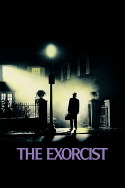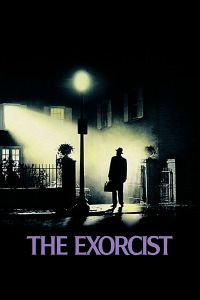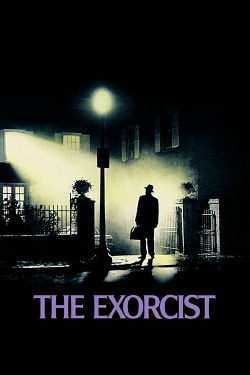
Review of The Exorcist (1973) by Cameron J — 21 Oct 2013
Dark forces are near, and who better to "duel with the devil living in your mind" than Neal Morse-I mean, Jesus Christ himself? The "duel with the devil" bit was a reference to a Transatlantic song, so that's how I got on Neal Morse, who, in all honesty, is such a big Christian that he might very well be able to rock the Devil away. Well, unfortunately, he's one of your better "modern" musicians, and was therefore not working back in 1973, thus, I place my investment back into Max von Sydow, who I'd imagine must be pretty excited about finally getting a break from those blasted chess games with Death and moving on up to the big red guy himself. Oh, well, it figures that he would just end up facing off against some girl possessed by Satan, which isn't to say that isn't well-experienced enough for the challenge, because in "The Greatest Story Ever Told", he had to deal with some serious face boo-boos... and was Jesus... you know, if that's a big deal when it comes to a duel with Satan. Nah, I guess the face boo-boos experience is a bigger asset in this battle, because just when you thought that a teenager's complexion couldn't get any worse, stuff like this has to happen... and just after Christmas no less. Jeez, I don't know what's wrong with horror film marketers that they have to release material this disturbing just in time for the holidays, but hey, if the filmmakers really were trying to hit the Oscar season right at its peak, I'd say that their questionable efforts paid off, because this thing got quite a bit of Oscar attention, and it also swept the Golden Globes, which is even better, at least nowadays. Oh, the Oscars have lost their credibility so much over the years, but at least they had it right when they called this classic thriller good, which isn't to say that there aren't some scars to this effort, as well as Linda Blair's face.
To a certain degree, this film's story was always to be held back, because even though there's a good bit of dramatic meat, as well as other weighty elements, this story concept has a certain minimalism to it, particularly when it comes to characterization, or at least that's the case with William Peter Blatty's script. No matter how much this film meditates on its characters, there's something undercooked about Blatty's characterization, to where you end up with characters who are not simply a touch distancing, but underdeveloped, which isn't to say that this film doesn't find things to occupy time that it could have dedicated to exposition. As much as I complain about this film's natural shortcomings, minimalism might not be all that big of a big deal in concept, it's just that it seems that way when you look at the interpretation of the story concept, because at 122 minutes, or, in the case of the director's cut, a pretty hefty 133 minutes, this film's length carries on longer than it should, being achieved partly, if not largely by draggy, excess material and filler that drag plotting out, until it falls to a state of repetition, if not aimlessness. It's a while before anything happens in this very meditative dramatic thriller, though there are only so many points in this film that have well-realized focus, and when things drag out, they tend to limp out, and that's problematic enough on paper, without questionable atmospheric contributions by director William Friedkin. Needless to say, Friedkin's very atmospheric approach to this film works wonders at times, but as you can imagine, it's not long before material to play up effectively runs out, and when those moments come in, the film really slows down, leaving atmosphere to dry up as bland, maybe even - dare I say - dull, and decidedly reflective of the pacing problems that really undercut the final product. Really, there aren't a whole lot of problems with this film, and I'm kind of pleasantly surprised to see that, but problems still stand, and they're firm, dragging the narrative along as kind of unfocused, if not distancing, enough so for potential to ultimately go unrealized, at least wholly (Tee-hee, "holy"). Nonetheless, the film rewards, placing some challenges before you, even if you're willing to run with the infamous intensity, but still keeping you engaged, even in concept.
I complain about certain natural shortcomings, and I can go on a while complaining about shortcomings in the interpretation of this story concept, whose bigger problems, funnily enough, include stuff going on a while, but what makes this film such a hit is not simply the visceral scares, but the strong story, backed by an intelligent mythology, as well as audaciously disturbing subject matter, brought to life by many an aspect, even technical and aesthetic ones. The infamous special effects have become a little dated throughout these past couple of decades, but they remain quite impressive, with an adequate convincingness and disturbing effectiveness to their creative designs that compliment chilling imagery, as surely as a soundtrack featuring minimalist classical compositions, Mike Oldfield's "Tubular Bells" and a couple original touches by Jack Nitzsche compliments the film's chilling tone through a brooding tastefulness and atmosphere. The film is technically and stylistically proficient in a way that's not simply aesthetically commendable, but breathes some life into the telling of this tale, which wouldn't be told as well as it is without strong characters, who in turn wouldn't be sold as well as they are without strong performances. Like I said, there are some characterization issues, and they would make the characters who are pretty prominent in this very dramatic horror opus fairly distancing were it not for inspired onscreen portrayals, which are found across the board, but are particularly inspired within leading ladies Linda Blair - who is layered and chillingly convincing as an innocent girl, cursed by unparalleled evil - and Ellen Burstyn, who convinces as a loving, terrified mother who suffers fear for her loved ones and herself as evil rears it ugly head into a humble life. The film may have a lot of tension and whatnot as a horror film, but there's also plenty of dramatic weight to this opus, and much of it goes brought to life by the performances, which still cannot carry tonal depth enough to make this meditative film truly rewarding, thus leaving William Friedkin's offscreen performance in charge of really bringing things to life. My parents still tell me about this film's initial theatrical run in the '70s, with my mother saying that she did not actually see the film until later, but claiming that a local theater went so far as to install "crying rooms" for moviegoers (I'm dubious, but you get the point), while my father remembers seeing folks weep, hide and vomit, and forcing his date to stay in the theater because he had to wait, like, an hour in line and pay for the tickets himself after driving all the way from Arab to Huntsville to see the blasted thing in the first place (Not Arab as in the Middle East; that part of Alabama isn't quite that... culturally modern), so this effort isn't quite as scary as it used to be, but it hasn't dated so much that you can't greatly appreciate what Friedkin pulls off as director, for although Friedkin's meditativeness dulls things down when material really thins out, when tension picks up, backed by an audacious attention to haunting imagery, the meditativeness soaks up, not only dramatic resonance, but chills that range from unnerving to genuinely scary. As novelty, the film isn't quite what it used to be, but it will never fully lose its effectiveness, and it will certainly never fully lose its compellingness, because in spite of its flaws, the film remains inspired enough to consistently engage as a classic horror-drama.
When the deed is done, what natural shortcomings there are go emphasized enough by underdevelopment, dragging and atmospheric cold spells for the film to meander along, until finally collapsing short of its potential, but not so short that strong elements to the worthy story concept, brought to life by anything from effective technical value and score work, to strong performances and tensely atmospheric storytelling, William Friedkin's "The Exorcist" compels as a flawed, but gripping dramatic thriller.
3/5 - Good.
This review of The Exorcist (1973) was written by Cameron J on 21 Oct 2013.
The Exorcist has generally received very positive reviews.
Was this review helpful?