Review of The Executioner's Song (1982) by Edith N — 07 Oct 2010
The Real Horror of the '70s--Burnt Orange.
I have kind of a hard time looking at Tommy Lee Jones as a character sometimes, because I know too much about Tommy Lee Jones the man. Like I know, when I get around to [i]Unaccompanied Minors[/i] (probably come Christmas), one of my problems with it will be that it's Dyllan, and I was at his parents' wedding and his mother's baby shower. Indeed, I remember his grandmother's celebration that his father was no longer a teenager. So. The point here is that, while watching this, I could not but flash back to the 2000 Democratic National Convention. Tommy Lee Jones stood there, telling us the story about the time he and his roommate, and his roommate's girlfriend, roasted their Thanksgiving turkey in the fireplace of their Harvard dorm room. This was relevant because said roommate and said roommate's girlfriend were Al and Tipper Gore. The Democrats clearly felt that, if you can get Tommy Lee Jones to introduce your candidate and tell charming, folksy stories, have at.
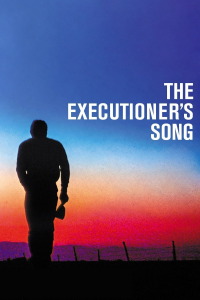
Here, Jones is Gary Gilmore. Gilmore is a cheap hood. He served twelve years for robbery. His cousin, Brenda (Christine Lahti), has agreed to have him brought to Utah to stay with her and look for work. She gets him work with Uncle Vern Damico (Eli Wallach), who runs a shoe repair shop. Only he's no good at that, and he's no good at living in the world Outside. Arguably, he's just generally no good. And then he hooks up with Nicole Baker (Rosanna Arquette), who is young and kind of trashy. Or, you know, really trashy. She has two children already at the age of nineteen. She's already widowed; she speaks at one point of a second marriage. She and Gary have a stormy relationship. Gilmore doesn't know how to get by, and he ends up murdering a couple of people for no reason during robberies. The last of the movie concerns Gary's execution, the first one after the Supreme Court reversed its ban. Gilmore just gave up, you see, and didn't want to live anymore.
The colour palette of the '70s really started to bother me about the whole thing. Especially in contrast with the wild patterns and designs. Yes, there is incredible paisley, but it was also the era of avocado appliances. We just moved out of an apartment with the original stove (the complex was built in '79, I believe), and it was an unpleasant shade of mustard. Chocolate brown was also popular. I guess they were in theory earth tones, but they were unnatural ones. Even avocados don't really come in avocado. I think the difference is a richness in colour. These were just flat. Not dull, quite, but bleak. Of course, the whole thing is intended to be bleak. Gary Gilmore's life basically was. (And in my head, I keep getting him confused with Gary Ridgway, the Green River Killer here in Washington.) On the other hand, I have at least one picture from my parents' honeymoon, surely intended to be a joyous event, which is also pretty bleak.
A woman in seminar with me in college once weepily confessed to us that she had thrown around the phrase "poor white trash," and it was an unfair generalization, and so forth. And I certainly don't want to imply that all poor people are somehow trashy. Indeed, I think the major distinction between Gary and Brenda is that she isn't trash and can't be made to be. Not to mention that, let's face it, I am both poor and white myself. And I don't know if the real Nicole Baker was quite so skanky as the one portrayed here. However, in many ways, the Nicole Baker of the movie was the epitome of white trash. Given the ages of her children, she must have had the first one at maybe fifteen. She wears tiny little shorts and tiny little tops, and she got a tattoo--and this in 1976, when it wasn't so fashionable and common as it is today. Frankly, making Gary jealous by kissing that friend the way she did transcends class, but the way she talks and acts and thinks is pretty poor-white-trashy.
I didn't pay much attention to most of the movie. I knew the vague outlines of the story, knew that Gary would spiral into the desperation and misery with which the story ends. I hadn't realized how fast it all was, though. Gary Gilmore was released from prison and went to Provo in April of '76. He was executed in January of '77. Not even a year. There's a strong argument that our current criminal justice system breeds more criminals than it rehabilitates, and it's not a bad argument. However, it's worth noting that the men Gary Gilmore killed didn't resist him. They got him what they wanted. They could have reasonably expected to live. Under the control of nearly any other robber, they probably would have. It's implied that prison changed Gary Gilmore, and I have no doubt that it did. Anyone unchanged by prison must have been in a coma while they were there. However, I think there must have been something wrong in Gary Gilmore to begin with that the whole thing happened so fast.
This review of The Executioner's Song (1982) was written by Edith N on 07 Oct 2010.
The Executioner's Song has generally received positive reviews.
Was this review helpful?