Review of The English Patient (1996) by Karl W — 11 Aug 2009
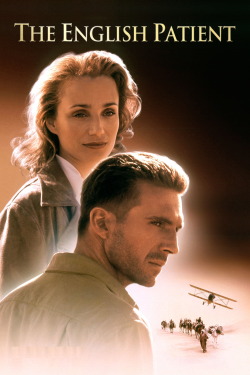
'you cannot kill me, I died years ago' this is what count laszlo de almasy, played by ralph fiennes, says to willem dafoe who was contemplating assasinating him based on his own encounters during world war 2. the english patient is count laszlo de almasy, an hungarian, whose body has been damaged beyond repair after his plane is shot down by germans. he is now an invalid who cannot remember anything and is taken in by a nurse( with her own emotional needs), played by juliette binoche, who tends to him in an abandoned villa in Italy. the war is nearing a close but there are those who will have to come to terms with the emotional wounds that the war has brought on them. the other two central characters are kip, a sikh, played by naveen andrews, and david caravaggio, an agent for the british government during the war, played by Willem dafoe. the film however centres around the romance of Count laszlo and Katherine, played by kristin scott thomas and as events unfold we will be able to discover why count laszlo says he died years ago.
This romance is based primarily on the recollection of the english patient who has trouble remembering his past. we sense that as a man he has been touched by joy because he makes clever quips to get us laughing but as the film progresses and he begins to remember his doomed romance with katherine the jokes are less frequent and he is very reflective and we sense that the hurt is coming back. as the major romance in the film is centred around his recollections we are only allowed to see why he loved katherine. katherine's perspective as to why she loves him is only revealed in two scenes: during their erotic but romantic encounter in the bath tub and when she scrolls through the clippings in his book. this is where kristin-scott thomas's performance is good to watch for she has to play katherine in a way where you get to understand why the english patient fell in love with her in the first place and why, in the beginning, he is such a jovial person and refers to her as his wife. the vivaciousness of her character is one of the major imprints of the film especially when we are constantly reminded throughout of the patients burnt body and the circumstances that led to his condition. the scene between these two characters during a sandstorm is classic romanticism.
This film is an mnemonic enterprise for we get to see, through the many layers employed, how our memories define us i.e what we recollect in life. there are times when a person does things that he is not aware of but it was because of some imprint that was made; it could be when the person was a child or only a couple of years ago as is the case here. when you watch the memory unfold it is obvious that katherine had a great influence on this man. the film also tries and make the transition from present day to reality as fluid as possible as you will see in some great one and one moments between the patient and hana, the nurse played by juliette binoche. when you watch it pay attention to the scenes where hana reads to him from his sole possession, a copy of herodotus, and katherine's final letter. these are moments of great beauty: one is where as hana reads from his book he is reminded of katherine citing the very same story when she is called upon during a game of spin the bottle. the other is at the end and this scene is more dramatic as hana recites the letter katherine wrote just before she died. we get to learn why the count is truly dead as the fire is gone.
As a result of the films approach the structure is very poetic in nature and does not seem very grounded at times. there are moments of silence where characters basically standstill or move in a suggestive manner with the hope that you grasp the meaning.there is a scene where katherine and the patient are dancing and her tongue is quieted by his intense gaze; as they dance in silence we are to understand that the emotion of love is taking centre stage (so shut up katherine). the poetic nature is conveyed through images such as desert landscapes, as the romance began on a expedition to seek out the cave of swimmers somewhere in north africa. it is a very isolated place, as one would expect for these people, as they are out of their customary european element, which is why the scene during the sandstorm works romantically also the scene where they make love during the heat at a christmas party and during a discussion at the counts apartment where katherine says she feels like a different wife. these are people that have never come to terms with the environment around them for katherine's husband, played by colin firth, seems very much at home in north africa. the environment is designed in a way to make them cling to one another and in their isolation their love will shine even brighter. therefore when or if you view this film you should take note of the final scene that takes place in the cave of swimmers and you will realise by the end, if you are keen enough, that they were probably the last two people of the expedition to grace that cave as most of their contemporaries have disappeared due to death and other reasons and this makes their separation even more dramatic. the tone of the memories is very consistent during the film as it is designed to convey this isolation. the wonderful score also helps to paint the atmosphere as all great musical scores should do.there is a certain theme that cannot be missed if you listen carefully and you will hear that theme in its high dramatic moments of revelation and in the tender moments which suggest that the love is brooding, just waiting to be released. it was well done in helping to paint the atmosphere and heighten the emotion.
It is this isolation which makes this film piercing and in the the villa we accept that the emotional wounds of these characters occurred when they were so far from home. the scene where Caravaggio and hana first meet he has to remind her that he lives a couple blocks down from her in montreal and so makes both these characters plausible. why I say this is because the events surounding the english patient and katherine are based on real events for there was an actual exploration to seek the cave of swimmers and count lazlo and katherine did exist. they disappeared however and the novel by michael ondaatje (which this film is based on) sought to explain the mystery behind these diasppearances. therefore all the characters in the villa, even the badly burnt figure of count almasy, are fictional and the memories are supposd to be the substance of the film as these were based on an actual event. this is why the relationship between kip and hana is not developed fully. there romance is to mirror the supposed romance that was to have taken place between katherine and the count. because it is not developed the film has received much criticism and rightly so. there characters are also tormented by the isolation from their environment. hana claims that she is in love with ghosts and kip is tormented by the death of the seargeant that accompanied him on his expeditions to locate mines since he was the only one with whom he interacted with on an intimate basis so far away from his home in India. there romance does not flourish because they are aware that they are people that have met at a crossroads in a foreign land so far from home. hana comes to the conclusion early on that everyone she knows that is close to her dies. these people are people she supposedly met during the war. this is probably the same thought that eats at kip and the film does not develop this properly which would have probably made it more complete. you may have to think about length as well and they probably wanted to streamline it so that the audience would not be lost. they were trying to say with this romance that it could not last because they met at a time when things were being overturned on a daily basis; that is one of the emotional undercurrents of any great war film. people wil meet at a time of upheaval and have some good times but because of the circumstance of war you have to keep moving and if you get attached the separation can be painful because you will always lament about what could have happened. Hemingway portrayed this theme well in his great novel 'A Farewell to Arms' which was about love found and lost during world war 1. this theme was also present in 'casablanca'. david caravaggio is also affected as he has also met a woman all the way in sicily, so far from montreal, and the movie suggests that he will settle into a new life with this woman or be subject to the same tragedy (who knows). the war has made david bitter as he is also on a pursuit of vengeance and it seems that this will quell his isolation so far from home.
All the performances in the film are top notch however because some of the characters are not developed you will not get to appreciate them and you may even disregard them. apart from the central characters played by ralph fiennes and kirsten scott thomas no one else is given much gravitas. the nurse played by juliette binoche is great as supporting and aiding the patient in his quest of self discovery but I did not find my self particularly involved in her own story with kip which needed to be developed some more and this is where the film falls off to some extent. there is still a great scene between herself and kip where he goes to show her some paintings. this scene supports my argument that we will have good times but what we are really doing is making great memories as nothing is allowed to be constant. the strong emotional currents that flow through the romance of katherine and count almasy is very strong however and will have you leaving the film with some longing. the editing is also very special especially when there is the transition from the present to the past.
All in all the film moves along as if on a breeze and the real grounding element of the film is the pain and isolation of these characters which is evoked through some poignant images. look for these moments in small shots in the villa and the wide expanse of the desert and during the frenzy of war. it is like a quiet meditation but the film needed a few more jolts to make you more sympathetic with some of the characters such as hana, kip and david. they achieved this with katherine and the count and you want to see it on those terms then it will reward you however this romance wont be for everybody like titanic was as there are some images that will make you cringe and there are some references im sure the easy movie goer will miss.
At the end of the film the isolation of these characters resonated with me a lot and if oyu like a romance that has to end because there is just no rest in the world then you will like it for that reason as well although it did not develop this as well as casablanca. It instead paints a great picture which you will savour.
This review of The English Patient (1996) was written by Karl W on 11 Aug 2009.
The English Patient has generally received very positive reviews.
Was this review helpful?