Review of The English Patient (1996) by Nick R — 11 Oct 2009
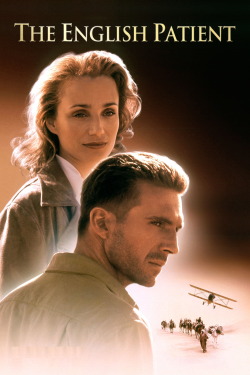
"Every night I cut my heart out, but by morning it was full again." Anthony Minghella's epic adaptation of Michael Ondaatje's Booker Prize-winning novel owned Oscar night, winning nine Academy Awards in the most sweeping victory since the 1987 film The Last Emperor. It was particularly remarkable for a film that the writer-director had almost despaired of making. Having been "intoxicated" by the poetic book, he spent over three years restructuring it, greatly expanding the doomed love story at its heart. The independent producer Saul Zaentz (One Flew Over the Cuckoo's Nest [1975], Amadeus [1984]) originally found backing from 20th-Century Fox. But disagreements, about casting Kristin Scott Thomas rather than an American actress for example, culminated in the studio pulling out. Production was halted before Miramax stepped in with the finance.
A severely burned and disfigured pilot (Ralph Fiennes) is found in the wreckage of his biplane in North Africa near the end of World War II. Apparently amnesiac, unidentified but presumed to be English, he is dying and in the care of French-Canadian nurse Hana (Juliette Binoche). Taking refuge in a devastated Italian monastery, they are joined by Willem Dafoe's vengeful Canadian torture victim and two bomb disposal experts for intimate explorations of memory, loss, and healing. The mystery patient - revealed as Hungarian Count Laszlo Almasy - recalls his past gradually between the late 1930s and 1945, in Tuscany, Cairo, and the Sahara Desert. Almasy's love affair with the married Katharine Clifton (Kristin Scott Thomas) unfolds with tragic consequences.
The film has two strong elements to captivate. The story is convoluted but classically, passionately romantic. And the production is meticulously artful, repeatedly likened to the style of David Lean, from dreamlike aerial sequences and a dramatic sandstorm to sensuous love scenes and enchanting effects - cave paintings examined by torchlight, church frescoes illuminated by a flare. The English Patient's scale, its majesty on big screens, and its sense of importance demanded recognition for its artistic and technical achievement.
This review of The English Patient (1996) was written by Nick R on 11 Oct 2009.
The English Patient has generally received very positive reviews.
Was this review helpful?