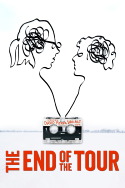
Review of The End of the Tour (2015) by Jack G — 22 Aug 2015
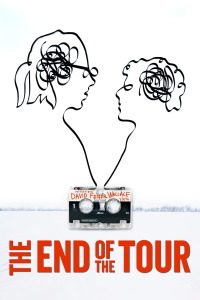
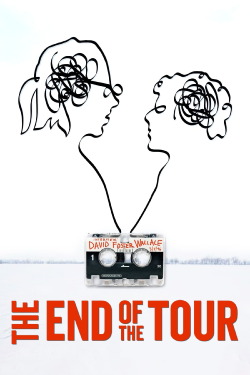
Few times this year, or in the past few years, have I thought "Wow, this performance, or for that matter this film, is revelatory", but I had that while watching The End of the Tour and specifically Jason Segel. What's most impressive here is the lack of any false drama. It's these two guys talking to each other, in the respect of a formal interview, over the course of four days, and while Eisenberg is quite good, it's Segel who is just mind-blowingly good here. Like, this is the guy from Forgetting Sarah Marshall? And The Muppets? He plays David Foster Wallace as disarming, shy, clever, engaging, engaged, at times appropriately miffed (or p'd off) and can also be funny and genuine and witty. These are all written in the script, but Segel makes them real, and it doesn't feel like a put on, which would've been the death knell here.
In this film, we get the story of Rolling Stone writer David Lipsky (Eisenberg) who finds that the writer David Foster Wallace (Segel) has a new book out called Infinite Jest, and that the magazine (which hasn't done an interview with a writer in over ten years) should make him a subject. He goes out to the snowy rural area where Wallace lives and works as a creative writing teacher and spends four days and nights with the man. When he first meets him he's not some crazed madman or hermit, but a guy with two big dogs and a lot of soda cans around his place and a bandanna on his head covering up part of his longish hair. And over the course of these days the real conflict here isn't so much WHO David Foster Wallace is, but who these two men are, together, and what they will or won't reveal to each other, or how far they'll go in their conversations.
What do you reveal when you're in that situation, particularly if this is your first smashing success in literary circles on this scale? And what responsibility does a journalist have with an author like Wallace, or on the flip-side what does Wallace have to say to this guy who he's just met and may/may not have ulterior motives? Even in those early scenes where it doesn't seem like a lot is happening, that there are pleasantries and getting-to-know-you stuff with junk food from the convenience store and some talk about Alanis Morrissette there's some tension, like 'Is what I'm telling you going to be USED in some way that's off somehow?' And yet for all of those little tense moments, when the two writers get down to talking about what is really real or fake or not between them, or what Wallace is or isn't saying, it's some of the best dialog back-and-forth in a movie in years.
For all the times the movie takes on that sort of intimate/epic quality, of just watching two people talking (and, most importantly, listening, which is a major part of watching acting as well and in hearing people talk), almost like a new version of My Dinner with Andre but with the stakes of celebrity interaction raised, the acting has to meet it halfway. As I mentioned, Eisenberg is solid here, and has that great quality of looking intently at someone and listening, and you wonder what this person is thinking behind those eyes of his, what little body language gives Lipsky away. And yet, it's Segel's movie - it's like, man, where did THIS come from? Every little moment with this guy is just completely fascinating, every moment he is looking at someone in the background, or how he chooses to say every line of dialog. Or how cutting a line like this can be: "David, this is nice... It isn't real.".
It seems like it shouldn't be substantial enough to just have two guys talking to each other for a movie. Sure, there are other actors too, like Ron Livingston for a scene and Joan Cusack (oh hey, her) for a few moments as well. But it's all about the dynamics of what it means to be a creator and more importantly of these two guys that makes it so spectacular. And that may be an odd word choice for a movie this small-scale, watching two guys in a car or in a room for large sections, and yet that's what it is. And it's not about any big mind-games, or rather if it gets anything close to that the reality and honesty of someone like Wallace cuts away the BS (or, at least, he tries to). What's talked about in this film is full of depth; the creative experience; how you take compliments from fans or just what it means to get acclaim; living with depression (that's a big one, and hanging over several scenes or just underneath).
The End of the Tour is, basically, about connecting with another person. How difficult is that? To the film's great success, how hard it is to pull it off with such grace and passion.
This review of The End of the Tour (2015) was written by Jack G on 22 Aug 2015.
The End of the Tour has generally received very positive reviews.
Was this review helpful?