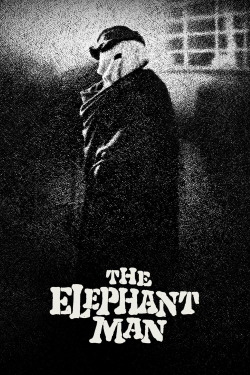
Review of The Elephant Man (1980) by Michael O — 06 Feb 2009
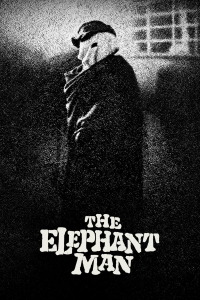
The 1980 Academy Awards were littered with great films, truly wondrous movies that were distinctly outside the conventions of the Hollywood New Wave of the 1970s. Films up for Best Picture included Martin Scorsese's blisteringly raw portrait of a psychotic human, and Robert Redford's fragile and painful wander through the lives of an anonymous middle-class family losing touch with each other. David Lynch, announcing himself with gusto in 1977 with 'Eraserhead', had suddenly jolted his focus in an entirely different direction; instead of psychotically-driven spirals into the mind itself with 'The Elephant Man' he turned this intensely psychological approach onto a story dealing with a very tender and caring love. Only his second feature, it grabbed nominations in some of the big categories, including Best Director and Actor. It's hard not to see why the attention is deserving.
Wiping the slate clean in terms of previous examinations of the life of Joseph 'John' Merrick, Lynch, with help, scripted an entirely new perspective on the Elephant Man. Enlisting the thesping talent of key British players Hurt, Hopkins and Gielgud, among others, and with an inspired use of monochrome cinematography from Freddie Francis, Lynch crafted an unusual and unique piece of cinema.
Lynch being Lynch there are many visible manifestations of the psychosis, particularly in the daydreaming scenes of Merrick himself, warping the black-and-white texture into abstraction and difference. The photography both replicates the grainy surface of Victorian-era photographs and plays up to almost chiaroscuro levels of contrast, giving the film a rich visual tapestry. A level of mentality is added with the layered sound design of Alan Splet, another Lynch regular, with throwaway details such as Merrick's slimy drawl and the small clicks of objects generating a colourful soundscape.
But, if anything, this is an actor's piece and the quality suitably fills in the emotional dramatics. Anthony Hopkins kick-starts his career with a fantastic performance, displaying his assured and perfectionist style with simple ease. It's Hopkins who is the real emotional fulcrum for the audience as we share his own objective compassion for Merrick. He is the crux for Merrick's almost-achieved new life of happiness and friendship, and it's with him who we empathise with most. The rest of the cast do their job fully and professionally, particularly Anne Bancroft's 'Kemble' who convinces suprisingly well as a caring high-profile actress (even if her involvement with Merrick is totally made up.).
Of course, it's John Hurt who vividly brings Merrick to life. Buried under a mountain of prosthetics he nonetheless forces ever single nuance of emotion through to the very edges of the screen, be it with a solemn dip of his head or a hesitant scrape of breath. Despite not being able to move his face into any expression whatsoever we feel Merrick's emotions every time, be it an eager cautiousness or a swelling happiness. Hurt fully deserved every plaudit he got for this role, one of genuine sadness and melancholy, yet with the charm and naivety of a young boy.
All in all, 'The Elephant Man' could easily be passed off as a lesoon not to judge people by their appearance but it would childish to even suggest that. Merrick is unusual in that he acquired all the skills he needed to be seen as perfectly normal, and loveable, before he was revealed to society at large. He isn't some creature who achieved a place in the respects of others, he was just a warm and friendly society man crushed under the burden of his appalling disfigurement. If anything the story is about reaching out to those less fortunate than ourselves, not the least of which real-life physically disabled people. In that sense Merrick is not unique as the vast majority of physically disabled people are just as ordinary as the other person walking down the street and Lynch's heart-breaking film does well to remind us not to neglect the unfairly-judged in our own societies and communities.
This is a deeply felt and incredibly powerful film, cutting straight to the heart and mind in the way Lynch, and countless others, have tried to do since. There aren't many films nowadays that can make the audience cry more than once before any sort of emotional climax, and that's some achievement.
This review of The Elephant Man (1980) was written by Michael O on 06 Feb 2009.
The Elephant Man has generally received very positive reviews.
Was this review helpful?