Review of The Elephant Man (1980) by Parker M — 30 Aug 2011
3.5 Stars out of 4.
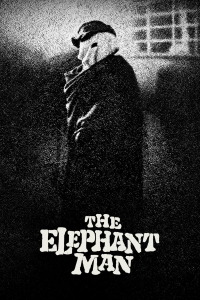
I am constantly fascinated by films that personify the inhuman. Not to say John Merrick (John Hurt), or the Terrible Elephant Man as the epithet goes, is not a man. He is, but his face is like no man. It takes true conviction to feel sympathy for a character you almost immediately recoil at. But you do. The Elephant Man thus is a film both audio as it is visual, sad as it is hopeful, and frightening as it is inviting.
The film is directed by David Lynch, whose previous film (and only feature film before) was Eraserhead, a surrealist exercise no critic has fathomed, according to Lynch. The material for The Elephant Man is Lynch's most lucid I would say, offering a story not meant to torment its audience. It deals with the platitude of making a monster a man, but Lynch is fascinated with deeper dwellings in the process.
It's based on the books "The Elephant Man and Other Reminiscences" by Sir Frederick Treves and "The Elephant Man: A Study in Human Dignity" by Ashley Montagu. The protagonist, we think at first, is Treves played by the brilliant Anthony Hopkins with reserved complexities here. He is a surgeon at a London hospital who discovers Merrick at a circus freak show run by the cruel Brytes (Freddie Jones). Merrick is beaten out of discipline, docile like a pet, and meek like a prisoner. He wears a hood over his head, caging his revolting looks and only exposing them to gawkers for their entertainment.
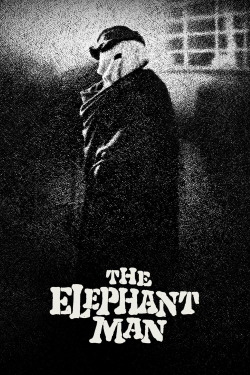
Treves pays Brytes to examine Merrick at the hospital. In a wonderfully, eerily shot scene, Treves introduces Merrick to his colleagues. Lynch frames Merrick from behind a curtain, in order to not exploit Merrick's grotesque image. Treves is fascinated by Merrick's deformities, insisting he be given treatment. The scene ends with the colleagues applauding to what we see as only an obscure shadow (this is a parallel to a later scene I will mention).
Merrick is reluctantly accepted as a patient at the hospital because his condition is incurable. Part of the tragedy and power of The Elephant Man is that Merrick cannot change. In a way, he endures a metamorphosis but that is of character not physiognomy. Merrick remains a monster on the surface, but he reveals a profound inner state. He has feelings and Treves coaxes them from him. In a very moving scene, Merrick is introduced to the beautiful actress Madge Kendal (Anne Bancroft, Mel Brook's wife - he produced the film). Merrick cries incredulously, stunned such a beauty could greet him as an equal.
The Elephant Man, wisely, is in black and white. This is not an artistic pretension. Lynch, like in Eraserhead (also black and white), uses the monochromatic to characterize an atmosphere that is bleak and created as if in a dream. Also, it doesn't expose the luridness of Merrick's face with colour, and instructs the audience to see what stirs inside.
The make-up was done by Christopher Tucker, a job so well done that it forced the Academy Awards to create a special category for Best Make-up. Tucker had the task of constructing a face that looked real in a grotesque sense. Any distortions could make Merrick look humorously ugly, and then the film would have lost its audience. But Merrick's look reads of pain and tenderness, and Hurt's human performance, which reminded me of Boris Karloff's astounding sensitive performance as Frankenstein in 1931, allows us to see Merrick as Merrick not an elephant man.
The Elephant Man is simpler, more accessible study for a Lynch film. I wouldn't call this a crazy, incomprehensible David Lynch work, but if this wasn't directed by him I might be calling it "Lynchian" (he uses sound for surreal ambience, lots of machines, just no lumber).
Lynch proves his confidence as an artist, testing the material by identifying with the outlandish Merrick and not the conventional, formal Treves. I suspect this would be a less interesting movie if The Elephant Man was about Treves' psychology, because his struggle is alarmingly transparent. Is he a good or bad man? Is he making a difference? Thanks but no thanks.
The Elephant Man is powerful when it avoids moral questions and decides to slide into Merrick's condition. The film has been criticized for not explaining what that condition is. I think Lynch does that on purpose. Films can make a devastating error by trying to justify a madness or illness. Merrick's haunted memories aren't meant to be explained, but suggested. There are hints that Merrick is beset by the memories of his mother, a character only shown in a terse display of fading images.
One of the final scenes shows Merrick at a musical theatre, where he is applauded by the audience not scoffed at (that is the parallel from before). He is no longer a specimen but a member of society. What happens to Merrick in the end I shall not reveal. The Elephant Man is a film that, like most Oscar-bate films, is ridden with good-intentions. But this film succeeds under the skill of an ambitious director who explores his style instead of celebrating those good-intentions. If you want to foray into Lynch, start here not Eraserhead. But don't get too cozy. The Elephant Man is just you about to drift off into the dream.
This review of The Elephant Man (1980) was written by Parker M on 30 Aug 2011.
The Elephant Man has generally received very positive reviews.
Was this review helpful?