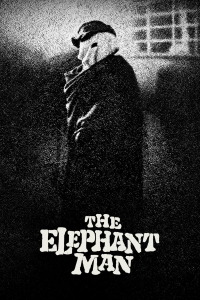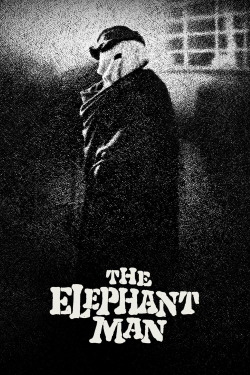
Review of The Elephant Man (1980) by Cameron J — 23 May 2012
I don't know which sad "fun" fact is morbidly funnier: the fact that they actually brought in someone to identify Joseph Merrick's body after he died or the fact that the play on which this film was based starred Mark Hamill as Merrick. The reason why the latter is such a sad fact is because it diluted the film's emotional resonance with me, because when it came down to that heartbreaking climax, I couldn't stop picturing Merrick responding to people calling him an animal with, "No, that's not true, that's impossible!" It was bad enough that I couldn't watch this film without being forced to think of other characters with weird head problems from other David Lynch films, like that baby from "Eraserhead" or that big fat dude who also had crazy boils from "Dune". Come to think of it, I'm pretty sure that Vladimir Harkonnen didn't even have those freaky boils in the original novel, so I guess, for a while, David Lynch couldn't even do a film unless it had someone with some kind of head deformity; that's how crazy the dude is. I don't know about y'all, but I personally can't wait to see his big comeback film starring Ron Perlman. Hold on, let me stop for a second, because I also want to go back to when I said that they actually had to bring in someone to identify Joe Merrick's body. It's bad enough that people kept messing up his name and calling him John, but that had to have been some kind of cruel joke, so I guess that means that them getting David Lynch to direct this film has gotten to feel more fitting with age, because after "Crazy Clown Time", we can see he knows a thing or two about cruel jokes. Speaking of Lynch's directorial traits, as good as this film is, "Dune" was kind of dull enough as some kind of crazy sci-fi "epic", so just wait until you see this thoughtful drama about some deformed guy who just bumbles around and heaves.
Needless to say, this film is slow, and quite often, it's not simply kind of dull, but full-on boring, with long periods of totally nothing going on. I don't quite know exactly how much momentum you could get out of a mere fictionalized and dramatized study on the latter life of a severely deformed man, though certainly not enough to warrant an over two hour runtime, which is met too prominently through consistent padding through dragging and repetition. It's a quiet, meditative drama, though one that falls a tad short on keeping intrigue consistently afloat through style or even a whole lot of inventiveness. The story structure is same-old-same-old, only with a different coat of paint, as well as the occasional twist in convention, though not quite enough for the film, as a whole, to abandon the extreme familiarity of its structure and run the risk of collapsing into genericism. It's a slow, overlong and ultimately rather conventional piece that may follow a worthy enough tale to where it doesn't stand much of a chance at being terribly mediocre, let alone terribly terrible, but collapses into its tropes and limps itself along more often than it should. However, speaking of predictable, I'm sure you can guess that I'm going to say that as far as transcending from those collapses and coming out on top, this film makes it. Sure, were it tighter or at least with more depth and inventiveness, it could have stood stronger, yet as it stands as a final product, walking away disappointed is an unlikely case, largely thanks to David Lynch's showing that, on top of delivering on the creepy surrealism, complimented by remarkably believable make-up effects, he can also cut deep when he needs to, and just sharply enough to win you over.
Looking at the script, this film is riddled with unrelenting manipulation and cheap, unsubtle emotional tugs that, when married with the active dramatic liberties, could have made this a borderline offensive film. As it stands, in execution, David Lynch is palpably inspired in his direction, giving the film deep emotional weight that, upon kicking in, makes good use of the meditative and somber tone by intensifying the resonance with subtlety. There's a surprising amount of restraint within the film, which isn't to say that it's not a tad melodramatic, because in structure, the film lacks subtlety, yet in execution, it's more subtle than you'd expect it to be, and the final product is, in a good way, disturbing, when not touching and stands as consistently compelling with a kind of engaging charm, broken up by riveting resonance of a very human nature. Still, it's not just Lynch who sells on such humanity, for each performance in the film could have gone horribly wrong as exaggerated, yet ultimately comes off as down-to-earth and believable, whether we're talking about a supplementary performance or a central one, yet it's the central performances that give the most. A relatively young Anthony Hopkins is presented with only so much material, so don't expect quite as killer of a performance as a doctor as the certain one he went on to give when he actually was a killer doctor, but do expect him to nail the presence of the brilliant man that was Frederick Treves, while subtley and sometimes emotionally incorporating vulnerability in him to set compelling layers. However, the real star owner of the show is, of course, John Hurt as Joseph-oh, I'm sorry, I mean "John" Merrick (Stupid common name inaccuracy), whose mannerisms and anguish go portrayed brilliantly and believably by Hurt. However, even with all of his pain Merrick was, as he'd tell "a human being", complete with joy and wonder, emotions that Hurt nail with charisma and charm, yet when Merrick's newfound world begins betraying him, Hurt portrays the nobility and eventual breakings of Merrick with subtlety, grace and compelling emotional range as he conquers the screen with his enthrallingly thoughtful and transformative restoration of the joy, pain and overall humanity within the late, great mystery of a person.
In conclusion, the film is predictably slow and occasionally overly meditative, with padding and some repetition over the familiar and slightly melodramatically-structured story further tainting the product, yet David Lynch ultimately transcends many of the faults with a surprising amount of compelling subtlety in the atmosphere, creating a kind of charm, broken up by a deal of moments of sharp emotional impact, anchored by many a strong performance, with Anthony Hopkins and, of course, a powerfully transformative John Hurt boldly leading and helping in making "The Elephant Man" an intriguing and hauntingly compelling study on the mystery and the man behind Joseph Merrick... or John Merrick; whatever you want to call him.
3/5 - Good.
This review of The Elephant Man (1980) was written by Cameron J on 23 May 2012.
The Elephant Man has generally received very positive reviews.
Was this review helpful?