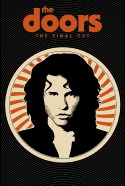
Review of The Doors (1991) by Harry W — 22 Jun 2016
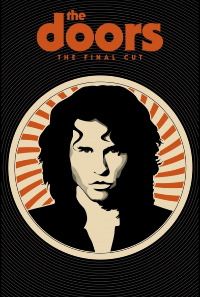
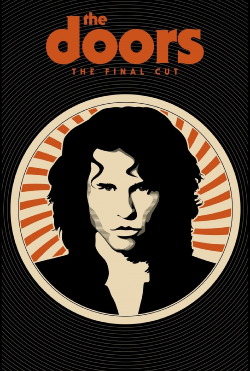
Though not a man with grand fondness for Oliver Stone's directorial style, the legendary legacy behind the titular band captivated my interest in seeing The Doors.
The first time I watched The Doors I found myself obsessed with the character depicted by Val Kilmer and found myself turning into a huge fan of the band. Prior to watching it the second time I read through Love Becomes a Funeral Pyre, Mick Wall's biography about the group and primarily Jim Morrison. What I gathered from the read is that a legend such as Jim Morrison is not a man whose story can be confined to a singular film. Re-watching the film supported this realization as within the meagre intro to the film it is clear that Oliver Stone has attempted to confine too much material into a short time period. Jim Morrison's childhood, experiences at UCLA film school and development of a relationship with Pamela Courson are all jam packed into the first 10 minutes of the film like a cheap series of vignettes. This structure is maintained for much of the early parts of the film which makes it difficult to embrace for a long time. It seems rather redundant that actual songs by The Doors plays during many of these scenes while the narrative attempts to take off, especially considering that the band has not yet formed within the context of the story. There are more gimmicks to captivate audiences as the film progresses, but it goes on for all too long and prevents the film from actually developing all that much. Given that audiences have to embrace this for 140 minutes, its really a lot to ask.
The problem with The Doors is mainly the fact that it is less a biography of its titular band and more a testament to the Jim Morrison myth. The first time around the film is a hypnotic examination of a mysterious legend, but upon a second viewing it is easier to look past this all and pick apart the flaws in the film. The Doors relies too much on recreating segments of Jim Morrison's life and captivating viewers with shock value to coerce them into thinking they are watching a brilliant film. Those familiar with Jim Morrison's antics can admire the mood of the feature and Val Kilmer's incredible performance, but a stronger understanding of the real story which the film cannot grasp will make it a challenge to completely admire. The obsession with the Jim Morrison myth neglects not only proper storytelling and real-world fidelity, but a fair depiction of the other people in the existence of The Lizard King. For one thing Pamela Courson's role in Jim Morrison's life exceeds the narrative grasp of the film. Her obsessive and self-destructive nature is not emphasized in the film, rather she is treated as a product of Jim Morrison's insanity more than her own character. As a result she is reduced to being a melodramatic subplot which does little more than distract from the central narrartive of the film. In reality the two were a co-dependent product of each other's descent into madness, and though Jim Morrison's influence on Pamela Courson was arguably more powerful than the alternative, Oliver Stone suggests that it was merely an exercise of power on behalf of Jim Morrison and nothing else. And also, there are other members of the band. If they have stories of their own then Oliver Stone sure as hell doesn't recognize it. And with that in mind, the film should not be titled The Doors when it is about The Lizard King and nobody else.
And the lack of histrorical context fails to ensure that audiences actually understand why it is that The Doors were such a hit. We gather that the shock value of Jim Morrison's antics were unforgettably distinctive, but the fact is that they came from a time of counterculture where the anti-establishment ideology fuelled the youth of America. The Doors' innovative musical style, poetic lyrical content and unconventional star power is what made them so legendary in a time of such disillusionment, but Oliver Stone is too busy idolizing Jim Morrison to explain why anyone else should. As much as I find Oliver Stone to be an obsessively self-indulgent filmmaker in too many cases, his efforts to capture the anti-establishment ideology in some of his better works display that he has a grip on the harsh reality of the 1960's from his own experiences. The Doors goes down with Born on the Fourth of July (1989) and Nixon (1995) while the stylistic obsession and forsaken narrative evoke memories to Natural Born Killers (1994) which stands as one of the worst films I've ever seen. Frankly, The Doors is little more than a style-driven fantasy about a legendary musician which will work to introduce new audiences to Jim Morrison without much respect for those who appreciate the truth or narrative coherence.
However, there is no denial that Oliver Stone's keen eye for imagery makes for a trippy experience. The cinematography works to position the imagery brilliantly and put special emphasis on whatever the key focus is, while the colour scheme shifts into a more acidic fluorescent style in the most energized moments of the film. This creates an effectively atmospheric experience, and when Jim Morrison brings the film to its most intense scenes with the power of his music it is easy to get lost in the experience. As if it is a testament to the style of Dennis Hopper's iconic Easy Rider (1969) but done with a significantly larger budget, the manipulation of colour and lighting in The Doorsmakes for an unforgettable visual experience. And against the backdrop of tunes by The Doors, audiences are transported back to the glorious art of The Doors' heyday and treated to a tribute concert which is brought on with top notch production values. The Doors is worth watching for this experience alone because with both viewings I have found brilliant artistic ambition in the recreation of concerts by The Doors, and it works as a testament to Oliver Stone's credibility in one department even when his storytelling tenacity fails to match up to it.
But the real thing which brings The Doors to life is Val Kilmer in one of the greatest performances given by anyone in the history of cinema. The first time I viewed The Doors I was blown away by the larger-than-life creature he had depicted on screen and fell in love with Jim Morrison. After learning more about the real story behind him and the inaccuracies depicted in the story, I still cannot deny that Val Kilmer is an example of absolute flawless casting. Even upon a second viewing, I completely forgot that I was looking at Val Kilmer the second time. As the film started I took note to the way Val Kilmer captured the man's manner of walking and talking, but I quickly got so lost in it that I just embraced the fact that he actually became the man. In a perfect tribute that completely brought the man to life once again, Val Kilmer is perfect for the part inside and out. For once in an Oliver Stone film, an actor actually looks like the person they're meant to be playing. Val Kilmer's appearance, slick movements and facial expressions all perfectly embody the legendary Lizard King. And to add to it, Val Kilmer's recreation of Jim Morrison's iconic tone of voice is a remarkable tribute to the legend. Said to be so accurate that even actual surviving members of The Doors couldn't even differentiate it from the real thing, Val Kilmer captures the unpredictable and wide-toned nature of Jim Morrison's lyrical style and the raw passion of delivery. Val Kilmer loses himself in the role as if it is a remarkable drug trip, and he walks around in the very skin of Jim Morrison to an unforgettable extent of brilliance. Val Kilmer's performance is pure perfection which goes beyond the realm of acting and creates a new standard for performers everywhere, and the way that he manages to bring the best out of everyone around him with the depth and explosive spirit of his performance. The Doors is clearly Val Kilmer's finest hour, and his performance nails Jim Morrison with sufficient tenacity to compensate for areas of the screenplay which fail to accurately depict the character.
Meg Ryan isn't given a role with all that much depth which is a shame because there is a large story behind Pamela Courson herself which the film cannot see eye to eye with. She is reduced to her own melodramatic subplot which puts limitations on what Meg Ryan is allowed to do with her role. Ultimately, she delivers a fairly satisfying effort. Most of the value in her performance comes from her chemistry with Val Kilmer and the power they bring out of each other as their combined efforts make for some powerful moments of drama. Meg Ryan does what she can with the role and brings out a decent performance.
Even though they play to the background far too often, the raw passion in the performances of Kyle MacLachlan, Frank Whaley and Kevin Dillon are in need of much appreciation. Kyle MacLachlan's sophistication, Frank Whaley's sense of confusion and Kevin Dillon's blunt nature provide a perspective into other sides of The Doors which hints at a story of far greater potential. Crispin Glover is a great fit as Andy Warhol as he captures a distinctive flamboyance in the part, and Kathleen Quinlan's mysterious nature makes her an intriguing addition. Michael Madsen is also an enjoyable presence, and Michael Wincott's reserved yet intense effort is befitting.
The Doors' obsession with the myth of Jim Morrison makes it a factually inacurrate story which is burdened by formulaic Hollywood cliches and a vignette narrative structure which prevents amy actual narrative development from occuring. But Oliver Stone's sense of style makes for a hypnotic experience while Val Kilmer's Academy Award-worthy performance solidifies it as an unforgettable experience.
This review of The Doors (1991) was written by Harry W on 22 Jun 2016.
The Doors has generally received positive reviews.
Was this review helpful?