Review of The Doors (1991) by Tiberio S — 28 Apr 2017
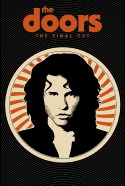
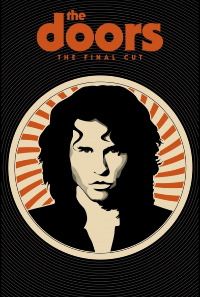
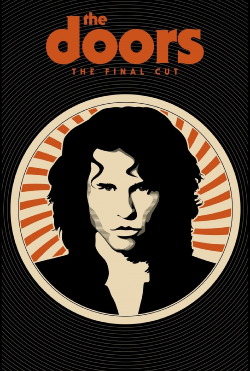
A movie that defines the cinematic acid trip. The Doors works as a double-entendre title, both headlining the band itself as the film's main subject, and alluding to the many gateways opening in Jim Morrison's mind, all leading to the same path towards death. Right from the get-go, Jim's only purpose is to die, and since we know that's the famed singer's eventual fate, it's an appropriate objective. Something about seeing a dead native in the desert as a child affects him, perhaps he senses cruelty and injustice from invaders who've stolen this man's freedom. Perhaps he doesn't feel right being alive if the members of his race kill. Perhaps I'm over analyzing, but whatever the case, the desert becomes a second home to him. Visually I got lost in another movie for a moment, as Stone will later retread this territory in Natural Born Killers (which I saw first), furthering the idea of white man's unjust invasion and murder of natives.
As always with Oliver Stone, we get the frenetic paced, swooping camera, musically accompanied journey that is a staple of all his films. I love the way we get absorbed into Jim's recording as the camera pushes in on him in the studio booth, only to crane over and reveal Pamela on her knees giving felatio while he sings. The way Stone directs the camera with Robert Richardson is so that it is constantly moving, almost floating at times, drifting in a trippy kind of motion. As a result, the camera seems to catch things, like Jim in a particular silhouette with appropriate lens flares creeping in and out. I love the tawny reflection on the plane as Jim flies into an orange New York. The film's most dominant colors are red, yellow, and their baby orange. We see a lot of red in the clubs and concerts he plays at, red color screens as transitions, and red blood rituals - it's the color closest to darkness, an appropriate shadow following Jim.
Stone has a tendency to work with extremes, like fellow New York filmmakers Martin Scorsese and Stanley Kubrick. It's loud, raucous, audacious, vivacious, perverse. We see lots of nudity, sex and adultery, violence, drugs and inebriation are a constant, lewd behavior unending. Jim and Patricia are drinking blood together, Jim tries to set Pamela on fire in a closet, Jim and Pamela dangle from a rooftop, Jim and Pamela throw hard objects at each other, then food at each other as they break up a Thanksgiving party, Jim pisses at a bar, gets a blow job on an elevator, Pamela gets addicted to heroin... the list is almost endless, you'd write about each scene and it'd be something ridiculous. Stone is certain he is going to keep our eyes open and entertain us every step of the way, never falling into some sappy melodramatic conventionalism, or harsh confrontational dialogue - when that happens, it's messy, noisy, distorted. Everything happens so that it reflects Jim's perspective, a perfect director/subject mirror relationship. I'm sure Stone drew from his own experiences with hard drugs as well.
Val Kilmer was born to play this role, his performance is provocative, daring bravura. He entirely puts his mind, body, and soul into the character, and it never feels like mimicry - this extends as far as growing a gut for the latter portion of Jim's life. Look at how he puts it all out there during the photoshoot with Mimi Rogers - bending and twisting his body in unique poses with great humility. Maybe it's easier to do this in character, but if I was just being myself, I doubt I could pose like that. There are numerous uncomfortable scenes, which he handles with total command - his violent outbursts at Pamela or the band, cutting his wrists with Patricia, numerous sex scenes.
Meg Ryan goes beyond her cutesy rom-com propensity, but she borrows traits which counterbalance Jim so that they have a perfectly unstable relationship, his lewd and rude versus her cute and cuddly. As an avid Lynchian aficionado, I love Kyle MacLachlan in anything. His introduction as Ray Manzarek defines him instantly - he dresses in a sleek sports coat, is sophisticated enough to attend film class at UCLA and appreciate Jim's avant garde filmic poetry, and his first words to Jim address a rowdy dismissive classroom, "fuck them, it's brilliant." And I love Michael Wincott's entire presence as Rothschild; something about his usual raspy voice and pointy face just seems to fit the mold of this record producer.
The most detracting aspect of The Doors is also it's most helpless part of the story: Jim is hopeless, doomed to a tragic fate, and there's never a glimmer of hope. It's an exercise in downward spiral without the conventional character arc of rise, fall, rise again, nor fall, rise, fall again; the whole film is a steady downward slope. We are simply meant to experience the attitude of his passerby life. The only rise is at the early onset; stardom seems to happen quickly and easily. From there, we watch his life drift away in excessive carousing without a moment of even considering any change. From a dramatic perspective, academically it seems to be what's missing. But I wonder if it would've made it a more boring, conventional experience. Perhaps I'm being too critical and missing what's essential about the whole show. It definitely warrants rewatching.
This review of The Doors (1991) was written by Tiberio S on 28 Apr 2017.
The Doors has generally received positive reviews.
Was this review helpful?