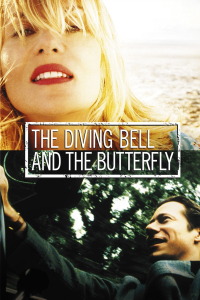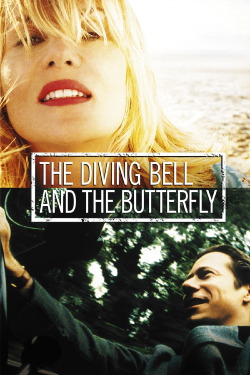
Review of The Diving Bell and the Butterfly (2007) by Paul Z — 18 Aug 2010
Using an easily contemplated but rarely done device, Schnabel initially shoots entirely from the restricted point of view of Bauby, as he wakes from a coma in a hospital in France. A neurologist explains that he has locked-in syndrome, an extremely rare condition in which the patient is almost completely physically paralyzed, but remains mentally normal. The viewer hears the thoughts of Bauby, which are unattainable to the other characters, and sees through his one functioning eye. During this exposition, the film, well, locks us in, as is the obvious intention, to an experience entirely on an emotional level, shutting out all ideology or superficial entertainment. The joy of this film comes from its extremely raw plunge into the deepest roots of the story, taking us an a rollercoaster from horrendous depths of despair to otherworldly summits of sensory pleasure.
We cannot bare his miserable restlessness as a speech therapist and physical therapist, no matter how beautiful they are staring straight in our/his eyes, try to help Bauby become as functional as possible by exercising his mind. He cannot speak, but he develops a system of communication with his speech therapist by blinking his left eye as she reads a list of letters to spell out his messages, letter by letter. It is his spiteful, raging drive that leaks from the one orifice it can.
Gradually, the film's restricted point of view broadens out, and the viewer begins to see Bauby from 'outside', in addition to experiencing incidents from his past, as well as his fantasies, in which he imagines beaches, mountains, and feasts. Schnabelâ??s juxtapositions work to the primal effect of the initial invention of the montage, where the editing follows a number of frames based purely on the physical nature of time, cutting to the next shot no matter what is happening within the image, eliciting awake the most basal and emotional of reactions in the audience.
Itâ??s so odd to me when I see movies directed by people who normally work in some other medium. They always seem to understand the fundamental purposes and distinguishing characteristic resources of cinema so much more than steady filmmakers, perhaps because the common filmmakerâ??s view of the movies is likely to be diluted compared to the fresh awakening to the change by painter-turned-director Schnabel, just like theater and radio actor Welles or theater director Julie Taymor, when they break new ground and make pure, refreshing and enlightening movies because they struggle to adapt to the cameraâ??s conventions. This could be why Schnabelâ??s vision is perfect for the tragic story of Jean-Dominique Bauby, Bauby being someone who is put in a position to see the elementary machinery of things now that he is plunged out of his element.
This review of The Diving Bell and the Butterfly (2007) was written by Paul Z on 18 Aug 2010.
The Diving Bell and the Butterfly has generally received very positive reviews.
Was this review helpful?