Review of The Devil's Doorway (2018) by Riff J — 01 Nov 2018
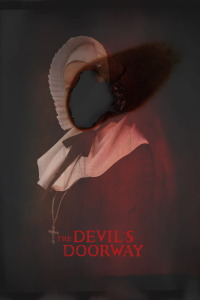
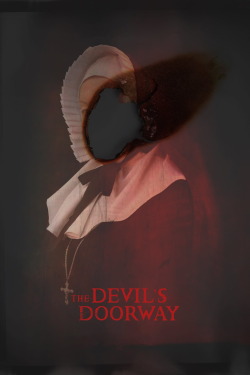
Unrelated to Devil's Doorway, a 1950 western directed by Anthony Mann, Aislinn Clarke's laudable debut feature, The Devil's Doorway, is rather a found-footage horror film. Taking its inspiration from the history of Magdalene Laundries in Ireland, specifically the Bon Secours Mother and Baby Home in Tuam, the film undeniable has its share of clichés, but overall it's an impressive piece of work, dealing in an interesting manner with a truly shameful part of Irish history.
Ireland, 1960. Father Thomas Riley (a brilliant Lalor Roddy) and Father John Thornton (Ciaran Flynn) have been dispatched by the Vatican to a (non-specific) Magdalene Laundry to investigate a possible miracle. Sometime previously, the bishop received an anonymous letter from someone in the laundry claiming that one of the statues of Mary is bleeding from the eyes. True to their biblical namesakes, "Doubting Thomas" (as John calls him) is a sceptic, the Vatican's go-to guy when they want to debunk something (by his own admission, he has never seen a true miracle). World-weary and disillusioned, he is the polar opposite of the young and enthusiastic John. Straight from the seminary, John believes blindly in the institution of the Catholic Church, much to Thomas's disdain. Determined to catalogue everything they do, the first 20 minutes of the film mainly involve John getting in people's way and being told to turn off the camera, with Thomas repeatedly pointing out, "this is a waste of your film". Although Thomas is determined to find the "trickster" behind the bleeding statue, his initial focus is the manner in which the girls in the laundry are being treated by the nuns (in one especially powerful scene, he incredulously asks John, "do you really believe that Our Lady is here? In this place?"). Because of this, he immediately butts heads with the rigid Mother Superior (an excellent Helena Bereen channelling Louise Fletcher's Nurse Ratched, and then some). However, with Thomas's focus on the girls, John comes to feel that something supernatural is happening - he hears, and later sees, bedraggled children playing in the corridors, despite there being no children in the institution; handprints appear on his window; strange sounds emanate from the bowels of the laundry. Testing the blood from the statue, Thomas determines its type, and that it came from a pregnant woman. Initially testing all the laundry girls, none match, and so, to Mother Superior's disgust, he widens the search to include the nuns. However, he again fails to find a match. He and John then learn of Kathleen (Lauren Coe), a young pregnant girl kept chained in a padded room in the basement. Temporarily putting aside the fact that she can speak ancient Greek and seems to know a lot about Thomas's history, he is horrified with her treatment, demanding she receive proper medical attention. A doctor is summoned and upon examining her, he is stunned to learn that although Kathleen is pregnant, she is still a virgin. Then things get really weird.
Firstly, a bit of background. Usually run by Catholic orders, the first laundry in Ireland, the Dublin Magdalen Asylum, was actually a Protestant institution, and was opened in 1765 by Lady Arabella Denny. In 1996, the Monastery of Our Lady of Charity of Refuge, on Dublin's Sean McDermott Street, closed its doors, the last laundry to do so. In this 231 year period, it is estimated that upwards of 30,000 "fallen women" were confined in these prisons in-all-but-name, with over 10,000 imprisoned since Ireland's independence in 1922. The women confined there were sex workers, orphans, victims of rape and child abuse, the mentally ill, young girls considered too flirtatious or beautiful, and those who became pregnant out of wedlock. Essentially used as an unpaid slave labour force, the women spent their days washing sheets (which also serves as a metaphor for the Church's attitude to the laundries - the women were penitently washing their "sins" away). They were physically and psychologically abused by the nuns and exploited by the Church, which was fully aware of what was happening behind closed doors. Of course, it's not just that these women were locked away and mistreated - it's that they were forcefully separated from any children they may have had, many of whom were illegally sold to wealthy American families.
In 1993, the Sisters of Our Lady of Charity of Refuge sold part of their convent, St. Mary's Refuge, in the Drumcondra suburb of Dublin. The property developer who purchased the land subsequently discovered an unmarked mass grave holding 155 bodies of women and children. Although the Sisters attempted to cover it up, the media soon found a litany of abuses perpetrated in institutions up and down the country. This led to the 1997 Channel 4 documentary Sex in a Cold Climate and the 1999 RTÉ documentary series States of Fear. It was later discovered that the Irish Army, Áras an Uachtaráin, Guinness, Clerys, the Gaiety Theatre, Dr Steevens' Hospital, the Bank of Ireland, the Department of Defence, the Department of Agriculture, Food and the Marine, CIÉ, Hasbro, and multiple hotels and golf clubs across the country all had contracts with what were referred to as "institutionalised laundries". Indeed, so widely used were these laundries that during the 1940s, the Irish government noted that commercial laundries were letting significant numbers of staff go, as so many businesses were using the cheaper "institutionalised laundries".
In February 2013, Taoiseach Enda Kenny issued a formal apology to the Magdalene Survivors, calling the laundries the "nation's shame". A few days later, two nuns gave an interview on RTÉ Radio 1 under condition of anonymity. Arguing that the media coverage was a "one-sided anti-Catholic forum", they refused to apologise to the Survivors, asking, "apologise for what? Apologise for providing a service? We provided a free service for the country". In July, Bill Donohue, the president of the Catholic League in the United States, claimed, "there was no holocaust, and there was no gulag. No one was murdered. No one was imprisoned, nor forced against her will to stay. There was no slave labour. Not a single woman was sexually abused by a nun. Not one. It's all a lie." In August, the Irish government set up a 50 million compensation scheme for the Survivors. However, as of 2018, the four religious groups who operated the majority of the laundries (the Congregation of the Sisters of Mercy, the Congregation of Our Lady of Charity of the Good Shepherd, the Religious Sisters of Charity, and the Sisters of Our Lady of Charity of Refuge), have refused all demands from the Irish government, the UN Committee on the Rights of the Child, and the UN Committee Against Torture to contribute to the compensation fund.
It's difficult for an Irish person to even speak about this without becoming angry, as it's one of the darkest chapters of our history, and, along with the revelations regarding state and Church-sanctioned clerical sex abuse, it is the reason why 21st century Ireland has roundly rejected the Catholic Church, an institution which once lorded over every aspect of the country, telling people how to act, what to say, what to think. To give an example of how much the country has repudiated the Church, when Pope John Paul II visited Ireland in 1979, roughly 2,700,000 people came to see him (just shy of half the population of the country). When Pope Francis came in 2018, attendance was less than 130,000.
In the vile Magdalene Laundry history, perhaps the most significant scandal was that of the Bon Secours Mother and Baby Home in Tuam, County Galway. Opened in a converted workhouse in 1925 and known to locals simply as "The Home", it was run by the Congregation of the Sisters of Bon Secours, and catered mainly to unwed pregnant women, who were sent there to give birth. It closed in 1961, but in 2012, a social worker discovered documentation related to over 1,000 babies sent to the United States for illegal adoption. The Health Service Executive soon discovered that The Home had often contacted parents asking for money for the upkeep of children who had already been shipped to the US. Speculating that the discovery could "prove to be a scandal that dwarfs other, more recent issues with the Church and State", the HSE recommended that then Minister for Health, James Reilly be informed, and a full enquiry launched. However, Reilly was never told, and the details of the HSE report were not made public until the Irish Examiner published a special investigation in 2015. Meanwhile, also in 2012, but unrelated to the HSE enquiries, local Tuam historian Catherine Corless began an investigation into The Home. In 2013, she retrieved the names of 796 children whose deaths were registered there. Cross-referencing the names with local graveyards, however, Corless discovered that only two of the 796 had been formally buried. In 2014, a mass grave was discovered at the site of The Home's septic tank, with the site unmarked and not registered as a burial ground with local authorities. Initial excavations in 2016 and 2017 found that all of the skeletons were between 35 foetal weeks and three-years-old, with most carbon dated to between 1925 and 1950. As of October 2018, a full excavation is planned, and the Mother and Baby Homes Commission of Investigation is continuing its enquiries.
One might think that nothing more horrific could be made of this subject than the actual facts of the case; after all, Peter Mullan's superb, but exceptionally disturbing, The Magdalene Sisters is a horror film in everything but name. However, what Clarke and her co-writers, Martin Brennan and Michael B. Jackson, do in The Devil's Doorway is use the very real issues as the foundation for a socially conscious horror film which serves as a conduit for the anger felt throughout the country. In a Q&A after the film screened at Dublin's 2018 Horrorthon Festival, Clarke explained that the decision to make a horror movie about something so serious and important to the nation was because, "horror is good at unpacking social trauma", allowing a filmmaker "to metaphorically explore national pain." Far more concerned with the shifting moral positions of the two priests than it is with devils and demons or silly jump scares (although there are a few of these), the film thus functions as a kind of microcosmic allegory of Irish history; John represents Ireland of the 1960s, innocent and blindly faithful, unwilling to believe anything negative about the Church, whilst Thomas represents the Ireland of today, jaded and disillusioned, spiritually cut off from ecclesiastical doctrine, scathing of Church dogma, and all too aware of the earthly sins committed in the name of Catholicism.
Reading between the lines of the horror tropes, this is a film about human evil - the primary story is not the investigation into the statues or Kathleen's possible possession, it's the discovery that the institution has been discarding the bodies of dead children in a vast underground catacomb, with the full knowledge of the Holy See. Clarke, an atheist herself, is thus far more interested in showing the hypocrisy of the Church's culpability, condoning the torture of woman and the unsanctified burial of children, whilst it preached morality to the masses, warning of the esoteric dangers of contraception, the evils of homosexuality, and the iniquity of blasphemy. In her view, the evils perpetrated by the nuns against defenceless children are far more horrific and disturbing than anything a demon could unleash on the world. Speaking to Indiewire, she calls the film "a comment on the potential for a church-state to become somewhere where evil happens and evil can be nurtured." Looking at issues such as the illogicality of blind faith and the history of organised religions' tendency to marginalise women, often to the point of violating their human rights, Clarke exposes the Catholic Church's duplicity, laying bare their utterly contemptible and self-serving role in Irish history, and it's the anger and sincerity of this message that lingers far longer than any of the film's genre elements. The sympathy Clarke feels for these women and children is palpable throughout. Indeed, in 1997, Clarke herself had a son out of wedlock at age 17, and under different circumstances, could have ended up in a laundry. Thus, the film is intensely personal, as the entire Magdalene scandal should be for all Irish people over the age of 20.
One of the film's greatest strengths is Lalor Roddy's performance as Thomas. Playing the priest as cynical and disheartened, worn down by years of debunking claims of miracles, at least initially, he is far more interested in the treatment of the girls than the possibility that the statue's bleeding may be authentic. He's also no shill for the church, seen in lines such as, "this place disgusts me. The people who run this place disgust me," or when he describes Giuseppe Verdi's letter to Pope Pius XI asking for special dispensation to allow female singers to perform the Messa da Requiem. As the film goes on, Thomas becomes more and more angry about what is happening in the laundry, leading to one of the most thematically relevant and narratively justified f-bombs I've ever heard in a film. One of the film's primary themes is the hypocrisy of the Church, and the ugliness of organised religion in general, and this theme is carried primarily by Thomas. Roddy's layered interpretation of Thomas's existential crisis is the primary reason the film works so well in an emotional sense. Painfully aware that acceptance of dogma, faith in the Church, and belief in God are three very different things, Thomas finds it increasingly difficult to reconcile his genuine love for God with the practices the Church carry out in His name, with Roddy's performance adding a great deal of both emotional and esoteric complexity to the film.
Thomas isn't the only character to voice criticisms of the Church, however. In perhaps the film's key scene, when Thomas threatens to reveal to the bishop what's happening at the laundry, the Mother Superior laughs, telling him he'd be surprised to learn how unsurprised the bishop is. She then launches her own attack on the Church, arguing that the nuns are used to do the Church's dirty work, with insufficient resources, and, when things go wrong, they must take the blame. An especially good line in this scene concerns the pregnancy of the women in the laundry, with Mother Superior rhetorically asking Thomas, "Do you know how many of the babies born here had fathers who were Fathers, Father?" Although a contemplable character, everything she says in this scene is relevant and pertinent to Clarke's overall message.
At Horrorthon 2018, Clarke was asked if there were any concerns regarding accusations of exploitation during the making of the film. She acknowledged there were, explaining that she remained very much aware during filming that many people who lived in the laundries are still alive today, and that maintaining the integrity of the women and children was paramount on her mind at all times. Speaking to Indiewire, she further explained, "there are women who are only 40 today who have been in these laundries, so I did worry that there might be people who have trauma from these places that would instantly feel that they were being attacked or they were being exploited by the fact that I even made a horror film with these elements." However, at Horrorthon, she also said she had heard from several Magdalene Survivors who had loved the film, and one woman in particular who travelled from Cork to Belfast to view it, giving an emotional endorsement when it was finished. Indeed, Clarke explained that the film was originally written to be set in 2018, with a group of urban explorers running afoul of eerie goings-on in an a.
This review of The Devil's Doorway (2018) was written by Riff J on 01 Nov 2018.
The Devil's Doorway has generally received mixed reviews.
Was this review helpful?