Review of The Deer Hunter (1978) by Booby H — 16 Jun 2010
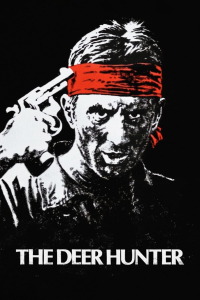
The Deer Hunter is as much a traditional war film as Dr. Strangelove or: How I Learned to Stop Worrying and Love the Bomb is a comedy. Each category fits the respectable film, but their true intentions spread beyond these categories. As much as Dr. Strangelove was a political film, The Deer Hunter is a psychological study of the torments of war.
The Deer hunter is concerned with a couple of friends living in Pennsylvania, and their daily exploits. Young men as they are, there is constantly a clash of emotions between them. The film wants to vividly display these emotions by showing one of the friend's wedding, Stephen and his bride-Angela. The scene which possibly lasts for more than half an hour attempts to do nothing but highlight their personality and sheer innocence. Three of these men, Niki, Stephen, and Michael, who are to venture to Vietnam for military duty, have a few precious days for reflection before their lives will be changed forever. After the first act, which introduces the characters and their lives, the second part focuses on the war, or rather the frustration of facing death in a "game" of Russian roulette "hosted" by the enemy. This game, in a nutshell, is the central element of the film that displays the agony of the war in a small setting. Every trigger could mean death or momentarily holding on to life. This symbol is brilliantly used, making the audience ask itself is the winner of Russian roulette, the winner, or is he the true victim of the psychological elements of the game; or, in a larger scale, the survivor of war may have won the battle, or conquered the hardships, but it seems that he lost the game of life, for he has lost his control, sanity, and livelihood. If these are the conditions for all veterans of war, is not death a better option?
After the second act, the third part focuses on the psychological study of the three friends that attended and survived the war. The film asks us to consider how war can change a person, and even if a person retains his personality after war? Everyone is so damaged, physically and mentally, that not only is their innocence shattered, but even their soul has been robbed by this war. Michael, played by Robert De Niro, who enjoyed deer hunting before the war, now doesn't have the heart to shoot a deer. These men are prisoners of war, even though they are not in prison. War has encompassed their life, that their very actions, thoughts, emotions, have been modified by the war. The distance they keep from their loved ones, distaste from firearms, and altered memory of events and people is due to the very effects of war that has made Niki, Michael, and Stephen the anthises of their previous selves.
The film's unexpected ending solidifies it as a tragic, and at times tearful, experience, rather than a mere display of military potential. At the beginning, we are at loss in the significance of the overlong wedding sequence, or the seemingly unnecessary conflict between Michael and Stanley, played by John Cazale. There seems to be a lot of fluff, but as the intent of the film sets in, it becomes clear that Michael Cimino wants to display the humanity of the characters before sending them to the most severely harmful place on the planet. In many war films, the audience becomes familiar with the characters on the battlefield; in a condition, that the human being is being tested emotionally, physically, and mentally. In such conditions, we do not really know the human being, but, rather know the distraught mess of a person. The portrait of men before war is pivotal to understanding the effects of war; in other words, the conditions of the man of war can be tested by his life before his engagement in war. Unfortunately, the film does not warn the audience of its psychological study, so for much of the film we are at a loss in how to approach the work. It does not hint that this is not a traditional war film, but rather an observation of the post-conditions of men of war. In this respect, the audience has to remodify its approach to the film to actually understand it from the specific angel it wishes to approach. If not, The Deer Hunter will seem nothing more than an overlong patch-like study of sections of a couple of men's lives, without each part being detailed or entertaining as a whole.
The film is a solemn, unexciting, slow-moving, character building experience which aims not at humanizing its characters, because they don't need the help. Its purest intentions are to display the cruelty of war on the human psyche, while cleverly lambasting the unnecessary Vietnam War. The film has long been criticized for its supposed liberal standpoint, but such a title would be best left for films such as Oliver Stone's Platoon. The Deer Hunter far extends the Vietnam War and warns of the effects of all wars, short or long in length, on the warrior. At the beginning of the film, in the wedding ceremony, there is a poster wishing luck to the soldiers that will serve this land in the name of God. The final scene of the film also harbors the same patriotism by the cast's singing of "God Bless America" which sounds, as unfortunate as it may be, mockingly funny, for it was the patriotism that got them in all the trouble that they find themselves in. Or, maybe it was a work of reverse psychology telling us that as wise as humanity is, war will always be an integral part of his life; maybe he just isn't wise enough to realize the harmful cultural ideas that have made him proud of his war service.
This review of The Deer Hunter (1978) was written by Booby H on 16 Jun 2010.
The Deer Hunter has generally received very positive reviews.
Was this review helpful?