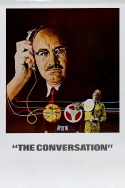
Review of The Conversation (1974) by Habiba A — 03 Jan 2014
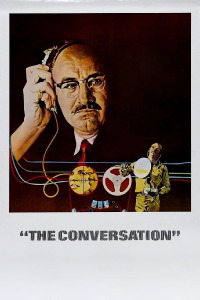
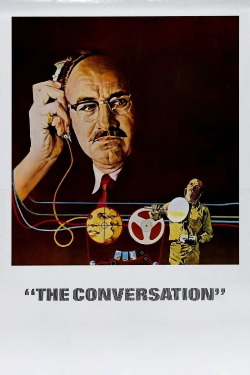
Gene Hackman's Harry Caul is the rock star of the private surveillance industry, the envy of his peers, the hero exposer of scandals at the highest levels. That's a needless premise, and after it is introduced relatively deep into the film it does the story harm.
At the beginning, Caul is interesting enough as an excessively-reserved man balancing an espionage career against his moral discomfort with the job. His character comes further into focus as we see how his guilt and obsession over his work makes intimate relationships, and even casual acquaintanceships like that between a landlord and a tenant, virtually impossible.
Caul's personality is not conveyed in not the most subtle or original ways: a trip to a confessional booth is involved, and tossed-off memories of childhood traumas, both of which are overfamiliar, quick and dirty methods for getting to the bottom of a character's psyche.
But in spy dramas stock characters have a long and fine history, and the real stars are often plot and atmosphere. The problems with "The Conversation" really begin, then, when Caul is built up as an expert in the field, but proves less savvy than the audience despite having access to the same information.
No George Smiley is he; although he, like Smiley, is well-respected in his field, and though both characters have blind spots in their personal lives, Caul exhibits a very un-Smiley-like fecklessness in virtually everything he does.
The plot twists remarkably little and elevates to disappointingly low stakes, yet Caul consistently proves to be no match for the crime thriller playbook's oldest tricks. Admittedly, that's part of the idea: he's become so damaged by his work that he's falling apart, but because the movie only spans the final stage of what must have been a long descent, Caul is remote and the story seems incomplete.
The climactic scenes seem to belong to a different movie entirely, one chiefly concerned with psychology and the reliability of perception, and while this turn may deflect attention from a relatively weak story, it again highlights the flimsiness of the central character and how little there is to know about him.
By contrast, other Coppola movies from the same decade, namely The Godfather films and Apocalypse Now, benefit from richly detailed scripts and powerful personalities. Coppola's directorial style is also weaker in this film than in the others, as for example in the almost embarrassing reliance on horror-movie techniques in a key scene in a bathroom.
This review of The Conversation (1974) was written by Habiba A on 03 Jan 2014.
The Conversation has generally received very positive reviews.
Was this review helpful?