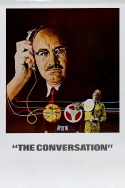
Review of The Conversation (1974) by John E — 27 May 2011
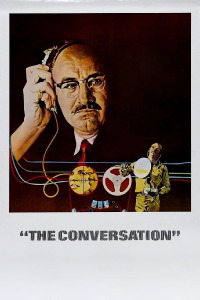
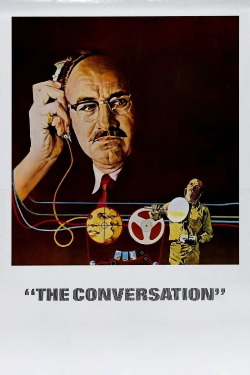
This quiet and staid masterpiece from Coppola's unbelievably fecund streak in the 70s is just as disturbing and disquieting today, perhaps even more so with the continued advance of technology. Harry Caul is a man married to his work, solely interested in providing the best possible audio fidelity while keeping his mark within observable distance.
He only cares about the act and quality of the surveil, showing little appreciable regard for the persons (or better put in his mind, the subjects) whose secret privacy he stealthily transgresses. When the dangerous efficacy and thoroughness of his work turns itself on him, he is unable to deal with it; the creeping uncertainty that someone else may be outwitting his brilliant countersurveillance protocols and capturing his life (no matter how boring it seems to be) gradually whittles away at his sanity.
Coppola does a fantastic job of ratcheting up the intensity knob at an excrutiating crawl. This crawl wriggles its way into Caul's head and drives him to the depths of paranoia and suspicion. The film is one giant irony: Caul seems to obsessively cherish his own privacy despite the uninteresting ennui of his own life and the vastly more complex lives of the people whom he is hired to surveil.
Althoug Caul is by and large an uninteresting character, Hackman's quietly intense performance (perhaps his best) and the few human touches (Caul's deep religious leanings and his affinity for his saxophone) make him almost immediately engaging if not sympathetic.
This movie is often overlooked because it is, by nature of its subject matter, much less bombastic and grandiose than Coppola's more famous work from the 70s. Regardless, it proves that Coppola is more than capable of subtlety and tension.
This review of The Conversation (1974) was written by John E on 27 May 2011.
The Conversation has generally received very positive reviews.
Was this review helpful?