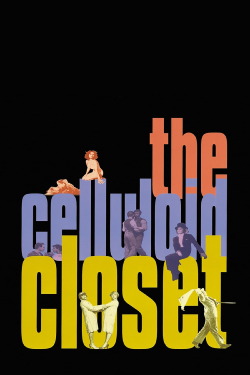
Review of The Celluloid Closet (1996) by Blake P — 17 Dec 2016
Five things hit me harder than a hammer to the kneecap while watching eye-opening 1996 documentary "The Celluloid Closet.".
(1) The movie, directed by Rob Epstein and Jeffrey Friedman, is, at its simplest, a study of homosexuality and its relation to the entertainment industry. At its most complex (and its most striking), though, is it a commentary revolving around the media's effective strategies in defining what's "normal" in terms of gender and sexuality, analyzing how the deficiency of portrayals of the LGBT community over the last century or so has essentially worsened the hopeless pangs of alienating "otherness" to have afflicted the minority group.
(2) Due to the lacking of widespread representation of the gay populace, many have been faced with the difficult task of having to rearrange the stories of heterosexually dominated films to try to find something relatable within them. For some, Joan Crawford wearing a black cowboy shirt throughout "Johnny Guitar" (1954) was enough. For others, Thelma and Louise's friendship strengthening road trip was, at its center, about same-sex love. Even the sexualized depiction of bisexuality in "Basic Instinct" (1992) still meant something if only because it was something instead of nothing. "I'd rather have negative representation than no representation," talking head Harvey Fierstein frankly admits, providing the movie with one of its most crushing quotes.
(3) As a young, white, heterosexual male - the most numbingly privileged demographic in the world - never have I had to worry about seeing someone like me reflected in the media. Never have I had to seek out entertainment catering to my sexuality or my culture: both are seen as such "normal" facets within our society that few find the time to question how much is left out in the process. For anyone who isn't categorically part of the majority has to thirstily search for anything that parallels their own lives even remotely, and that's an unfair, heartbreaking reality, an additionally brutal supplement within a globe that finds people more easily able to define their sense of self by ambushing someone who isn't like them as an "other" to be compared.
(4) Why is the image of a man showing affection toward another man seen as the visual destruction of masculinity - really a sign that a man is weak, soft - whereas the sight of a woman passionate toward another woman is looked at as something beautiful, comforting, sexy, and, perhaps, even an extension of the warmth that is female sexuality? Why is it unacceptable for a man to be feminine, while it's enthralling, sometimes even titillating, for a woman to be masculine? Why has it taken so long for there to be accurate delineation of the LGBT community when they've always existed, when they've always been so integral to the entertainment business? Why does society so oftentimes strongly fear people simply because they are not like them?
(5) In the twenty years since "The Celluloid Closet" was originally seen by mainstream audiences, things have been rapidly changing for the better, perhaps a sign that films like this one are, in fact, capable of drawing attention to the recurring crime of underrepresentation. The overarching society in which we live has a long way to go in widespread acceptance, but like all stigmas perpetuated by media and people who consume that said media, social change can spread like wildfire with enough normalization and with enough neatly packaged reminders that to ostracize another is a pointless endeavor - the celebration of all is of utmost priority, and nothing should be stopping us from running up that hill.
This review of The Celluloid Closet (1996) was written by Blake P on 17 Dec 2016.
The Celluloid Closet has generally received very positive reviews.
Was this review helpful?