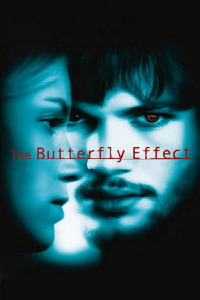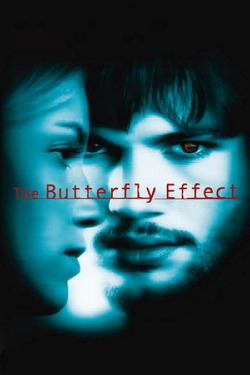
Review of The Butterfly Effect (2004) by Adam F — 16 Jul 2013
"The Butterfly Effect" is a paradox in itself because it's a science fiction film that will in no way satisfy fans of science fiction and will instead appeal to casual movie viewers. If you can manage to be engaged by the plot and not think about what you're watching too much you might miss the glaring problems and inconsistencies in the story but even then, that's a challenge. Ashton Kutcher plays Evan Treborn. As a young child, Evan experiences frequent blackouts. These memory lapses appear to be triggered by intense periods of trauma or stress and when even hypnosis fails to unearth what happened during a particularly intense event, Evan is encouraged by his therapist to keep a daily journal. As an adult, Evan discovers that when he reads his journals he can temporarily transfer his adult consciousness into his past self and is even able to alter the events that occur. These trips back in time correspond with the blackouts and Evan sees a great opportunity to prevent or fix some of the traumatic events that plagued his childhood sweetheart, her brother and some of his friends. As he takes multiple trips back in time, he realizes that even the smallest change in the past can alter reality in unpredictable ways.
This is a pretty interesting premise. Who hasn't wanted to travel back in time and prevent or enable certain events in their past? Combine this desire with the fact that Evan's childhood is filled with events that are genuinely disturbing and damaging to the people around him and you've got the opportunity to have some real drama and thrills. You sympathize with the character because when you see the potential here, you also want these events to be erased from history. There are also some clever twists in the story, with some changes benefiting Evan, others putting him in a position that's far worse than the one he started in. In some cases, journal entries are destroyed or never even exist so there's a genuine thriller element to the film as well. Evan always has good intentions but because of the unpredictable nature of the timeline, you can never predict what is going to happen in the long run.
There is a giant flaw with the film however; the fact that under closer inspection it just doesn't really make any sense. It feels like the overall outline of the film was written down first and then the scenes of time travel were inserted in so that they would reach a specific end instead of reaching a logical one. Every time Evan travels back in time, the rules seem to change. Sometimes, when he travels back in time it plays out exactly as it did in the original reality; ok that's all right because maybe the changes he made (if any) were inconsequential. If a trip back in time can in fact have no impact on the future one might wonder why the film is titled "The Butterfly Effect" but logically, that makes sense so moving on. Sometimes, the changes to reality are very small, such as a scar appearing on Evan's body. In these instances, there are great inconsistencies. At a point in the film, Evan has to convince a friend that he is able to travel back in time. To do this, he travels back, mutilates himself and when he returns to his future body, the scars appear. If you are a fan of time-travel stories, that sequence will immediately jump at you as making no sense. If Evan travelled back in time and altered his body this way, then he always had those scars. Theoretically though, this method of alternating reality could work so once you wrap your head around it, you'll be ok with it. After all, this story is all about a character's consciousness that stays the same even as the people and events around him change. HOWEVER this logic is contradicted in the next trip back in time. After proving to his friend that he can travel to the past, Evan alters his life and awakens in a reality and body that is completely different from the one in the previous scene. Why did one trip back change nothing up until the point where he was talking to his friend while another changed everything except for Evan's memories? There are many time travel stories where the past is altered and you have to mentally pause the film and think to yourself that time travel basically defies logic in itself but at least in a tight story the laws of time travel are consistent, meaning you can just accept what happens and move on. In here, that just isn't the case.
Another problem with the film is the main character Evan. It is established early in the film that he's an intelligent, if not brilliant young man at the top of his class. In fact he's so smart that his peers resent him. Why is it then that the man is constantly baffled when he alters the past? Every time he arrives in a new reality, he is always confused and acts like he doesn't understand what happened. Some of this could be attributed to the fact that essentially Evan has travelled to a different dimension where an event in the past altered reality but there's an element in the film that contradicts this. You see, whenever Evan wakes up in this new life, he sees flashes of the events that lead up to it. There is also a scene where they flat-out explain that when he wakes up his brain suddenly amasses a massive amount of memories, indicating that he now knows everything he should know about this world in addition to his previous encounters. Why is he so surprised when people act differently then? Why can't he blend in? If he's so smart, why is he always in such a hurry to get back to his journals and alter the past? Doesn't he realize that when it comes to time travel he literally has all the time in the world to go back and fix everything that went wrong?
The plot holes and leaps in logic are quite numerous in "The Butterfly Effect" and that's the reason why the movie won't really appeal to fans of science fiction. If you're watching it with friends (as I did) you'll find yourself constantly pausing the movie to discuss what just happened and ask the other people watching if a) what happened works with the loosely established internal logic of the story b) said logic makes any sense or c) if any intelligent human being would act as Evan or the other people in the film would. The good ideas and genuine drama of the film get swept up in the inconsistencies and the momentum that the story is building towards completely falls apart because you'll constantly get pulled out of the story by the lack of logic. If you're not a fan of science fiction (or I guess if you're incredibly forgiving) you probably won't give a second thought to the movie and you'll just accept that what's going on makes sense. If you're that kind of viewer then by all means watch "The Butterfly Effect" and you'll be totally immersed in the interesting plot. You'll genuinely have a good time and you'll enjoy watching the hero try and fix the world while experiencing all of these different alternate versions of the characters present in the story.
The film is available in a theatrical version and a Directors cut, both of which share the same problems. The major difference is in the ending and neither hit quite the right note. The theatrical cut works logically but doesn't feel like it belongs with the overall grim tone of the film. The Director's cut fits more with the mood of the story but the actions taken by Evan here are extremely illogical. There's a good movie somewhere in the script for "The Butterfly Effect" but this should have been run through a fine-toothed comb before shooting began. Maybe then the problems would have been less numerous and the film bearable for fans of time travel but as is, it's a mess. Despite an intriguing story, good performances and some good drama there's just too much wrong for "The Butterfly Effect" to earn a real recommendation. (Theatrical and Extended Cut on Dvd, July 12, 2013).
This review of The Butterfly Effect (2004) was written by Adam F on 16 Jul 2013.
The Butterfly Effect has generally received positive reviews.
Was this review helpful?