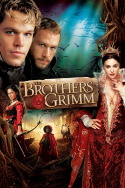
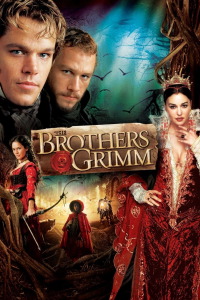
Review of The Brothers Grimm (2005) by Daniel M — 15 Mar 2010
One of the hardest things about being a film fan is when a director you love makes a really bad film. We expect nothing but the worst from Michael Bay, Brett Ratner and McG, so that while their films are terrible this does not come as a shock. But when Alan Parker makes The Life of David Gale, or Tim Burton makes Mars Attacks!, or Ridley Scott makes A Good Year, it is almost unbearable. The knowledge of these directorsâ?? talent clashes with the experience of the films themselves, resulting in anger, despair and disappointment.
Terry Gilliamâ??s The Brothers Grimm fits into this category very neatly, although in terms of its problems it is unlike any of those mentioned. Where all three aforementioned flops were the directorâ??s chosen projects and therefore entirely their fault, The Brothers Grimm is closer to David Fincherâ??s Alien 3 or David Lynchâ??s Dune, potentially interesting projects undone by heavy-handed producers obsessed with hitting their target audience.
Where Fincher wanted Alien 3 to be as dark and nihilistic as the original, the studios wanted a mainstream action film. Where Lynch saw Dune as a chance to expand his palette to create an immersive world, Dino DeLaurentis wanted a simplistic space fantasy that could cash in on the success of Star Wars. Both films have moments where the directorsâ?? true intentions shine through (Alien 3 moreso, it must be said), but for purists they remain so disappointing.
Itâ??s not difficult to see why Gilliam would have been attracted to The Brothers Grimm. He is renowned for blending fantasy and reality together into one seamless whole, whether in the dream sequences of Brazil or the wild flights of fancy in The Adventures of Baron Munchausen. Many of his films are about the triumph of faith and imagination over the grim, restrictive realities we find ourselves in, a theme completely embodied in the character of Jakob Grimm. And much of his work, like Jabberwocky and The Fisher King, has a fairy tale element to it.
Sadly, all these good omens are in vain, and simply make the end result all the more unbearable. Gilliamâ??s clashes with Bob and Harvey Weinstein were wide-ranging, from the firing of cinematographer Nicola Pecorini for â??working too slowlyâ?? to their refusal to let Matt Damon wear a prosthetic nose, for fear that it would â??distract audiences from his star-studded good looks.â?? These squabbles continued well into post-production with the supervision of ever-increasing effects shots. They ran on so long, that Gilliam was able to shoot the whole of Tideland before The Brothers Grimm was even released.
The result of all this in-fighting, regardless of its cause or extent, is that The Brothers Grimm is not a Terry Gilliam film. It is a mainstream film which just happens to be directed by Terry Gilliam, with a visual style which is severely compromised and often completely derivative. Some moments seem to be cobbled together from Gilliamâ??s previous work, in some kind of bizarre, ham-fisted self-parody. The woodland catapult feels like a lift from Time Bandits, while both the odd technology and the Grimmsâ?? armour seem to have escaped from Brazil. Elsewhere there are clear rip-offs of Sleepy Hollow (the look of the village), Indiana Jones and the Temple of Doom (the torture scenes), and â?? most insultingly â?? The Lord of the Rings.
The derivative visuals can be traced to the filmâ??s over-reliance on CGI in place of more organic effects. Despite the lengthy post-production, which saw the release date pushed back almost a year, many of the effects look ropey and unfinished. The wolfâ??s transformation is no great surprise because the wolf runs in such an odd way that we know itâ??s a man underneath. The treesâ?? moving branches, which seem to have escaped from The Evil Dead, are not threatening enough, nor is the scene of the horse devouring the child. Even when things get impressive, like the Ice Princess regenerating and then shattering into mirrored glass, we simply donâ??t care because all the bad effects preceding it take us out of the fantasy and leave us feeling inert. In any case, Théodenâ??s regeneration in The Two Towers is far more impressive, being quicker and largely unedited.
But itâ??s not just the bad effects which make this a stinker. The script is really third-rate, never managing to do justice either to the characters or the fairy tales. It was written by Ehren Kruger, who also wrote Gore Verbinskiâ??s abysmal remake of The Ring, and in its worst moments the film does feel like Pirates of the Caribbean. The storytelling is incoherent, the dialogue is flat and incomprehensible, and the actors have the distinct look of not knowing what is going on. The goofy comedy is especially out of place, being completely at odds with Gilliamâ??s sensibilities. In Time Bandits or Baron Munchausen, dark and forbidding worlds are created into which humour is introduced to add depth. Here we have lots of bad slapstick, with people falling over each other in various mirthless ways.
On top of all this, the film is completely miscast and badly acted. Even before we get to the individual actors, there is the issue of accents. Both Grimms speak in â??naturalâ?? English accents, which would be fine if everyone else did the same. Instead we have Jonathan Pryce nearly swallowing his words in a French accent, and Peter Stormare being impossible to understand as an Italian. Heath Ledger is quite simply all over the place, babbling his lines and stumbling around aimlessly, just as he did in The Imaginarium of Doctor Parnassus. Matt Damon looks completely at sea, and Lena Headly is far too glamorous to play Angelica (Gilliam originally wanted Samantha Morton, but the Weinsteins effused in yet another act of genius). All the supporting cast look less like characters than rejects from the local freak show; the acting is hammy and over-the-top in a way which quickly stops being funny.
The Brothers Grimm is a soul-crushing experience for anyone who loves Terry Gilliam, or indeed anyone who appreciates genuine artistic talent over the demographic obsessions of studios. The film as a whole bares a strange resemblance to Army of Darkness, which stripped out all the colourful darkness of the earlier Evil Dead films to create a goofy mainstream romp which ultimately falls flat on its face. All of the darkness and real substance of Gilliamâ??s greatest work has indeed been stripped away, and all that is left is a hollow shell vainly pumped full of cheap imitations. Even if one goes in with the lowest expectations â?? say, having just seen Doctor Parnassus â?? the overriding emotion will be either anger or despair. Itâ??s a real calamity in Gilliamâ??s career, and based upon his subsequent work, he has yet to recover from it.
This review of The Brothers Grimm (2005) was written by Daniel M on 15 Mar 2010.
The Brothers Grimm has generally received mixed reviews.
Was this review helpful?