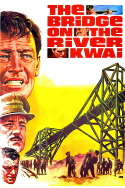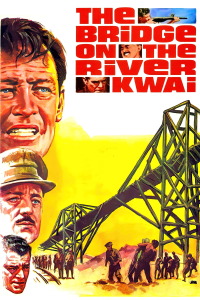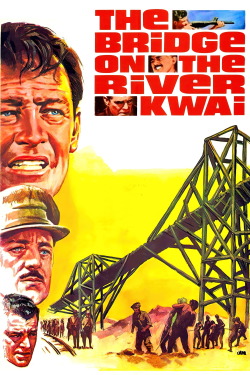
Review of The Bridge on the River Kwai (1957) by Carlos R — 13 Sep 2010
From July 4, 2008:
The Bridge on the River Kwai exemplifies and almost revels in moral ambiguity. This film is unique because it is an unusually diplomatic portrayal, especially for the year in which it was made (1957), of both sides in a war. As such, it wades through murky shades of gray, never favoring one side or one character over another. There are no clear heroes or villains. Nicholson clearly has the interests of his soldiers at heart at first, but his self-interest in the bridge's construction becomes tantamount to anything else. Shears is a man who thrives on common sense and takes up the commission to go back to the place from which he escapes, but in actuality, he's really a man trying to survive, having assumed a fake name and wanting only to be medically discharged with no fuss or muss. Saito is a hard man, but he respects hard work and loyalty and hard-fought principles and seems to be softer than first impression would suggest.
David Lean, who directed Lawrence of Arabia, directed this film. This film seemed tighter and more character-focused than "Lawrence," rather than sprawled out over cinematically large shots of desert landscapes and four hours of story. He elicited some wonderfully complex performances from some fine actors, and he used the on-location scenery in what is now Sri Lanka to great effect. The hallmark of this film was Alec Guinness, whose performance is understated and suspension-of-disbelief convincing. It was also the most completely developed and richest character, though with some question at the end as to whether he was really "mad" or simply trying to make the best of his situation in an effort to make himself feel more like a man and less like a slave. This film explored some heady philosophical issues as they relate to human nature in extremely adverse conditions, and the depth and breadth of good and evil, and the Nicholson character was sort of the fulcrum for that exploration. Also, William Holden was good (he's always good).
There are some noticeable but minor flaws in this film. Narratively, some questions about the characters go unanswered, which can be effective, such as in the question of Nicholson's sanity, or simply confusing. Nicholson mentions that he and his unit were ordered to surrender with no explanation as to why and no indication that the British government had any concern for them in their captured state. This was a curious thing to say; it felt like a contrived plot device, but the contrivance was not properly fleshed out to be satisfying. Shears is given no past at all, not even when we learn that he has a true identity of sorts, but maybe that speaks to the lostness of a POW, and how one's identity melts into the background when treated as sub-human.
In addition, there are some pacing inconsistencies, particuarly around the time that Shears and the young lieutenant are setting out the explosives. The film moves along at a steady clip, jumping back and forth between Nicholson and Saito's budding respect for one another and the plot with Shears and Warden's jungle march toward the bridge, but it slows to a crawl. What's distracting is the questionable lighting. While possibly the limitations of the day, these scenes were meant to be at night but were not lit cinematographically enough to be convincing. There were too many sparkles from unidentified light on the water, considering they were in a canopy of jungle trees.
Now, perhaps, the pacing is meant to set the viewer up for the last 15 minutes, which, if that's the case, is quite alright. All of a sudden, the film becomes something of a thriller, and it's one of the most satisfying endings to a film ever. Also, it wasn't a war movie about patriotism and struggles in the face of violence; it was a war movie about the consequences of war and what they do to the men (and women) fighting them, and that point was expertly executed.
The Bridge on the River Kwai is worth the watch. It's a satisfying film on many levels and a well-rounded story with many layers.
This review of The Bridge on the River Kwai (1957) was written by Carlos R on 13 Sep 2010.
The Bridge on the River Kwai has generally received very positive reviews.
Was this review helpful?