Review of The Brave One (2007) by Mark D — 07 Apr 2009
I recently read about the four cops murdered in Oakland on March 22, 2009. They were gunned down by one very bad 26 year old man who had a long list of very bad past deeds. Subsequently, I learned about rules of engagement that place law enforcement officers between a rock and a hard place in the call of duty. When the chips are down they can either shoot at the bad guy without hesitation and face prison for their actions after the clever liberal lawyers get through with them, or they can hesitate and be killed themselves. I've heard this called the "die first--shoot later" syndrome. Worse yet, there are boundless examples of the 'bad guy', once apprehended, cheating the system on miniscule legal technicalities. It's maddening, and the more I look around and observe the wheels of justice in motion, the more I conclude that the 'good guys' are typically held in a position of disadvantage in this world full of 'bad guys'. You can argue that the "system" is doing the best that it can to make society safe for the common tax-paying citizen, but I'm hardly convinced of this. This preamble leads me into my subject at hand: I love vigilante films!
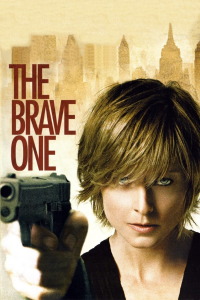
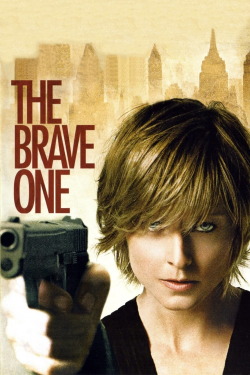
"The Brave One" is a 2007 film directed by Neil Jordan ("Interview with the Vampire", "Michael Collins") and starring Jodie Foster as an unlikely vigilante. The film starts off with lovebirds Erica Bain (Foster) and her fiance David (Naveen Andrews from TV's "LOST"). They have great lives--so much so that a friend tells them "you're way too happy. I hate you. I'm serious: I really hate you!" I'm sure this friend felt terrible the next day after Erica and David are attacked by bad guys in Central Park (yes, an NYC setting). Erica narrowly escapes death--she wakes up from a coma three weeks later only to learn that David had been killed and their dog has gone missing. Now the friend has no need to hate her so much I guess.
Erica is now no longer really "Erica". She is angry and scared and broken and she describes herself as now being a stranger to her own existence--she can't find herself within herself any longer. She tries buying a gun to provide protective piece of mind but is dissuaded by the gun shop's red tape and wait period. An opportunist overhears her concerns, approaches her on the street and ultimately sets her up with a black market 9 mm handgun. Possessing her new concealed weapon is the only thing giving Erica the fortitude to liberate herself from virtual imprisonment in her own apartment. The storyline becomes a little too convenient after this point because Erica manages to wind up in several back to back perilous scenarios wherein she becomes pitted against some really bad guys. I don't think even a soldier in Kabul could find trouble as prolifically as Erica Bain does in the course of this film. But the point is that she DOES find trouble and she does become a vigilante many times over.
"The Brave One" seems to run along the middle ground with regard to the morality of Erica's vigilantism. We are left to decide for ourselves what is justifiable or morally correct. I personally would have done exactly as Erica: kill the bad guys dead without hesitation. Forget that "rules of engagement" crap, and forget expectations that the bad guys will be dealt justice--they probably won't be. I prefer personalized justice, and I'll wager that most viewers watching "The Brave One" would second this motion at least for the duration of the film.
Jodie Foster plays a deliciously troubled Erica Bain. Erica is a mere mortal--a woman whose life has been obliterated. She has no where near the steely, unwavering disposition of a Clint Eastwood (Gran Torino) or Charles Bronson (Death Wish) vigilante. She starts off terrified and clearly loses another piece of her soul with every seemingly justified slaying she commits. I feel that the film delivers us deeply into Erica's weighty predicament very successfully such that we are powerless to remain morally indifferent. However, most viewers, lacking the requisite brokenness that launches Erica, are more or less reduced to pious and political platitudes on the matter: "it's a matter for the authorities" or "justice will be served by God on Judgment Day--it's not for us to decide". That's why I like the way this film plays out--we become broken along with Erica and we go sliding down the slope along with her. We vicariously earn the right to weigh-in on the morality of her actions and then when it's all over we feel grateful that we are still safe in our bubble-wrapped lives.
Upon commencing her vigilante spree, Erica's life becomes enmeshed with that of a Detective Mercer (a very sharp and very Sidney Poitier-esque Terrence Howard). Mercer is a good man and an honest cop. His own life is largely broken, and justice has repeatedly failed him in big ways, but he continues on playing by the rulebook. Before long both Erica and Mercer become wise to each other, but remain silent about what the other is clearly thinking regarding the vigilante elephant in the room. The story is given an unexpected and largely unlikely ending involving Erica and Mercer that seems to advise us that the rulebook should be tossed aside periodically both in film-making and in real life justice. Overall "The Brave One" is readily engaging and well-acted, but it has far too many convenient plot devices (ex: the African neighbor who supplies both medical attention and timely wisdom to Erica) which deny us full immersion into Erica's gritty reality.
This review of The Brave One (2007) was written by Mark D on 07 Apr 2009.
The Brave One has generally received positive reviews.
Was this review helpful?