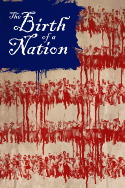
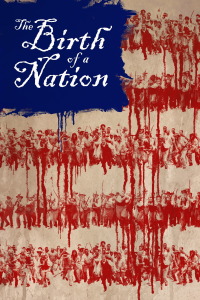
Review of The Birth of a Nation (2016) by Marcel A — 17 Oct 2016
Separating artists from their art is no small challenge, if divisive celebrities like Kanye West and Mel Gibson are any indication. We often struggle to appreciate on its own terms the work of a controversial figure whose personal life becomes tabloid fodder. We seem hardwired to dismiss their artistic merits out of hand, as if acknowledging them absolves their creators of their transgressions. Usually, the passage of time goes a long way towards softening such harsh outlooks: Richard Wagner and Edgar Degas were both unrepentant anti-Semites yet their works enjoy universal acclaim...150 years later. Unfortunately for actor Nate Parker, whose much-anticipated directorial debut 'The Birth of a Nation' opened nationwide this past weekend, time is not yet on his side.
Back in January, he unveiled his scorching biopic at the Sundance Film Festival to rapturous acclaim. Borrowing its title from the infamous 1915 D.W. Griffith film that celebrated the efforts of the Ku Klux Klan during the American Civil War, Parker's period drama explores the life of Nat Turner, the leader of an 1831 slave revolt that resulted in the bloody deaths of dozens of white people, followed by the retaliatory murders of over 200 slaves. Then in late August, Parker's own troubled past came to light with reports of a 1999 rape charge for which he was later acquitted. [Jean McGianni Celestin - the movie's co-writer and Parker's college roommate at the time of the alleged assault - was convicted for the same crime before seeing that conviction overturned on appeal.] Particularly in light of the alleged victim's 2012 suicide, Parker's recent remarks to the press on this subject have struck many as lacking in empathy and almost indignant in tone. Less publicized but no less disturbing is his declaration in a 2014 BET interview that he refuses to play gay characters in order to "preserve the black man" (whatever the hell that means).
It is through this murky prism that audiences are forced to watch this stirring, often-unsettling dramatization of a little-known chapter of America's shameful past. For some, it presents too great a challenge, inspiring many potential viewers to boycott the film altogether. Myself, I remain conflicted on the whole 'art-versus-artist' conundrum; I suppose my ability to remain objective depends on the severity of the artist's alleged crimes. Returning to the two examples I mentioned earlier, I can tolerate Kanye's public antics since the only person he's really harming is himself, yet I have a harder time reconciling Gibson's talents as actor/director with some of his more deplorable behaviour over the years. Still, there is no denying the powerful impact of Parker's film; whatever the man's personal shortcomings, 'Birth' doesn't suffer from them as a result.
Which isn't to suggest the film doesn't have problems of its own. Being released a few short years after another period drama about slavery in the American South (i.e. the seminal '12 Years A Slave'), comparisons between the two films are inevitable. Both deliver genuinely disturbing images of the casual inhumanity of the era, and you could argue that Parker has the tougher assignment here: whereas '12 Years' vividly captures one man's herculean struggle to maintain his humanity and transcend his tragic circumstances, 'Birth' charts another man's journey towards fighting back against his people's oppressors in the name of God. As a child, Turner's keen intellect is noticed by his owner's kindly wife Elizabeth (Penelope Ann Miller), who teaches the young boy to read via the one text she deems "acceptable" for a Negro: the Bible. [Disappointingly, her motivation for doing so is never properly explored in the film. Does she believe she's doing God's work? Is she trying to give Nat a better life, or is he merely a 'pet project' for her?] Growing into the role of the plantation's resident preacher, Nat is eventually trotted out to neighbouring properties in hopes of pacifying their slaves (and thereby increasing productivity). Having lived under comparatively more humane conditions, the horrors he witnesses during these visits open his eyes to the depths of depravity endured by his fellow slaves and kindles Turner's revolutionary call to arms.
Films like 'The Birth of a Nation' are culturally important, even necessary; in a digital age where most people get their news from social media, they help keep alive vital chapters of our history that would otherwise be relegated to the least-visited section of your neighbourhood library (i.e. the one containing actual books...just left of the internet café). As such, these movies have a heightened responsibility to dramatize these events and figures accurately, and here Parker stumbles. In presenting Turner as a virtuous, God-fearing leader both to his fellow slaves and the viewing audience, 'Birth' fails to ask tough questions regarding the morality of vengeance. [It is telling that we only see Turner and his fellow rebels slaying white men, whereas the actual killings involved women and children as well.] The details of Turner's eventual capture are also modified to emphasize his nobility and righteousness, a small but noteworthy alteration which stronger writing would've rendered unnecessary. In fact, the film's final act (which dramatizes the slave uprising itself) is arguably its weakest, rushing through the startling events and muting their overall impact. Several supporting characters - e.g. the aforementioned Elizabeth and Turner's wife Cherry (Aja Naomi King) - feel frustratingly underwritten, as does the pacifist Nat's conversion to radicalism.
So...is 'The Birth of a Nation' worth watching? Most assuredly, yes. Despite its flaws, the film is a haunting, beautifully staged document of slave life in the American South during the decades leading up to the bloody war that would herald its end. The performances here are uniformly strong, including Parker himself in the lead role and Armie Hammer as Samuel, Turner's disarmingly tolerant owner. As director, Parker creates indelible images of slavery that will stay with you. While I remain firm in my belief that movies have an obligation to entertain first, then (if applicable) educate, forgotten stories like Nat Turner's deserve to be shared with the masses, however uneasy they may leave audiences in their wake.
This review of The Birth of a Nation (2016) was written by Marcel A on 17 Oct 2016.
The Birth of a Nation has generally received positive reviews.
Was this review helpful?