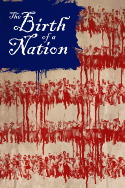
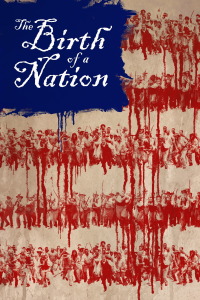
Review of The Birth of a Nation (2016) by Spangle — 20 Jan 2017
Is there a talented actor with worse luck than Armie Hammer? Since first establishing himself in teen hearthrob roles on shows such as Gossip Girl, he went on to show he was here to stay with a great turn in The Social Network. Since then, no matter what he picks, things just never work out for him. Sign onto J. Edgar, directed by Clint Eastwood and starring Leonardo DiCaprio? Critical failure. The Lone Ranger, directed by Pirates helmer Gore Verbinski and starring Johnny Depp in a big budget revival of a popular old television show? Critical and commercial failure. The Man From UNCLE, co-starring Henry Cavill and directed by Guy Ritchie, and another revival of an old television show? Mixed reviews and a commercial failure. Nocturnal Animals, starring Amy Adams, Jake Gyllenhaal, Michael Shannon, and Aaron Taylor-Johnson, while being directed by Tom Ford? This one has to be the one, right? Nope. Mixed reception and not likely to garner much Oscar attention. And now, we can add The Birth of a Nation to that pile. After seeing Michael Fassbender play a slave owner in 12 Years a Slave and in the aftermath of #OscarsSoWhite, this one seemed to be a safe bet to finally get Armie Hammer some popular recognition, but no, the film suffers critically and is maligned because of Nate Parker's past. Will this man ever find a film that is successful both critically and commerically?
The Birth of a Nation is a largely well put together historical biopic, a genre that I love. Though many hated the earlier The Free State of Jones, I am an apologist for the film and the genre as a whole. Give me some historical story and I would probably enjoy it a bit more than most. The Birth of a Nation, however, is hard to enjoy and its reasons only become clear in the second half. Initially a rousing tale of a slave, Nat Turner (Nate Parker), who learns the Bible and is sent to preach in horrible conditions to horribly treated slaves, the film is moving. It is always moving, in fact, with its images of brutality and horrifyingly poetic take on slavery. Yet, Parker overdoes it with symbols and a ham fisted approach to his protagonist's tale. Using butterfly symbols, a bleeding piece of corn, and repeated religious symbols (angels, crosses, and connections between Turner and various prophets), the film feels entirely misguided. This symbol-filled second half largely derides an otherwise solid film.
In the lead role, Parker is incredibly solid. Delivering powerful monologues, he captures the charisma and power of Nat Turner. Any man willing to take on his oppressor with nothing more than the Bible and an axe is a man that has incredible internal strength and confidence. Parker really captures this and turns in a consistently powerful performance of Turner. Alongside him, Aja Naomi King is brilliant as Nat Turner's wife, Cherry. Backing her husband on his mission from God all the way, she turns in a subtly powerful performance that will hopefully springboard her into larger roles.
Yet, as mentioned, it is the writing and direction that often let this one down. While the acting is rousing and the writing hits some high notes in the monologues, the film just feels too hamfisted. I am not one to argue that Nat Turner is bad. The men he killed undoubtedly deserved what they got coming to them for their treatment of slaves. Yet, the symbolism connecting him to Jesus or other prophets was just far too much. Turner lived with the sword and died by the sword, yet Parker is unwilling to criticize his hero at all, instead painting him as a religious prophet. While I concede that his situation demanded a violent uprising and that Turner himself was very religious, Parker comparisons between the violent Turner and the non-violent Jesus feel a bit too much. Of course, this only one instance of such ham fistedness with other instances of bleeding corn, some dream sequence in the trees with a half-naked Nate Parker or something, and the butterflies. All-in-all, Parker loses sight of his hero in these moments and instead turns into a symbolic look at a real story, when the real story was good on its own.
All of that said though, the first hour of The Birth of a Nation is quite good. Largely lacking the symbolism, it is a raw and powerful look at slavery. Combined with the sequence set to "Blood on the Leaves" at the end, Parker finds some truly stirring images in this film. Combined with good smoky cinematography covering the film is flat browns and grays, accented solely by blood or by the bright red/pink flowers given by Nat to his wife Cherry, the film is often quite pretty to look at. Through this film, Parker finds a captivating visual style and it is unfortunate that the final product does not live up to this style.
However, despite my reservations with this film, Nate Parker's past would not hinder my watching of any of his films. If I can watch the works of Woody Allen and Roman Polanski without hesitation, I can do the same here.
This review of The Birth of a Nation (2016) was written by Spangle on 20 Jan 2017.
The Birth of a Nation has generally received positive reviews.
Was this review helpful?