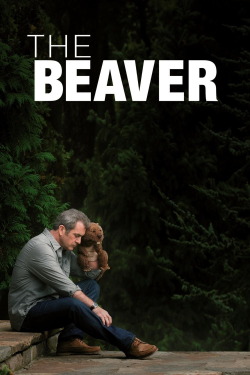
Review of The Beaver (2011) by Todd L — 18 Jun 2012
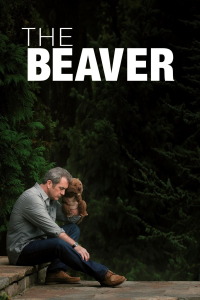
A film that features a man communicating through a hand puppet of a Beaver must be a comedy, right? Well, partly so - how could it not be? And yes, the film does have some moments that make you smile, but this Jodie Foster directed film is far deeper; deftly exploring clinical depression in a sober, and somber way.
Mel Gibson stars as a man suffering from depression. It's gotten to the point where he is literally sleepwalking through his life. He has given up, as all the little foibles and trials of daily life seem insurmountable to him. His wife, also played by Foster, still cares for him, but has distanced herself in an act of self preservation - which is part of Mel's problem. Everywhere he may step in attempting to fix the problem is a minefield, so he takes an avoidance tactic to the nth degree by emotionally and physically (by sleeping long and often) withdrawing from his own life.
This film shows, in spite of his public outbursts, that Mel still has serious acting chops. His performance is measured - over the top when necessary, and powerful in its silence, where much is conveyed by a raised eyebrow or sideways glance. In an act of desperation after a suicide attempt fails, Mel creates an alter ego - a hand puppet of a beaver who has this wonderful Manchester accent. Mel expertly flips between the two personas, with each being distinct and easily discernable, and totally believable that they coexist in the same mind.
Mel's struggle of trying to get his life back - reuniting with a family that he has, in many ways, betrayed by his actions, is meaty enough, but in an interesting move the film also tells a parallel story of Mel's eldest son, a bright high school senior who detests what his father did to the family and detests himself as he sees many of his father's mannerisms in himself - chief among them being the moodiness and glass half empty outlook.
While we see Mel's adult struggles in trying to reconnect and find some kind of joy in the adult world of work and family, his son Porter is equally at war with the expectations of high school. Foster does a nice job flipping back and forth between the two, drawing not only the parallel of father and son, but pointing out that, while they each have different crosses to bear, in either case life ain't easy.
As Mel tries to reconnect with his wife, son Porter takes interest in a cheerleader and class valedictorian, who, in spite of appearing to have the world as her oyster, has her own demons to deal with - and this becomes the central theme of the film... we all have our crosses to bear, and as the valedictorian speech makes clear towards the film's close, "there are 6 little words that our family and friends tell us - and those 6 words are lies... no, everything is not going to be alright!".
One might think that the use of a hand puppet is a mere contrivance, but I found it to be totally believable: a physical representation of multiple personality disorder, or just the wars we all have within ourselves as we try to cope. In creating the Beaver, Mel's character is giving control of his life to his self created alter ego - which is typical of MPD patients. As the alter ego becomes more successful, Mel gives it more and more control, until the real and lesser personality becomes almost non-existent. Finally, a war between the two parts of his psyche takes place - and all the early humor disappears, making the film a poignant drama.
In an interesting bit of allegory, the company that Mel inherited from his father is called Jerry Co. If you're up on the book of John in the bible, concerning the war of Jerico - only by absolute obedience to God was the city of Jerico delivered to Joshua - which echoes Mel's situation - only by giving himself over to his alternate personality, the Beaver, can he achieve success and reinstall himself in the real world. In a manner of speaking - Mel must let the Beaver be his god.
I'm reminded of the sign that used to hang over the door of John Larroquette's office on his old TV show (which also dealt with depression and other mental demons): "Life is a dark ride".
This review of The Beaver (2011) was written by Todd L on 18 Jun 2012.
The Beaver has generally received positive reviews.
Was this review helpful?