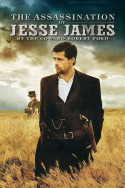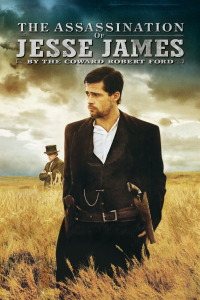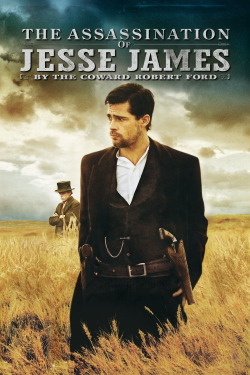
Review of The Assassination of Jesse James by the Coward Robert Ford (2007) by Rafaela S — 15 Jul 2011
Warning: this is just a PERSONAL analysis/conclusion.
Majestic. Moving. Intricate. Engaging. And without a doubt, beautiful. I thought in a thousand words who could describe the magnificence of this film, but none of them fit me. I could try to use the ingenuity and the apparent linearity of the film title that almost describes the plot. This, if I didn't use the word "apparent". As a composer friend of mine would say, perhaps, it's all about a great alchemy of words. A title which seems so simple, but that in itself is the key of the movie. Not for nothing, Brad Pitt (amazingly badass superb as Jesse James) required in contract that the name of the movie could not be altered in any free translation. Well, for me, each movie he does, the certain that Pitt is a genius grows, that's for sure. The strength of the movie, undoubtedly, is the generous Affleck's interpretation. Good Lord, so talented and inspiring that robs us of the breath. Every scene we wonder why he didn't take that deserved Oscar (there was a Javier Bardem in the way, ok).
Well, I could talk about the questioning the film does about the rise of celebrity's culture using the american myth par excellence, already sung by God Dylan, Jesse James. During the movie, using the craft of the "off narrative", the director dialogues with the myth to explain the man, a bold inversion of values. In traditional biopics, you take the man to unravel the myth. There's also another great merit of the film. The director knew that only by risking to break some paradigms of american cinema he could, in fact, disassemble that so engendered figure, so entrenched in it that he succumbed to his own fame. He draws a parallel between fame and fan, and how the relationship of love and hate, greed and contempt happens.
I remember that my level of fascination was such that, after watching it, I downloaded the incredibly beautiful soundtrack by Nick Cave, and after my delight in listening to it, I couldn't contain myself and watched the whole masterpiece again. A masterpiece of 160 min! As a Psychology student, I could expand on the strong influence of unhealthy introjection of Robert Ford, his narcissistic identification, and still wouldn't detail the amazing genius of the film. And, surely, I remember that ALL the facts reported in the film were not only "based" on actual events, as is a DETAILED DESCRIPTION of the murder of Jesse James. The director himself said that he bet the dialogue would fit the facts. Of all the films made about Jesse James, his descendants have claimed that this is the most accurate. The beauty is in the art of telling as it was in the director's cinematic prowess combined with frighteningly brilliant photograph of the greatest genius, in this area, alive, Roger Deakins. The Assassination of Jesse James snatched me in such a way that occupied my mind for a long time, so I asked everyone to review the film for me. Interestingly, I perceived a common reaction. Everyone described the key scene as being ambigeous but there is more than enough evidence to suggest that it isn't ambigeous at all and this common opinion intrigued me. Let me explain and stress that this is just an opinion. The entire film is about how Jesse is a man at conflict with himself, reflected in three key scenes; the train robbery when he is standing over the train conductor ready to assassinate him, the scene where he attacks Albert the young boy and his subsequent remorse and the scene where he presents Robert Ford with a new gun by way of apology for his erratic behaviour. Other evidence is when he confesses to Charlie Ford about the murder of Ed Miller and the scene where he asks Charlie Ford if he had ever contemplated 'suicide'. We all know that, not coincidentally, that would be the way that Charlie would end. All of this shows a man in deterioration, a man who is at complete odds with himself and who increasingly longs for a release from the pain of living what has become an almost impossible existence. As an outlaw he is wrought with paranoia and guilt over his history of violent crime. He isn't a man who is going to take his own life, but he is a man who is becoming so increasingly tired with his way of life that he is increasingly willing to accept death. Jesse James was a man who knew the exact time, date and place of his death. And he would be responsible for it.
When he discovers that Robert and Charlie have betrayed him, he realises that he will always be in the company of men that he has to suspect of either trying to turn him in or betray but he just doesn't know how to live any other way. His immediate reaction is one of anger which he manages to restrain at the breakfast table and Robert Ford, clearly fearing his life, leaves for the other room. Earlier, before breakfast Robert made a clear point of asking Jesse if his wearing guns in public was a wise decision. It is also suggested earlier in the film that Jesse is never without his guns. It never ocurred to me that the act of Jesse of abandon his guns, was a gesture of trust to the Ford brothers. No way. After Jesse has been made aware of the betrayal there is a scene of him looking out of the window at his daughter with an expression of melancholy. It is in this moment that he decides that he does not want to continue living and that Robert and Charlies fear for their own life is Jesse's own opportunity for his own release. Can we make an allusion to Freud here again? No, we MUST. When Jesse takes his guns off he methodically lays them out on the chair, this is clear indication that he is making himself vulnerable to Robert. Robert is visibly distraught and likely to take the extreme step of shooting an unarmed Jesse to protect himself but it's Charlie who is key to this scene, because he is so reluctant to draw his weapon on Jesse but accepts that it has to be done hence the title of the song 'What Must Be Done' which is further evidence that all three know what is coming. When the assassination doesn't arrive after Jesse lays out his guns, he does something quite kinky considering the circumstances and says 'don't that picture look dusty'. He stands on the chair and awaits his inevitable fate, he doesn't attempt to dust the picture. The picture isn't dusty. On the contrary, the image of Ford is reflected and melts at Jesse. Yes, this is Freud once again. It is a clear act of submission encouraging Robert to undertake 'what must be done'. When he sees Robert pointing the gun at him in the reflection of the picture, he doesn't react with surprise or shock or anguish, he accepts what is going to happen and bows his head in anticipation. He knows that Robert is cowardly and will shoot him in the back. And I say more. This is an act of suicide, since he "let himself die" by his own reflection, Bob Ford.
Robert being a coward is also significant to his theatrical portrayal of the assassination where he dramatizes events by claiming that Jesse was just trying to lull them into a false sense of security which is clearly untrue. Later when he challenges the audience, the narrator states that Charlie agrees with the accusations that Robert is a coward. Jesse enticed the brothers into killing him for his own selfish reasons and the whole film is geared towards that key scene supported in the superb (without the slightest exaggeration) interpretation of Sam Rockwell, Pitt and the spectacular Casey Affleck.
That's why the title of the film is deliberately ironic. It could have just been called 'The Assassination of Jesse James' but the extended title challenges the audience to question why it is that Robert Ford was largely considered to be a coward for shooting Jesse in the back when Jesse did the exact same thing to Ed Miller. To imply that Jesse didn't want to die at all is missing the entire fabric of the film. As his career draws to an end, Jesse James becomes aware of the impossibility of facing an increasingly vast army of sheriffs, federal agents and Pinkerton men. With the taunts and whims of a lover, he encourages Ford's envious, murderous fascination, and grooms him as his own killer, so that his own legend will be pristine after his death. He engineers a character-assassination of Ford, and the title, knowingly, gets it precisely the wrong way around.
In the end of the day, the question is... who really was the coward? I wouldn't say Jesse James. I would say Jesse James and Robert Ford.
This review of The Assassination of Jesse James by the Coward Robert Ford (2007) was written by Rafaela S on 15 Jul 2011.
The Assassination of Jesse James by the Coward Robert Ford has generally received positive reviews.
Was this review helpful?