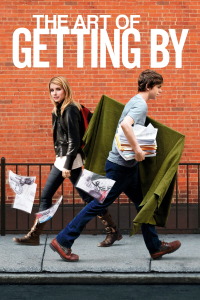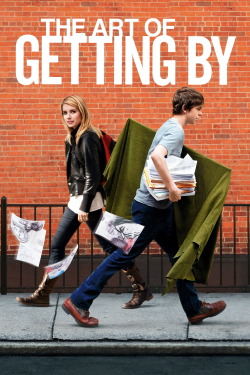
Review of The Art of Getting By (2011) by Shiira — 23 Jun 2011
"Rushmore" gets it all wrong. Max Fischer, filmmaker Wes Anderson's take on Holden Caulfield, the archetypal alienated teenager from "The Catcher in the Rye", is the Caulfield spun from a madman's mind.
When Salinger writes, "He turned around and looked at me like a madman," it's because Holden is exasperating to the cabbie, who doesn't know the first thing about where ducks migrate to in the wintertime, let alone "those ducks in that lagoon right near Central Park.
" On the other hand, Max, the socially awkward teen, one of Rushmore's worst students according to the school's headmaster, seems based more on Beatle assassin Mark David Chapman, who undoubtedly re-enacted the duck scene, some time during that fateful week of December 1980, when he wasn't offering cocaine to the taxi driver.
If "Rushmore" presented itself as a drama, devoid of the deadpan comedy that tempers Max's unrequited love towards a teacher, and consequent war for her affections with his mentor-turned-competitor, this co-opted version of Holden, sans barbed laughs, would be far better exposed for the sociopath that the film pretends he's not.
Anderson aligns his anti-hero with Johnny Boy, evoking "Mean Streets" by employing slo-mo and music with Scorsese-like flair, in the scene where a victorious Max emerges from the elevator, celebrating the successful releasing of bees in his rival's hotel room, scored to The Who.
Employing insects instead of bullets, nevertheless, like a rose, a hit attempt is a hit attempt by any other name. And the anti-social behavior doesn't end there. In retaliation of a trampled bicycle, Max cuts the brake line to the industrial magnate's car, a malicious act of treachery that nearly overextends the genre's framework.
That's not Holden Caulfield; that's Chapman's figmentation of the Salinger protagonist in his polluted imagination. The Holden we know and love, wouldn't harm a fly. In the novel, Holden prescribes to the virtues of obscurity, chastising his brother, a short story writer, whom the troubled boy labels a "prostitute" for selling out to Hollywood.
He hates movies because the actors "never act like people", whereas in "Rushmore", Max embraces film, going so far as adapting "Serpico" for the stage. Like Chapman, who is quoted as saying, "I was nobody until I killed the biggest somebody on earth," Max actively seeks fame, through the celebritydom associated with the popular arts, and by killing a notable public figure, in which Henry Blume symbolizes the slain singer/songwriter.
And also like Chapman, Max becomes romantically involved with a girl of Asian ancestry. Margaret is his Gloria Abe. There's a dissonance to this relationship, however, since the public school girl represents one of those phonies both Holden and Lennon's killer had gotten all riled up about, but to different degrees.
At what future time will Max hold her falsifying the results of an award-winning science fair project against her. Although in jest, this is a guy who threatens a Rushmore mate's life with a knife. By comparison, Holden confesses, "I'm not too tough.
I'm a pacifist, if you want to know the truth," in the post-mortem minutes of being soundly pummeled by Stradlater in their dormitory room. Contrary to popular opinion, George Zinavoy, the latest descendant of American literature's most-loved character, in "The Art of Getting By", comes closer to capturing Holden's character than any other film in recent memory.
"Igby Goes Down" gets some of it right. Comparable to Holden, whose personality is partly shaped by a schoolmate's suicide that occurred prior to his enrollment at Pencey, Igby is, likewise, a mess, after having witnessed his father's mental breakdown, which resulted in broken glass from the shower door and lots of paternal blood.
Igby, however, helps his brother Oliver kill their mother in a mercy killing, then angrily beats up her corpse. That's not Holden either. Differing from both Max and Igby Slocumb, George has a much sweeter disposition.
You don't believe him when he self-describes himself as a misanthrope, and neither does Sally Howe, who is Jane Gallagher's stand-in, the girl whom Holden loves; the girl who "keeps all of her kings in the back row.
" While Stradlater gets ready to take Jane out, Holden mentions repeatedly how he should say hello to her, but doesn't, due to his social impotence. Whereas Holden misinterpreted the Robert Burns poem "Comin' Thro the Rye", George misses a crucial line("And I fought every man for her") in the Leonard Cohen song "Winter Lady".
He surrenderd his lady to Dustin without much ado. Instead of saving children, George needs to save himself, and does, in a too-tidy ending. He graduates, which is antithetical to Holden's unformed nature.
Holden doesn't know what the future has in store for him. But for the Holden Caulfield who stood outside the Dakota, to quote Cohen's "The Future", "it is murder".
This review of The Art of Getting By (2011) was written by Shiira on 23 Jun 2011.
The Art of Getting By has generally received mixed reviews.
Was this review helpful?