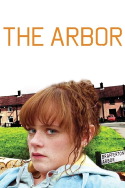
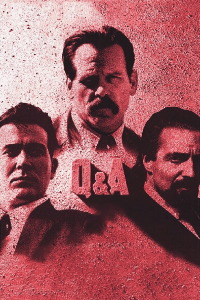
Review of The Arbor (2010) by Tony S — 03 Sep 2012
An Unconventional Telling of an All-Too-Common Story.
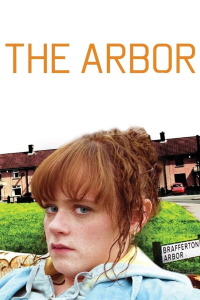
The only thing I knew about this documentary going in was that it was the story of a family, and that it was actors lip-synching recordings. I knew essentially nothing else. I'm not sure I'd ever heard of Andrea Dunbar. I've now read a synopsis of the one movie based on her work ([i]Rita, Sue and Bob Too[/i]), and I'm not particularly interested. As it happens, I've started several movies with similar thematic elements, and I seldom finish them. I seldom get more than about half an hour in before I get bored, frustrated, and/or angered and turn them off. Which means, I suppose, that if I had known more of the plot, I probably wouldn't have watched it. It would have been a shame, because this was intensely moving. It's really more the story of the daughters than the mother, who died in 1990 when the girls were children. The mother's story informs the daughters', but in many ways, it is the older daughter's story which is more compelling.
Andrea Dunbar was a lower-class British girl. She grew up in the Buttershaw council estate in Bradford, West Yorkshire. When she was fifteen, she wrote a play called [i]The Arbor[/i]. It was produced, and Dunbar became a minor celebrity. Except in Buttershaw, where she wasn't exactly popular. Especially because she had a daughter with a Pakistani man, Yousaf (performed by Jimi Mistry). Lorraine (Manjinder Virk) grew up with a drunk mother and two half-siblings by two different fathers. One night, she overheard her mother telling a boyfriend that she never should have given birth to Lorraine, her biracial child, and that she didn't love her as much as she loved her white children. Lorraine, understandably, turned to drugs, especially after her mother died. She became a prostitute. She got pregnant and gave birth to a john's child. And one night, the baby ingested some of her methadone and died.
It's easy to feel sorry for Lorraine, though there is some speculation that she deliberately gave the baby methadone. However, her stint in prison (manslaughter) at least did what it was supposed to do and got her to acknowledge that the baby's death was her fault even if it was an accident. She believes now that she will remain clean even if offered the opportunity to do heroin, because she knows that she chose her drugs over her baby. Either way, though, no child should ever see and hear what Lorraine saw and heard. She was also sexually abused as a child; if the baby hadn't been the john's, it is probable that she never would have had one, because sex has no real appeal to her. She is a scarred young woman, and she will never really be able to resolve her issues. She will never be able to confront her mother, no matter how much she wants to, because her mother died when she was young. Younger, in fact, than her mother had been when she was born.
These things do tend to repeat themselves. Lorraine had good foster parents (Monica Dolan and Neil Dudgeon), but in a way, they were too late. The damage had been done to Lorraine before they got her. Lorraine's sister, Lisa (Christine Bottomley), believes that Lorraine is just exaggerating her problems, or at any rate isn't really so mad at their mother as she thinks she is, but in many ways, Lisa had it easier. For one, she was younger when she got out of the situation. For another, she wasn't the biracial child. Even if what Lorraine says isn't true, and Andrea never expressed regret, it's definitely true that it would not have been easy for Lorraine around the neighbourhood. The stories the characters tell are deeply compelling no matter how they are told, and the only reason their story is unusual is that Andrea Dunbar was someone. There is, for example, no Wikipedia page for the movie, but there is one for Andrea Dunbar. It is because we know who she is that we care about Lorraine and Lisa.
The way the story is told could be distracting. Easily. After all, we're talking about lip-synching here. Lip-synching is often done very badly, which is one of the reasons it has the reputation it does. However, the other reason it has that reputation is that it is too often used to hide laziness in performing. In this case, however, I think the performing became more complicated because the actors were required to make it look as though the words were coming out of their own mouths. I don't know what Lorraine and Lisa Dunbar look like, because in my head, they look like the performers in this movie. In fact, the performances were so well lip-synched that, had I not gone in knowing that the actors weren't delivering their own lines, I would not have been able to pick up on it from watching the movie. I have seen much more distracting movies. I have failed to watch movies because they were much more distracting. This movie is best known for its filming technique, because it dances the line between documentary and biopic. But it deserves to be known for more than that.
This review of The Arbor (2010) was written by Tony S on 03 Sep 2012.
The Arbor has generally received very positive reviews.
Was this review helpful?