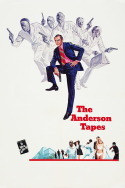
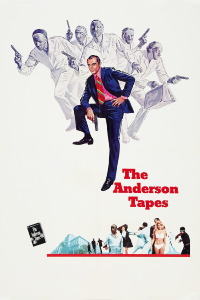
Review of The Anderson Tapes (1971) by Ola G — 13 May 2016
Burglar John "Duke" Anderson (Sean Connery) is released after ten years in prison. He renews his relationship with his old girlfriend, Ingrid (Dyan Cannon). She lives in a high-class apartment block (1 East 91st Street) in New York City and Anderson, almost instantly, decides to burgle the entire building in a single sweep - filling a furniture van with the proceeds. He gains financing from a nostalgic Mafia boss and gathers his four-man crew. Also included is an old ex-con drunk, "Pop" (Stan Gottlieb), whom Anderson met in jail, and who is to play concierge while the real one is bound and gagged in the cellar. Less welcome is a man the Mafia foists onto Anderson - the thuggish "Socks" (Val Avery). Socks is a psychopath who has become a liability to the mob and, as part of the deal, Anderson must kill him in the course of the robbery. Anderson is not keen on this, since the operation is complicated enough, but is forced to go along. Anderson has unwittingly entered a world of pervasive surveillance - the agents, cameras, bugs, and tracking devices of numerous public and private agencies see almost the entire operation from the earliest planning to the execution. As Anderson advances the scheme, he moves from the surveillance of one group to another as locations or individuals change. These include a private detective hired to eavesdrop on Anderson's girlfriend who is also the mistress of a wealthy man; the BNDD (a precursor to the DEA), who are checking over a released drug dealer; the FBI, investigating Black activists and the interstate smuggling of antiques; and the IRS, which is after the mob boss who is financing the operation. Yet, because the various federal, state and city agencies performing the surveillance are all after different goals, none of them is able to "connect the dots" and anticipate the robbery...
"The Anderson Tapes" was the first major film to focus on the pervasiveness of electronic surveillance, from security cameras in public places to hidden recording devices. Following the Watergate scandal a few years later, covert surveillance, and who is listening, became the themes of several 1970s films such as "The Conversation" and "The Parallax View". Columbia Pictures was not happy with the planned ending of the film, in which Connery escaped to be pursued by police helicopters, fearing that it would hurt sales to television, which generally required that bad deeds not go unpunished. Veteran director Sidney Lumet´s generic heist thriller "The Anderson Tapes" is not amongst his best ones in my eyes. The film can´t seem to find the right mood and drive plus the dialogue and acting is not 100%. And the the camera work makes the film look like a tv-movie. The problem is as well that the storyline has too many subplots and confuses you more than amuses you. You simply end up asking "What?".
This review of The Anderson Tapes (1971) was written by Ola G on 13 May 2016.
The Anderson Tapes has generally received mixed reviews.
Was this review helpful?