Review of The Abyss (1989) by Heather M — 28 Aug 2010
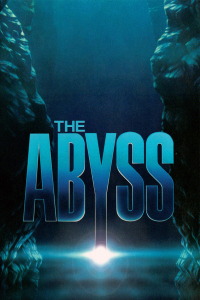
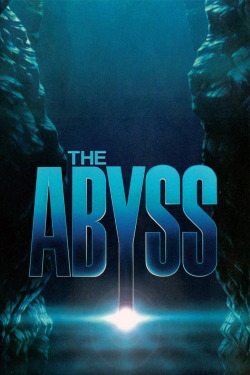
The Abyss is James Cameron's third major film project, which was completed in 1989. As far as underwater science fiction action thrillers go, this would be the benchmark film for that genre. Hands down. The reaction this film received was mixed and in some respects very under appreciated at the time of its release. There were also a couple of studios that caught wind of Cameron's hugely elaborate production and attempted to follow in his footsteps with films such as DeepStar Six, Leviathan, The Rift, The Evil Below, and Lords of the Deep, all which released on the very same year and failed miserably in every possible way. Aside from the original story that encompasses the Abyss, the true spectacle of the movie was the production values and special effects that went behind it.
The story begins with the last moments of an ill fated mission of an American Nuclear Submarine called the USS Montana. An unexpected encounter with a massive unidentified object causes the USS Montana to crash into the shelf of the Cayman Trough and sink to a unreachable depth. As tensions mount between the United States and the Soviet Union, a Navy SEAL team is called in to mount a search for the missing submarine. With a hurricane approaching the crash site, the team is forced to move quickly by enlisting the help of a civilian deep sea diving crew operating a prototype under-water oil platform designed to reach extreme depths. The oil platform is ran by Bud (Ed Harris) who is married to the platforms design engineer (Mary Elizabeth Mastrantonio). After the SEAL team travels to the ocean floor and joins the civilian crew, the oil platform is moved to the edge of the Cayman Trough and the team ventures out to find the wreaked submarine.
In order to create the environment depicted in the film, Cameron constructed one of the most elaborate underwater sets ever conceived. The set used to film all of the underwater scenes took place in an unfinished containment building inside an abandoned nuclear reactor. It is said that when construction was complete over seven million gallons of water was used to fill both the A and B reactor tanks, giving the set a depth of 40 feet. The cast and crew would often spend time in decompression due to the long amounts of time spent filming underwater. Even if you aren?t a fan of science fiction, the design and heart that went into this film is a hell of a sight indeed.
As the story progresses, the hurricane reaches the crash site and the oil platform is cut off from the surface. Suffering from major damage to the Oil Platform in the aftermath of the hurricane, the crew struggles to survive and also comes into contact with the mysterious entity that caused the USS Montana to sink. The story is very gripping in the fact that there is so much depth to the characters that is built throughout the course of the movie, especially the leads. The environment is completely believable and realistically detailed thanks to the meticulous set design and camera work. For its time, the special effects were truly extraordinary. Even for a dated film, the effects hold there own today and this film has aged considerably well given the fact that it was made pre-CGI. The Abyss also won the (62nd) academy award for best visual effects, of course the competition that year wasn?t anything special. It's just too bad it didn?t compete the following year at the 1991 (63rd) Oscars against Total Recall. I still think it would have won.
It took over two years and a budget of about 70 million to produce this film. Cameron pushed his crew to the very limits, and it shows. Cameron's demanding direction was so intense that it is said that some members of the cast and crew even publicly announced that they would never work with him again. At the time The Abyss was a technical marvel, which is a trademark of most Cameron films. Even though the film was a financial success profiting over it's budget by about 40 million dollars, it is loosely considered to be Cameron's least successful film in comparison to the other six, especially compared to the astronomically financial successes of Titanic and Avatar.
There are actually two versions of this film, the theatrical release and the special edition. Many critical reviews of this film were based on the original release (which is totally different than the special edition) stating that the ending of the film did not justify the buildup of suspense or storyline. The special edition contains 25 minuets of additional footage and features an amazing "wave sequence" finale and a more well rounded story with a fully developed plot that ties the entire story off at the conclusion. Needless to say the "critics" seemed to be more overly pleased with the special edition which says a lot about having a directors vision fully realized. I personally love both versions however the additional 25 minuets stretches the film from its already two and a half hour run-time to just under three hours (171 minuets) so if your into epics, this is right up your ally. If you have an inkling of sci-fi in you and haven't seen this film yet, your in for real treat.
This review of The Abyss (1989) was written by Heather M on 28 Aug 2010.
The Abyss has generally received positive reviews.
Was this review helpful?