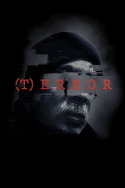
Review of (T)ERROR (2015) by Sophia R — 07 Dec 2018
Prior to watching this film, based on what little I knew of the FBI, I assumed that all employees - full-time, and informants alike - shared a passion for (or at least respected) the U.S. government and its values - namely, national security. I did know that many informants had unconventional paths, often having broken the law, which perhaps implies a lack of respect for the U.S. government. But I suppose I blindly assumed that when a person becomes an FBI informant, a magical transformation of sorts takes place, wherein they become a dutiful, single-minded civil servant. I thought of the FBI and its informants as machines, fulfilling their respective missions: to protect, to inform or to collect information. I think this is a common misconception many American citizens have of the more covert bureaus of our government, and those who work for them: we forget that our government workers are real people.
Indeed, for most Americans, the FBI merely lurks in the background of daily life; by and large, its mention conjures an image of an institution, and we seldom wonder about the individuals that comprise it. What (T)error does is humanize the figure of the FBI informant on two levels: people are both creatures of emotion, and, as the film's title suggests, creatures prone to error, and FBI employees and informants are no exception.
One particularly poignant scene from the film comes to mind: Saeed sits on the floor, reading one cookbook from a pile of many, leafing through the cupcake recipes. Just a few scenes earlier, we had heard him detailing his baking dreams, stating, "I really want to get into a bakery... I want to specialize in custom cupcakes ... go in with someone who is a master baker and I'll be his apprentice," while tossing two Bundt cakes into the oven. A few moments later, he sits, without looking up from his cookbook, telling the camerawoman slowly, in a satirically amused voice, "In the interest of national security, I shall oblige, by gathering information, and taking it to my securities, who at this time will be paying me some money." His tone evokes a sort of mocking, feigned dedication - he is clearly doing this work for the money. This explains the somewhat haphazard, erroneous nature of the way he treats his mission with Khalifah; for Saeed, even when he is acting as Shariff, national security is a secondary interest, at best.
Given that it is his primary incentive for being an FBI informant, I assumed that Saeed agreed to be featured in the film because he needed the money. During the film's opening scenes, Saeed is, to say the least, camera shy, complaining about his face being filmed. In fact, the film never reveals exactly why he agrees to partake in the documentary. However, as I continued to watch the documentary, I came to wonder if perhaps he agreed to be filmed because it meant he wouldn't have to spend quite as much time alone.
The filmmakers provide us with intimate, often painful insight into Saeed's personal life. In many moments throughout the film, we hear Saeed lament the life he has chosen for himself; his work as an FBI informant has torn apart his past relationships, alienated him from his former religious community, and continually draws him away from his son for months at a time. The FBI has even assigned him targets who were close friends, including Tariq Shah, whose case we hear about from Saeed, as well as Tariq's mother, throughout the film. During these solitary scenes, Saeed is often smoking marijuana, cracking open a beer, or eating takeout food, seeking solace. He is hostile, he is arrogant, but more than anything, he is deeply sad and alone.
By the documentary's final scenes, we come to understand that not only is Saeed alone, but he is, in fact, no less a prisoner to the FBI than is Khalifah, and all of the hundreds of others convicted by the FBI using informant tactics. Though he might claim otherwise, it is apparent that Saeed's entire life has become swallowed up by his informant identity, Shariff. Just after the Khalifah case ends, Saeed is distraught, and embittered with the FBI, lamenting, "I blame this all on the government... I'm just trying to be a good fucking citizen and look what happens... I'm a fucking Muslim and I cant even go to the mosque." Yet, during the flash forward one year later, Saeed is reinvigorated by his need for money. Caught in a vicious cycle of necessity and denial, he feigns excitement for the upcoming case, boasting his past convictions, saying that the government, "remember(s) (his) expertise.".
In one of the final scenes, we see the mother of Tariq Shah tell the camerawoman, "(Saeed) may be physically out of jail, but mentally he's not... so I don't think I would want to be in his place right now." In a moment during which we can only hope Saeed is revealing a glimmer of self-awareness, he tells the camera, "this story is never-ending." Sadly, I think he's right. As Tariq Shah's mother suggests, he's imprisoned, not only mentally, but in a sense, by the FBI itself.
This review of (T)ERROR (2015) was written by Sophia R on 07 Dec 2018.
(T)ERROR has generally received positive reviews.
Was this review helpful?